Cart
0

You can take whey protein before or after a workout. For most healthy adults who train, the more useful question is where a shake helps them meet their daily protein needs without making training uncomfortable or replacing a proper meal. Your last meal, your next opportunity to eat and your own tolerance matter more than a universal minute on the clock.
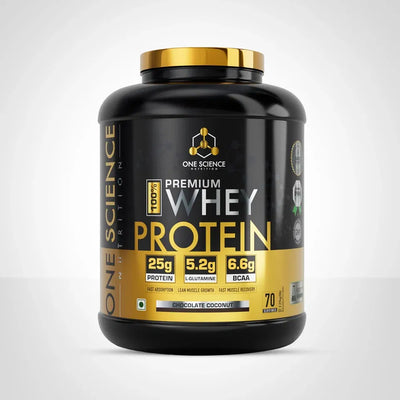
One Science Nutrition Premium Whey is a convenient option for that gap. Its Chocolate Charge serving provides 25 g of protein from 32.5 g of powder. You can plan it around an early start, an office workout or the journey home, rather than treating a shake as an emergency after the final repetition.
Start with the meal on either side of training
Before deciding on whey protein timing, look at when you last ate a substantial protein-containing meal. Then consider how soon you can eat again. Someone training between lunch and dinner has a different schedule from someone who gets up before sunrise and goes directly to the gym.
For example, suppose you have lunch at 1 pm, train at 5 pm and usually cannot have dinner until 9 pm. A planned protein serving after training may be convenient because there is a long practical gap before dinner. The same person training at 7 pm with dinner ready at 8 pm may prefer to cover a low-protein breakfast instead.
These times illustrate different routines. They do not establish a medical deadline or prove that every four-hour gap needs a supplement. The point is to locate the eating occasion that regularly becomes difficult, then make it easier to manage.
When whey before a workout can be useful
A pre-workout shake may be convenient if you have not eaten for several hours and would otherwise go through training and a long commute without a protein-containing meal. It may also suit someone who prefers a drink to a larger portion of food before an early session.
Leave enough time to feel comfortable. A full shake just before heavy squats or running can feel different from the same drink taken earlier. Try a familiar preparation on an ordinary training day and pay attention to fullness, reflux or stomach discomfort. There is no reason to copy another person's schedule if your body responds differently.
Whey also does not cover every part of pre-workout nutrition. One Science Nutrition Premium Whey is primarily a protein supplement. Its listed Chocolate Charge serving contains 1.6 g of carbohydrate, so it is not a substitute for the carbohydrate-containing foods that may support a demanding session. Plan the whole meal or snack around the exercise you are doing.
When whey after a workout is the easier choice
Post-workout whey can be useful when your next meal is delayed, appetite is low or a portable serving makes the routine simpler. You can finish training, prepare the drink as directed and continue with your day without needing a cooked meal immediately beside the gym.
That convenience is different from a requirement to drink whey before leaving the building. If dinner already contains an appropriate protein portion and is ready soon, you can have dinner. You do not have to delay it because a shake has been labelled “post-workout”.
In its 2017 nutrient timing position stand, the International Society of Sports Nutrition discusses protein around resistance exercise alongside the rest of the diet. The choice belongs within an eating pattern you can sustain.
Treat the end of training as a useful reminder to eat well, rather than a countdown. A routine you follow comfortably across the week is more practical than repeatedly missing meals while trying to meet a precise shake time.
What if you train before breakfast?
Early training often leaves less time for a substantial meal beforehand. You might prefer a light familiar snack before exercising and breakfast afterwards, or you might tolerate a protein drink earlier. The best arrangement is the one that provides suitable nutrition and does not interfere with the session.
Suppose you leave home at 6 am and return at 7:30 am. If breakfast follows shortly after you return, plan its protein contribution first. If you head straight from training into a long commute, a prepared supplement routine can make the morning easier to organise.
Keep your powder, clean mixing equipment and instructions ready rather than making the choice while rushing. Prepare and store drinks hygienically, particularly in warm weather. A dry measured portion carried separately can be more convenient than leaving a milk-based drink unrefrigerated for hours.
Use One Science Nutrition Premium Whey to solve a specific gap
One Science Nutrition Premium Whey combines whey concentrate and isolate. In the Chocolate Charge example, the 25 g protein serving contributes 117 kcal when prepared with water. Milk adds its own protein, carbohydrate and energy, which should be counted as part of the drink.
That makes the product useful when the problem is a missed protein opportunity. For example, if your planned food intake supplies 85 g and your appropriate target is 110 g, one listed serving covers the example difference. Moving that same serving from before training to afterwards does not change the arithmetic.
The product contains milk and soy. It is not recommended for children or during pregnancy or lactation, and adults with a medical condition should seek individual advice. If you have milk allergy, changing the time of the shake does not make it suitable.
Choose One Science Nutrition Premium Whey when you want a concentrate-and-isolate blend that gives you a clearly labelled protein amount. Give the serving a place in the day where it helps you eat consistently, instead of adding it automatically before and after every session.
Does morning or evening whey change the result?
Morning whey can be useful when breakfast is low in protein. Evening whey can be convenient after later training or when dinner needs support. Neither time automatically makes the product more effective for every person, and a bedtime serving is not a treatment for poor sleep.
A 2025 review of direct before-versus-after training comparisons found no important difference in lean-body-mass changes from protein timing. The certainty of evidence was low to very low, so the result does not prove that every possible schedule is identical.
For an ordinary routine, this supports a flexible approach. Keep adequate food intake, a suitable training programme and recovery in view. If you are struggling to eat enough across the day, moving a shake by ten minutes is unlikely to solve the underlying planning problem.
Plan rest days without a workout clock
If the daily amount is still unclear, use our guide to daily protein needs before deciding where a whey serving belongs.
On a rest day, decide whether your meals meet your protein needs. The absence of a gym session does not remove protein from the diet, but it also does not create an automatic requirement for a shake. Use the same food-and-gap check you use on training days.