Protein and resistance training support muscle growth in different, complementary ways. Training challenges muscle to adapt; dietary protein supplies amino acids used to make and repair muscle proteins. A good food plan helps you respond to the work, but it cannot perform the repetitions or organise the programme for you.
One Science Nutrition Premium Whey and One Science Nutrition ISO Gold offer convenient whey servings when food leaves a practical protein gap. Choose the formula that suits your requirements, then place it within a routine that includes progressive training, sufficient overall food and recovery. The useful question is what makes that routine work better, rather than how many supplements you can fit around it.
The programme comes before the perfect supplement schedule
If you're starting resistance training, you may spend more time comparing powders than learning the exercises. It's understandable: the label offers a clear purchase, while progress in the gym takes practice. But a well-chosen serving helps most when you also know what you are trying to improve in the session.
The American College of Sports Medicine's 2026 resistance-training update emphasises consistency and training the major muscle groups at least twice weekly. Professor Stuart Phillips puts it simply: “The best resistance training program is the one you’ll actually stick with”. That advice concerns healthy adults and needs adapting to individual ability and health.
You can use weights, machines, bands or suitable bodyweight exercises. A qualified trainer can help you choose movements, learn technique and progress the work. The equipment matters less than having an appropriate challenge and a plan you can repeat safely, rather than a different collection of exhausting exercises every visit.
What protein adds to the work you do
Resistance exercise stimulates changes in muscle protein turnover. Eating protein supplies amino acids that can support the making of new proteins. The two belong together, which is why muscle-building advice considers both training and nutrition instead of treating either as a complete answer.
Robert Morton and colleagues' analysis of 49 training studies found that protein supplementation enhanced some training-related gains in healthy adults. The additional effect depended on the broader context, including total intake. It doesn't mean every person who adds a powder will obtain the same result or that extra servings keep adding benefit indefinitely.
For an everyday routine, first check that meals contain substantial protein sources. Then decide whether convenience is the difficulty. If you already eat enough suitable protein, another shake may be less useful than improving sleep, practising technique or following the programme more consistently.
Three situations where the routine loses its balance
You train harder while eating less and less
A growing training workload needs fuel. If you remove rice, roti or other foods simply to make the diet look more focused, you may struggle with energy and recovery. Protein deserves attention, but it doesn't remove the need for carbohydrate, dietary fat and sufficient overall food.
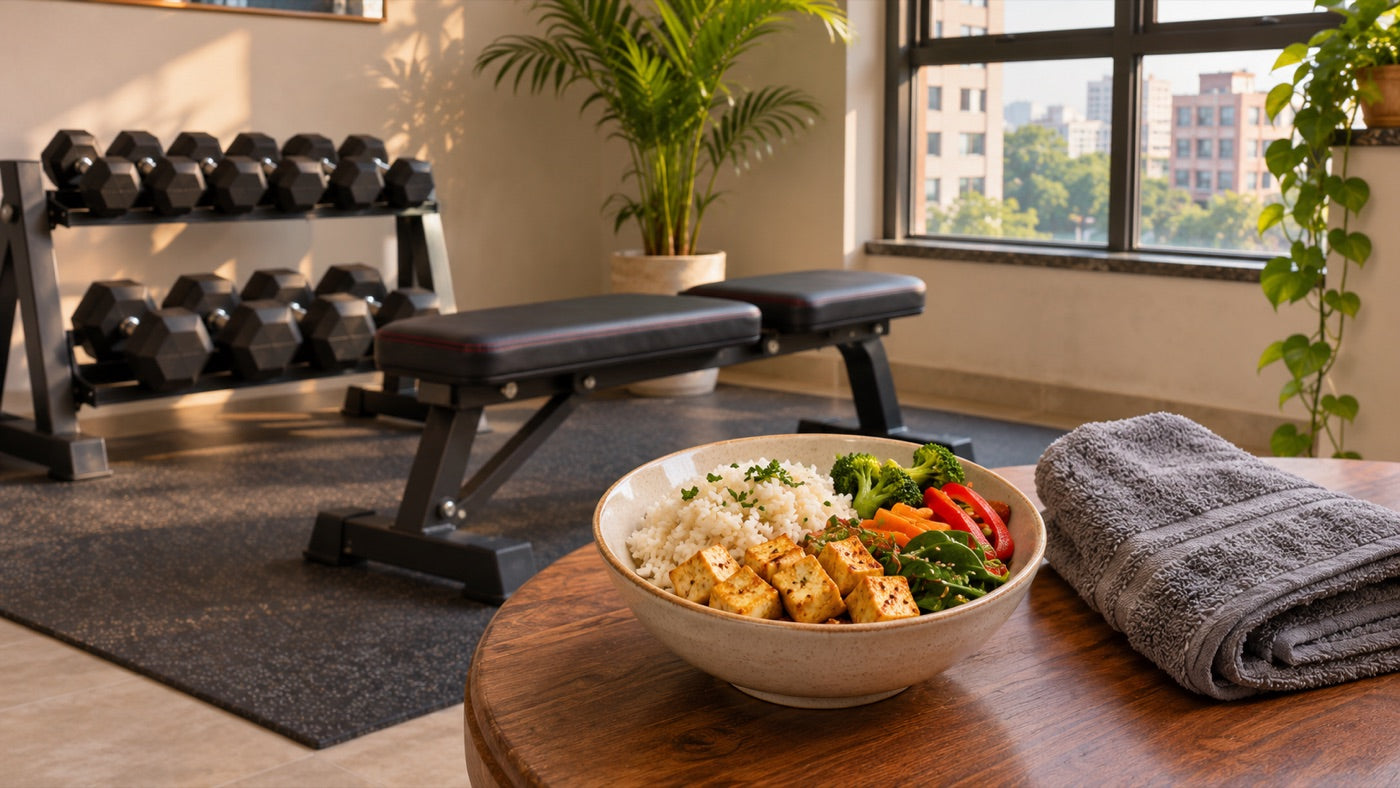
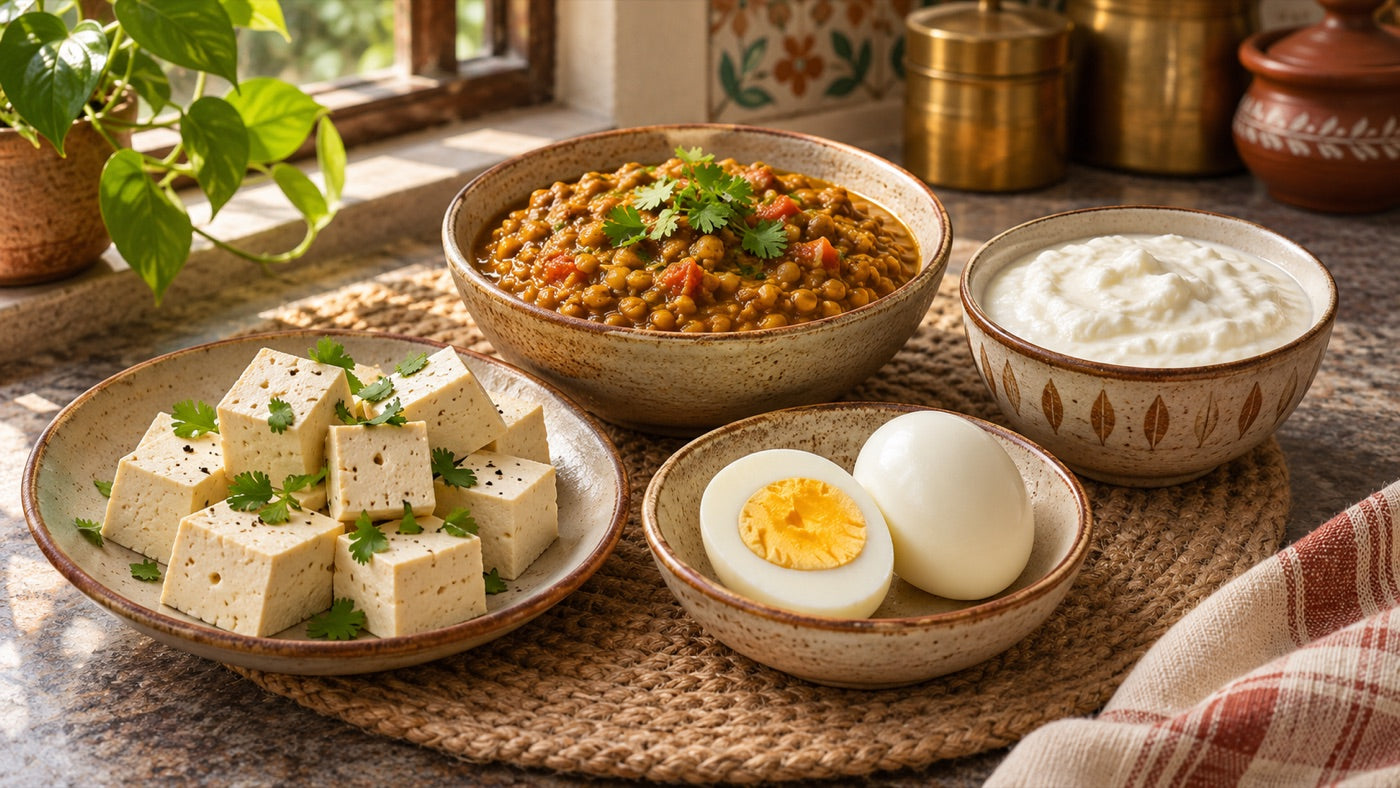
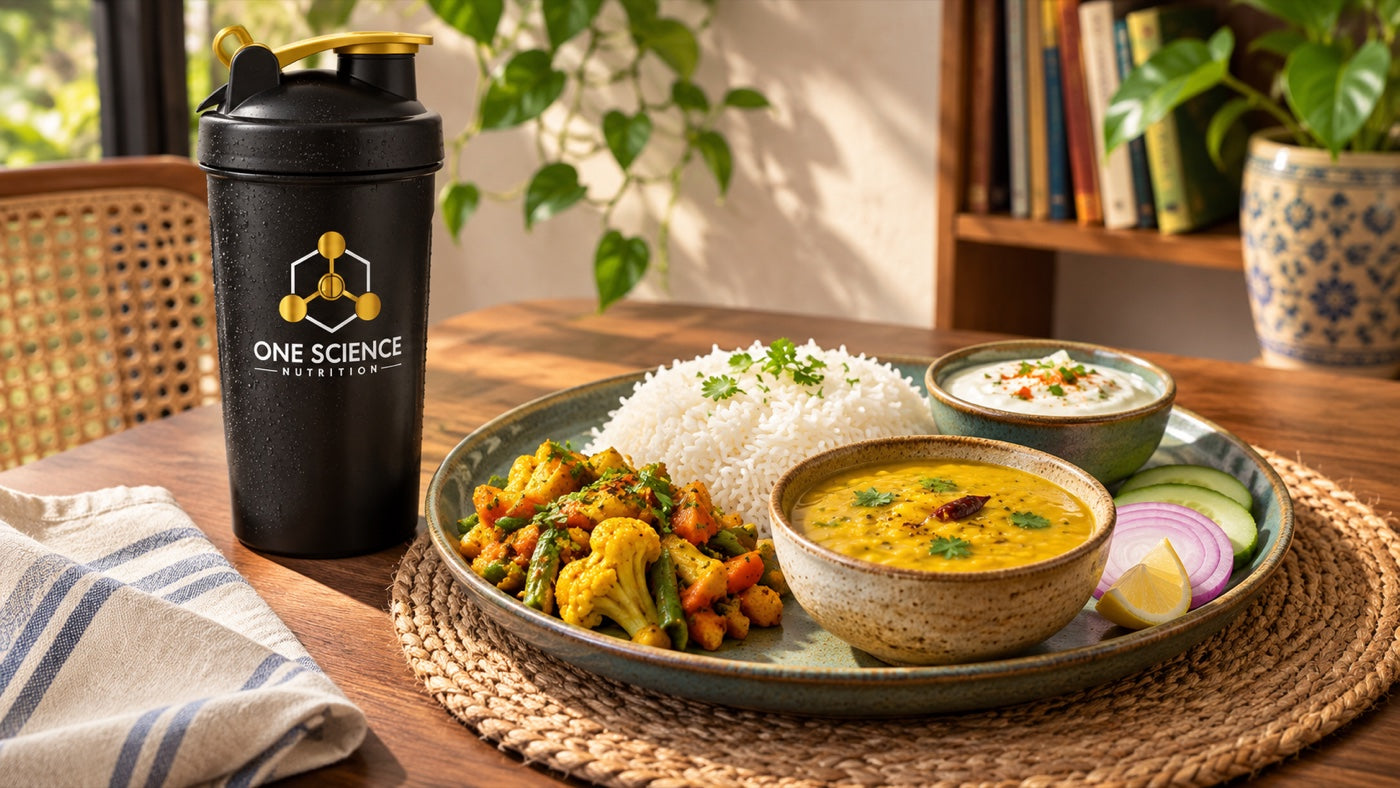
A meal with dal, rice, curd and vegetables can provide several useful things at once. Another person's meal may use tofu, eggs, fish or chicken. The pattern should suit your diet and goals, rather than requiring every plate to look like a bodybuilding photograph.
You chase soreness instead of repeatable progress
Soreness tells you that something felt different or demanding; it isn't a direct measurement of muscle growth. Making every session unfamiliar can leave you tired while giving you little reliable information about whether you are improving. Keep enough consistency in the programme to compare your own work.
Record the resistance, repetitions and sets, and use technique that lets the intended muscles do the work. Progress when appropriate, not because every session must set a record. If pain or persistent symptoms affect exercise, get help assessing them rather than treating discomfort as proof of commitment.
You save nearly all your protein for dinner
A substantial dinner can contribute, but it becomes awkward when breakfast and lunch supply very little. You may finish the day trying to eat a huge amount while tired and short of appetite. It is often easier to improve an existing earlier meal than to force another late-night serving.
Our protein and meal-timing guide explains how to spread useful eating opportunities across the day. You don't need identical meals or a timer every few hours. You need a realistic way to eat enough while the rest of life continues.

One Science Nutrition Premium Whey combines whey concentrate and isolate. Chocolate Charge supplies 25 g of protein and 117 kcal per 32.5 g powder serving. It gives you a measured option when preparing another protein food is difficult, such as a late finish at work before an evening session.
You can use One Science Nutrition Premium Whey at a convenient eating occasion rather than creating an additional compulsory meal. If dinner is already substantial and close to training, the afternoon may be where the serving is more useful. Count what it adds to the day and keep the ordinary meals that already work.
Flavours including Chocolate Charge, Vanilla Swirl and Alphonso Mango give you choices for a regular preparation. Follow the selected pack's directions, keep any added milk or toppings in the nutrition total and avoid changing several supplements at once. A clear routine is easier to assess if your needs or comfort change.
One Science Nutrition Premium Whey contains milk and soy and is unsuitable for milk allergy. It isn't recommended for children or during pregnancy or breastfeeding. Obtain individual advice before supplementing when a medical condition, medication or prescribed diet affects your protein intake.
One Science Nutrition ISO Gold combines whey isolate and hydrolysed whey. Its Chocolate serving provides 27 g of protein, 113 kcal, 0.5 g carbohydrate and 0.3 g fat in 32.5 g of powder. Choose it if you prefer that combination and the serving composition helps with your food plan.
The convenience of One Science Nutrition ISO Gold can be useful after a session when another protein-containing meal will be delayed. It can also help at another point in the day. You don't need to reserve the product for a special type of workout or assume that its processing replaces the need for progressive training.
One Science Nutrition ISO Gold contains milk and is unsuitable for milk allergy. It isn't recommended for children or during pregnancy or breastfeeding. An isolate-containing blend doesn't guarantee lactose-free status or a symptom-free drink, so check the selected pack and get appropriate advice if dairy tolerance is a concern.
What will you repeat next week?
Look at the week as a whole: the sessions you can attend, meals you can prepare and recovery time you have. If a plan depends on everything going perfectly, make the difficult part simpler. A suitable ready-to-mix serving may help with food access; a more manageable programme may help with attendance.
You can explore One Science Nutrition Premium Whey or One Science Nutrition ISO Gold for the whey serving that fits your requirements. Neither requires the other to make the purchase useful. Choose one for a clear reason and give it the same practical scrutiny you give the rest of the routine.
Before the next session, open your training record. Know the exercises you are practising and the work you completed last time. That gives the food you've planned something specific to support, with progress judged across a repeatable programme rather than a single impressive workout.