Vegetarians can get enough protein for muscle growth by planning substantial protein foods across the day and supporting them with appropriate resistance training. You don't have to abandon dal, roti or rice. The useful change is making sure protein isn't left to a small side dish at every meal.
One Science Nutrition Pea Protein and One Science Nutrition Fermented Yeast Protein give you convenient protein options for the occasions when another cooked portion isn't practical. Choose the source and flavour that suit you, then give the serving a clear place alongside the food you already enjoy. A vegetarian muscle-gain routine should feel like a way of eating you can keep, rather than a new set of restrictions.
Before breakfast, decide what kind of vegetarian diet you follow
Some vegetarians eat dairy; some include eggs; others avoid both. That changes the choices available, and it is worth being clear before copying a meal plan. A menu built around eggs and milk isn't useful to someone who avoids them, even if it reaches an attractive protein total.
The Academy of Nutrition and Dietetics explains that a well-planned vegetarian diet with sufficient energy and varied protein sources can support muscle development. Foods such as soy, beans, lentils, grains, nuts and seeds can contribute, with dairy and eggs included where suitable.
Training goals don't erase the rest of your nutritional needs. If your diet excludes major food groups, get qualified help with nutrients that may need particular attention, including vitamin B12 in a vegan pattern. A high protein total alone doesn't tell you that the whole diet is adequate.
Breakfast: give the meal something substantial
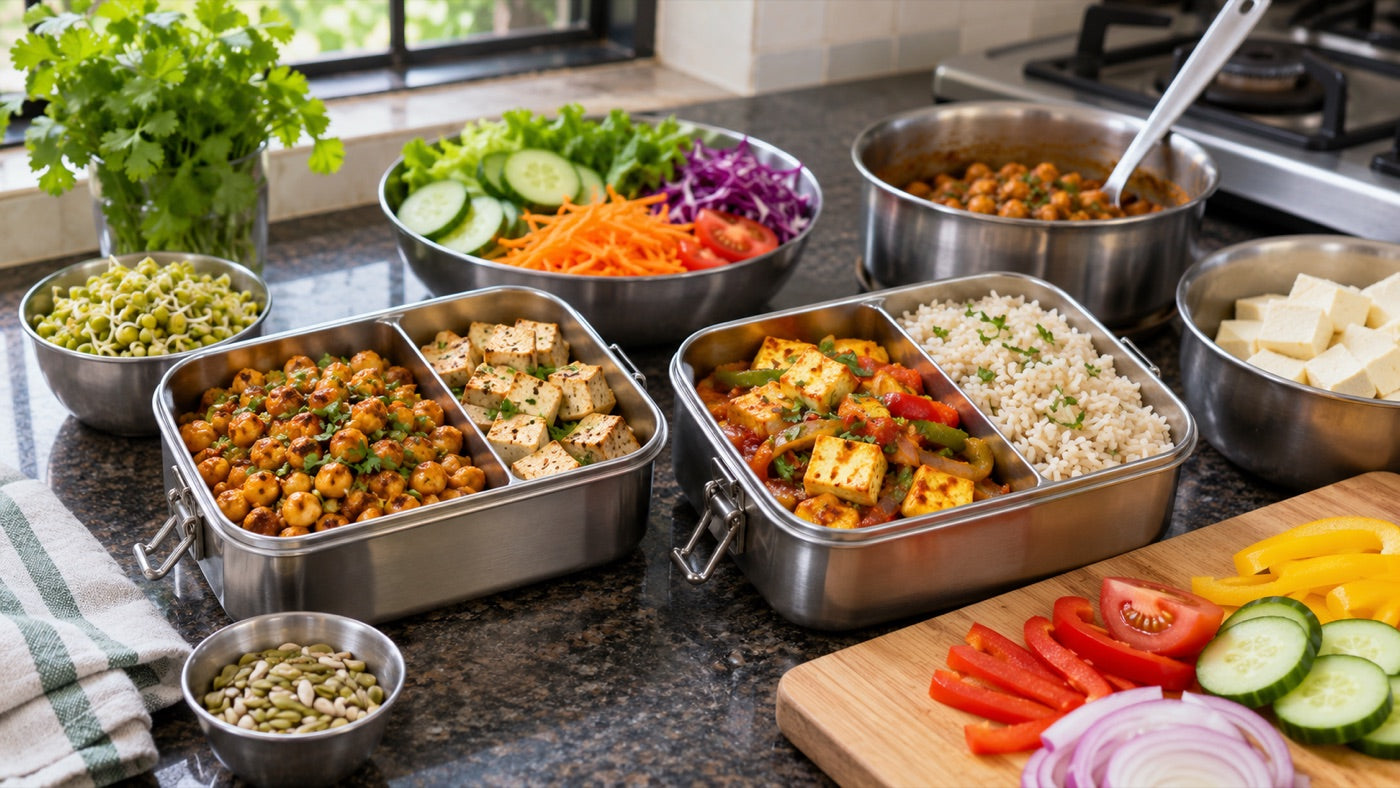
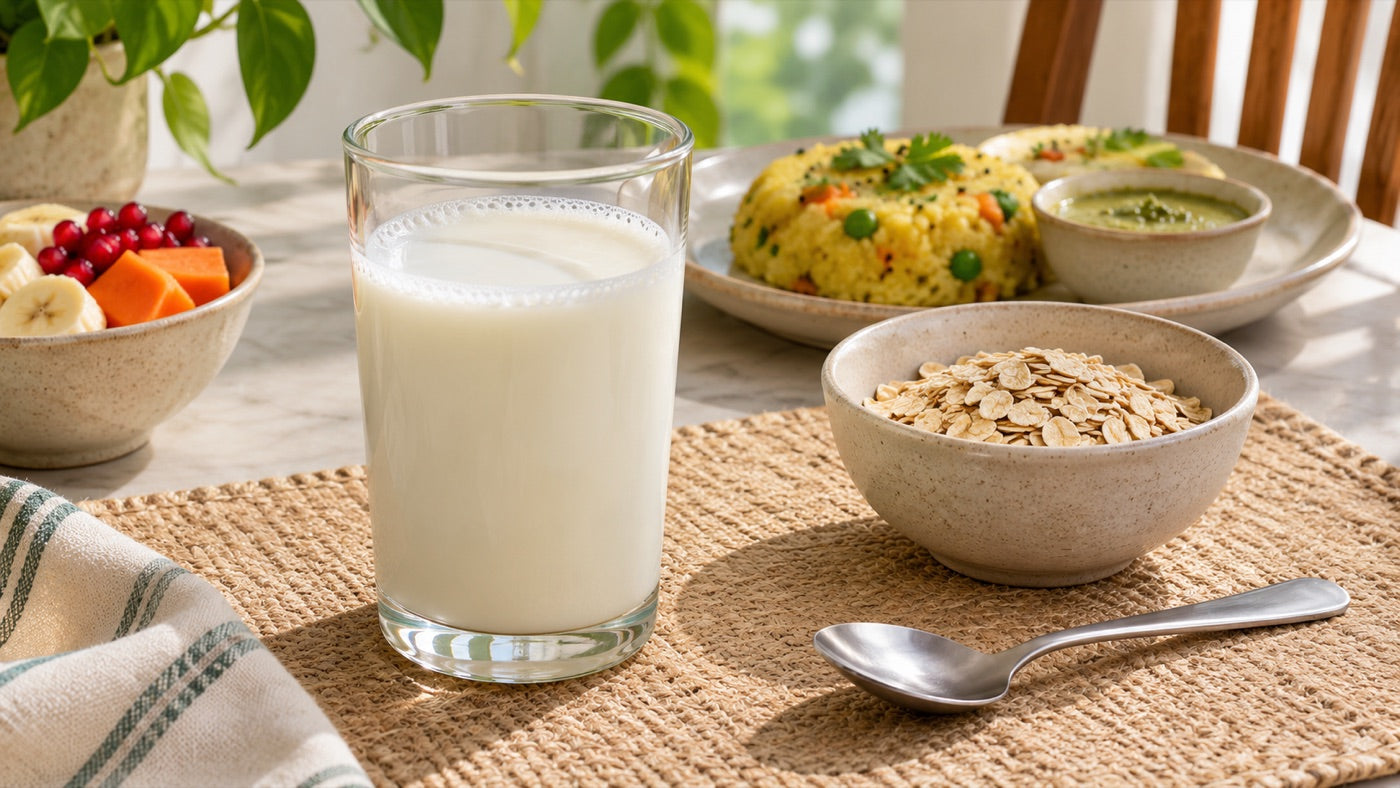
If breakfast is usually tea and a few biscuits, begin there. Besan or moong preparations, suitable tofu dishes, curd or other dairy foods can give the meal a clearer protein source. Choose the foods you eat and enough of them to make breakfast more than a placeholder before lunch.
You can keep familiar staples too. A breakfast with carbohydrate, protein and other foods can be easier to live with than a meal built around avoiding everything except protein. If you're struggling to eat enough for training, removing more staple food may make the practical problem worse.
The night before often determines what happens in the morning. Have the suitable ingredients ready, plan any soaking or cooking needed and choose a preparation that fits the time you actually have. A dependable ordinary breakfast is more useful than a complicated recipe reserved for one relaxed weekend.
Lunch: don't let the protein become a garnish
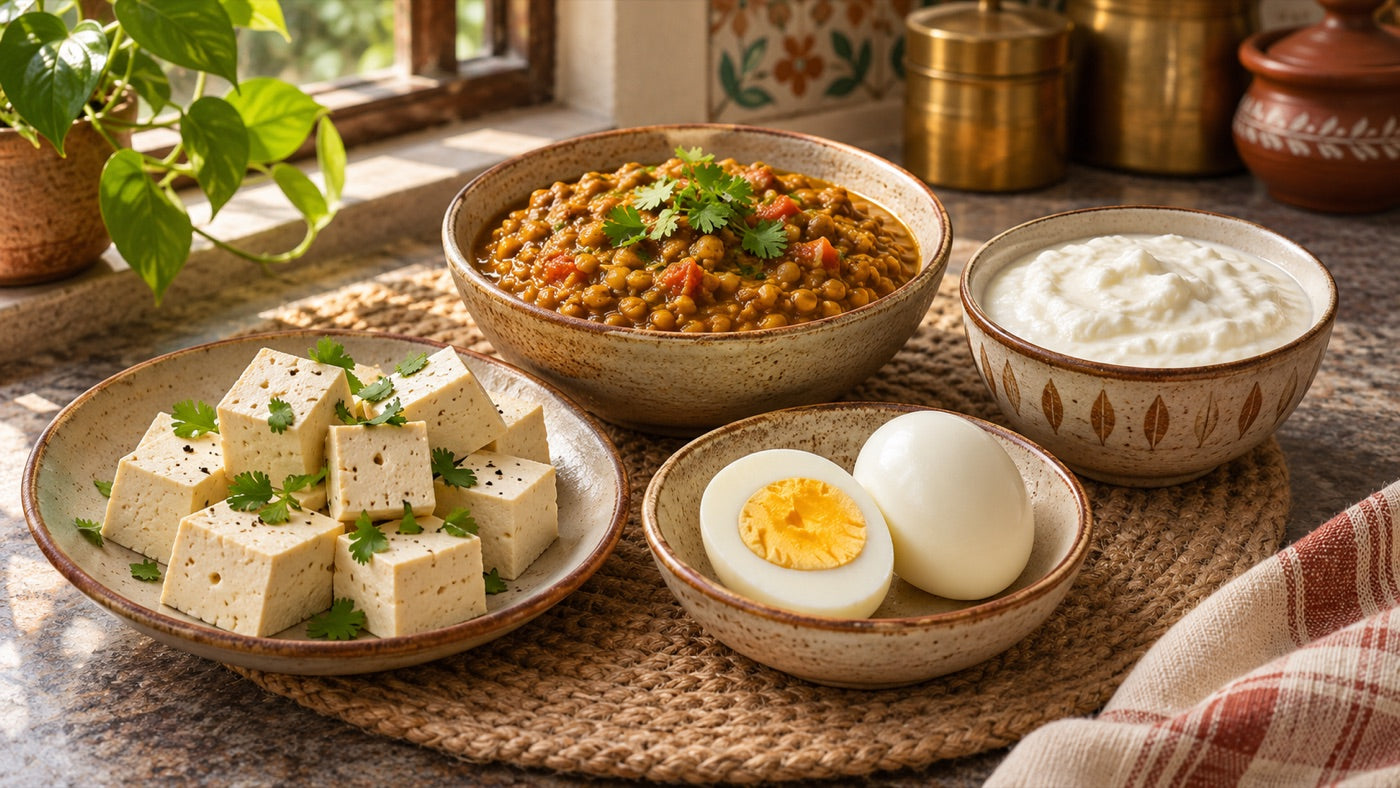
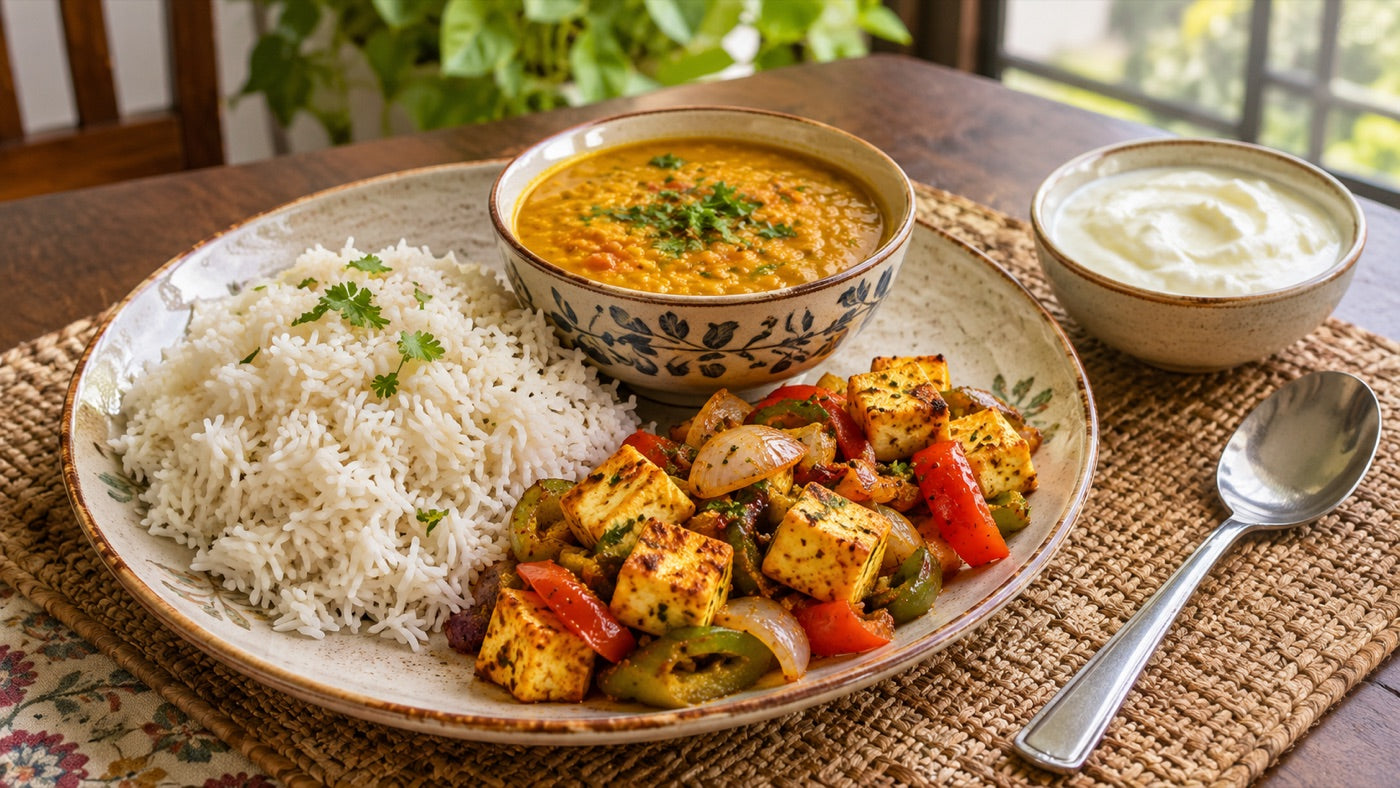
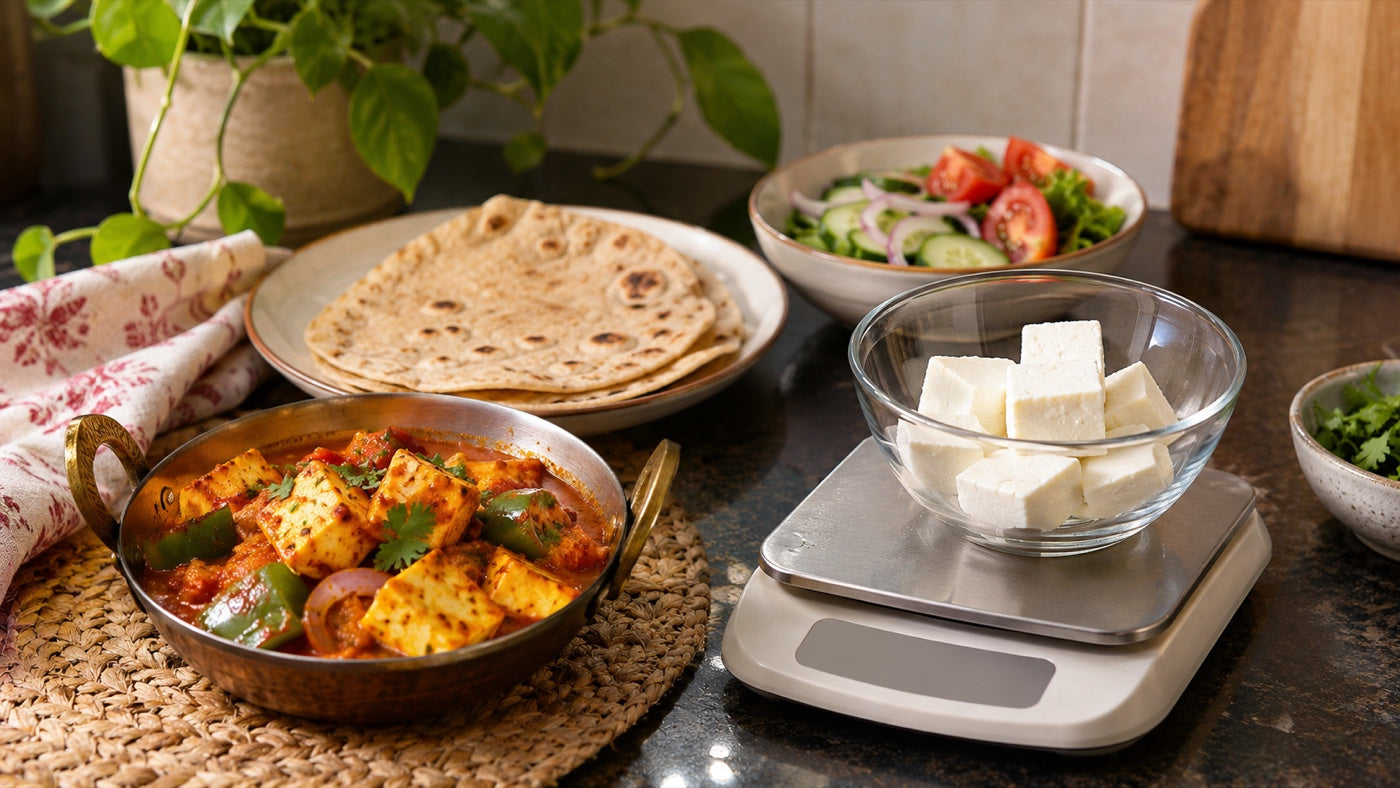
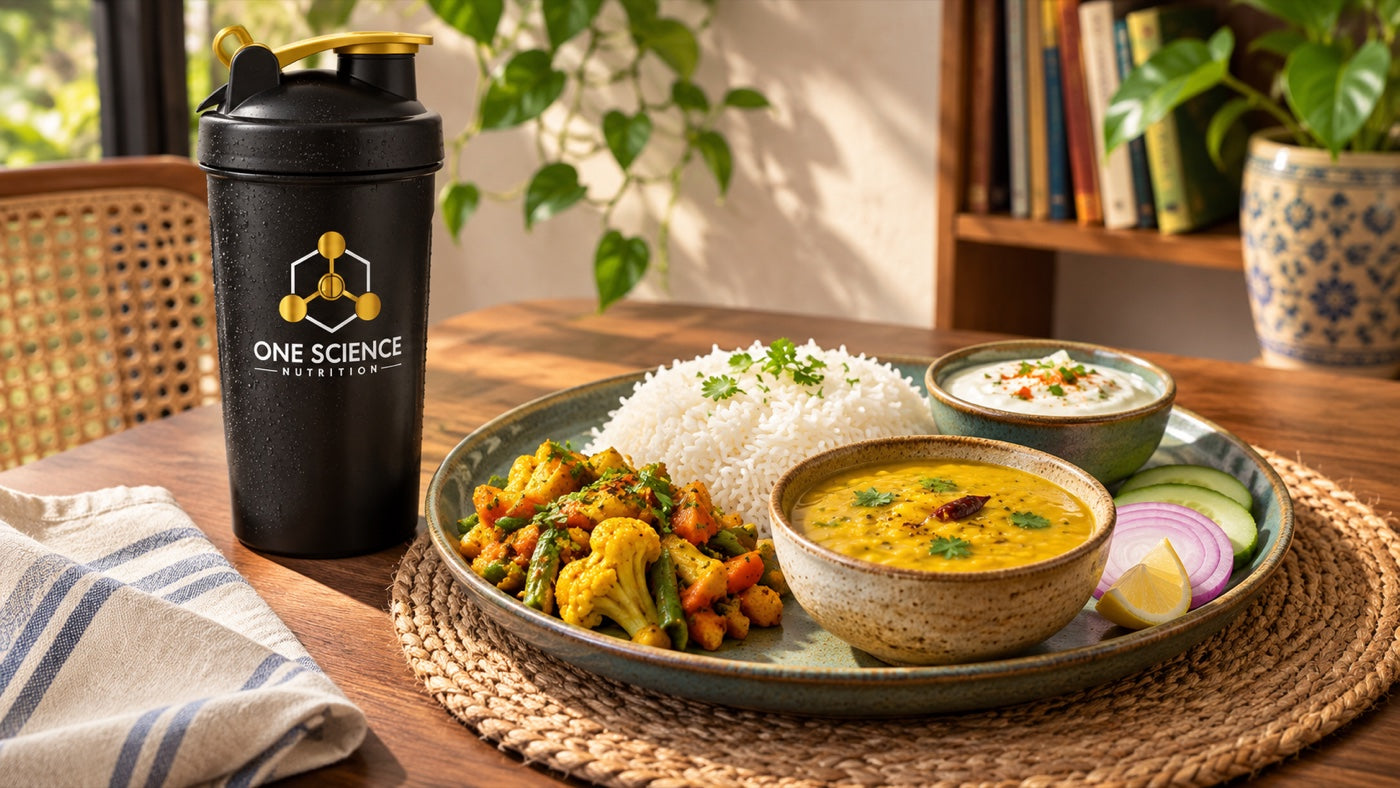
Rice with dal, roti with tofu or a paneer-and-vegetable meal can all work, depending on your diet. Look at the portion of the protein-containing food. A spoon of thin dal used as gravy isn't the same as a substantial serving, and a few paneer cubes don't turn every large plate into a high-protein meal.
With pulses, keep raw and cooked amounts separate when estimating nutrition. Water absorbed during cooking changes the weight, so 100 g of dry dal doesn't have the same protein amount as 100 g of the cooked preparation. Use a matching food value and a portion you actually eat.
You don't need to perform exact amino-acid matching at every lunch. Variety across the day helps, and the total amount matters. Soy foods, pulses, grains and suitable dairy can share the week without making every meal identical or requiring one ingredient to do everything.

The afternoon is where a planned day often becomes less predictable. Lunch finishes early, training is later and the only convenient snack may be whatever is in the office drawer. One Science Nutrition Pea Protein offers a measured protein serving you can plan for that gap, rather than relying on dinner to catch up.
One Science Nutrition Pea Protein uses pea protein isolate and provides 25 g of protein, 154.52 kcal and 5 g of fibre per 40 g serving. That clear amount can be useful when another tofu or pulse portion is inconvenient to cook, carry or eat. It supplements the food pattern rather than making the rest of the diet unnecessary.
Flavours of One Science Nutrition Pea Protein include Rich Chocolate, Iced Coffee and Unflavoured. Choose a suitable flavour and preparation, follow the directions and check the full ingredients and allergens. If placing a drink near exercise, consider its fibre and your own comfort rather than trying a large unfamiliar preparation just before a demanding session.
One Science Nutrition Fermented Yeast Protein obtains its protein from yeast produced through fermentation. Its 36 g serving provides 26 g of protein and 144.57 kcal. It offers a different source from whey and pea, giving you another practical option when you want a convenient protein drink.
Choose One Science Nutrition Fermented Yeast Protein if that source and a listed flavour such as Alphonso Mango, Iced Coffee or Rich Chocolate appeal to you. You can use it at an eating occasion that needs help without also taking a second protein shake simply because another product is available. Decide what problem the serving solves before adding more.
Before buying One Science Nutrition Fermented Yeast Protein, check the chosen flavour's complete ingredients, allergens, directions and warnings. If you follow a strict vegan diet or need to avoid an ingredient, make sure the full recipe meets that requirement.
Dinner: finish a planned day rather than rescue it
A substantial evening meal can support the routine, but it doesn't have to carry nearly all the day's protein. Look back at breakfast, lunch and any useful snack. When those eating occasions already contain suitable protein, dinner becomes easier to organise around appetite and food preferences.
Suppose a professionally agreed target is 100 g and your normal meals provide 75 g. A suitable 25 g protein serving could fill that example gap. Another person may have a different target or prefer to change the meals instead. Use the arithmetic to understand the decision without treating 100 g as a vegetarian rule.
Our protein-intake and meal-timing guide can help with that distribution. You don't need every meal to hit an identical number, but you do need a plan that doesn't depend on being extremely hungry at night.
Keep training and food progressing together
A 2025 Nutrition Reviews analysis found that protein-source comparisons depend on the foods and outcomes studied; soy and milk did not differ in pooled muscle-mass results, while some non-soy comparisons favoured animal protein. It supports a thoughtful approach rather than assuming all sources are interchangeable at any amount.
Plan enough suitable protein, maintain variety and give the muscles progressive training to respond to. If your performance or recovery keeps deteriorating, review the workload, overall food and sleep rather than assuming vegetarian eating has failed. A qualified sports dietitian can help identify the actual difficulty.
Explore One Science Nutrition Pea Protein or One Science Nutrition Fermented Yeast Protein when a convenient serving would make the day easier. Then make tomorrow's lunch practical: choose the protein food, prepare enough of it and arrange safe storage. That small piece of preparation can make a training diet feel much less like a daily scramble.