You can meet your protein needs through ordinary food. A protein supplement becomes useful when it makes that task more convenient, especially if preparation, appetite or carrying food creates a recurring problem. Whole foods and protein powder have different practical strengths, and many people can use both sensibly.
One Science Nutrition Premium Whey provides a convenient whey-based serving, while One Science Nutrition Fermented Yeast Protein offers a fermentation-derived option. The reason to choose either is a clear place in your diet, not the idea that food protein has stopped working or every gym member needs a tub.
The better question: what are you trying to solve?
“Protein powder vs food” sounds like a contest with one winner. In practice, the decision changes with the day. At home, a normal meal may be easy. During a long commute or a packed workday, preparing another protein food may be difficult.
Start with the obstacle. Is lunch too small? Are you missing breakfast? Is carrying food safely the problem? A supplement can solve a convenient-protein problem, but it cannot solve every reason an eating pattern falls short.
If the main issue is repeatedly skipping complete meals, improve meal access as well. If your meals are balanced and adequate but one eating occasion is awkward, a suitable powder may be exactly the practical addition you need. The goal is a workable diet rather than loyalty to one format.
What whole foods bring to the table
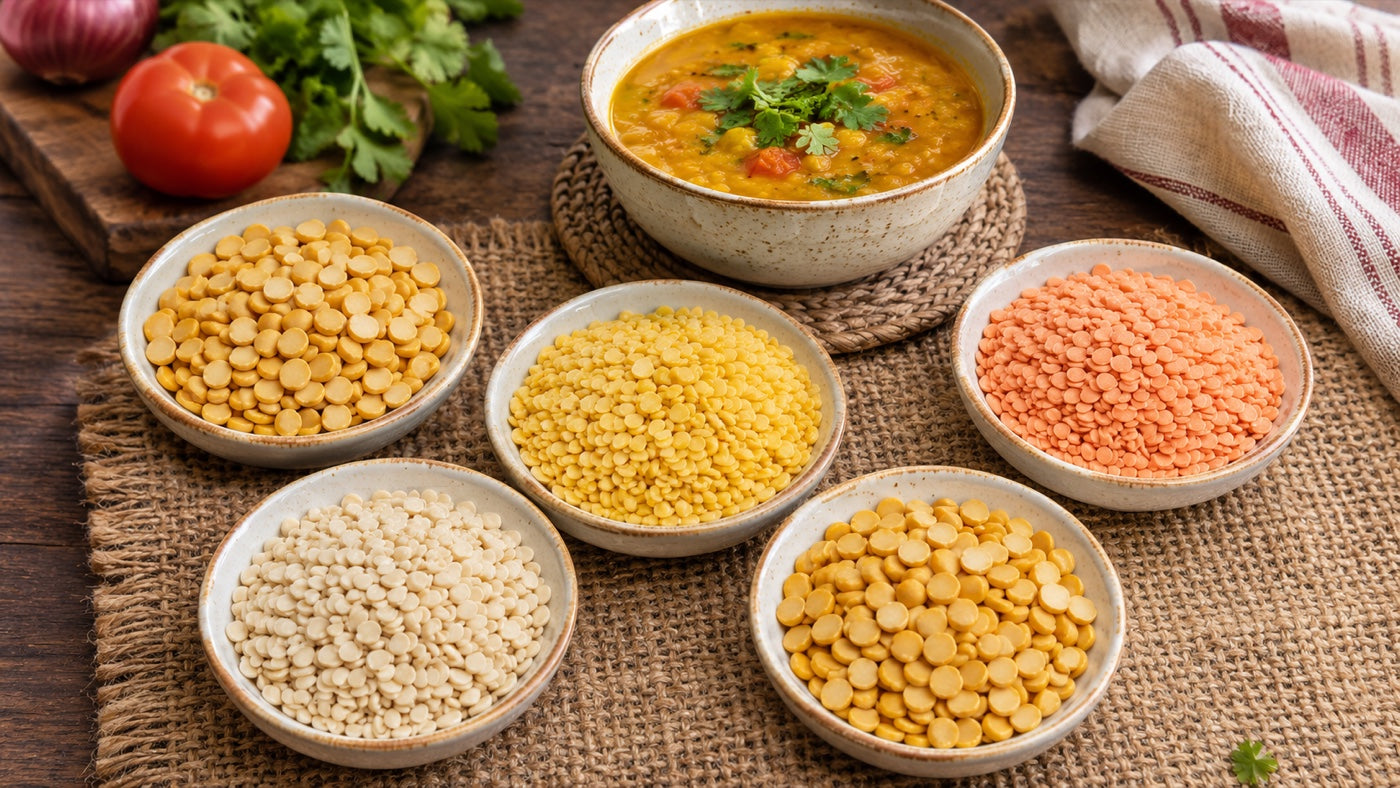
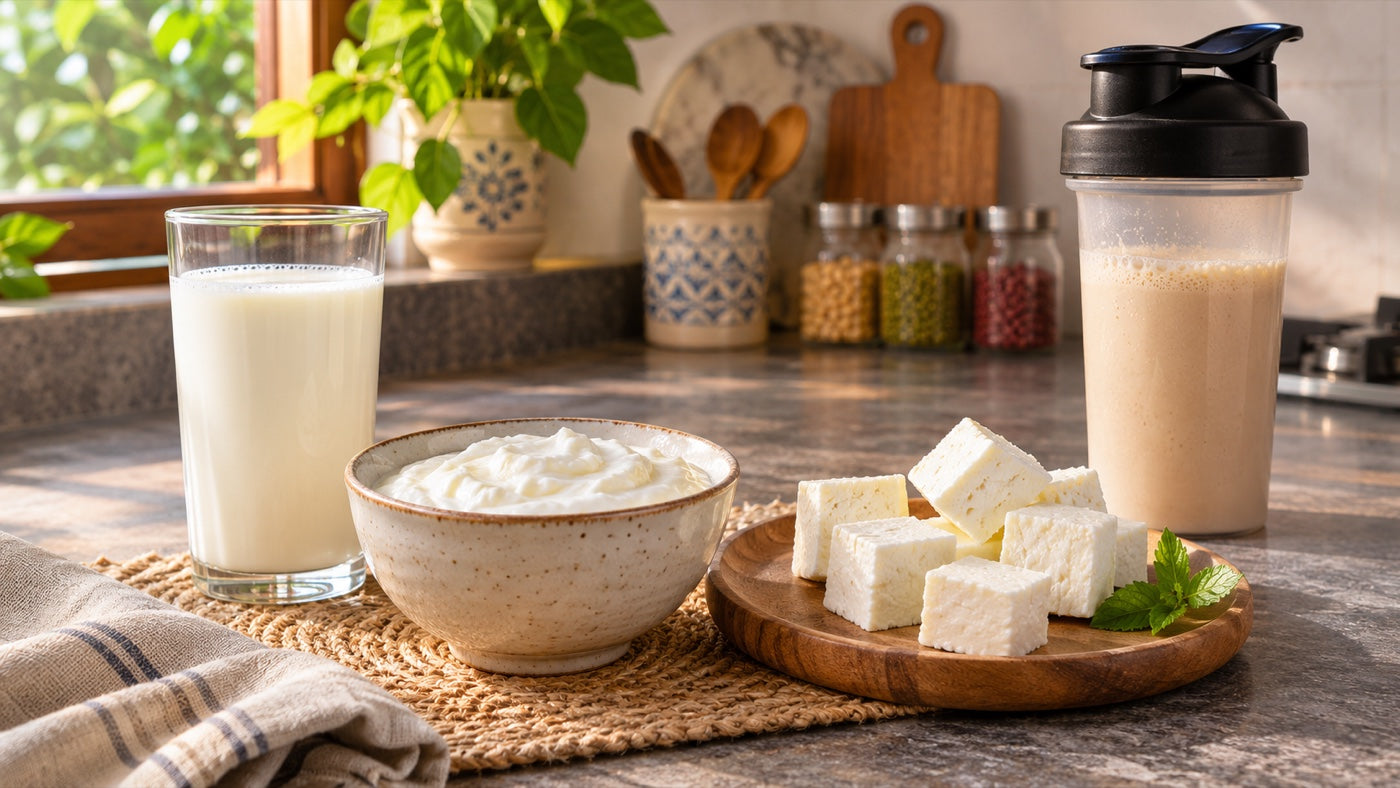
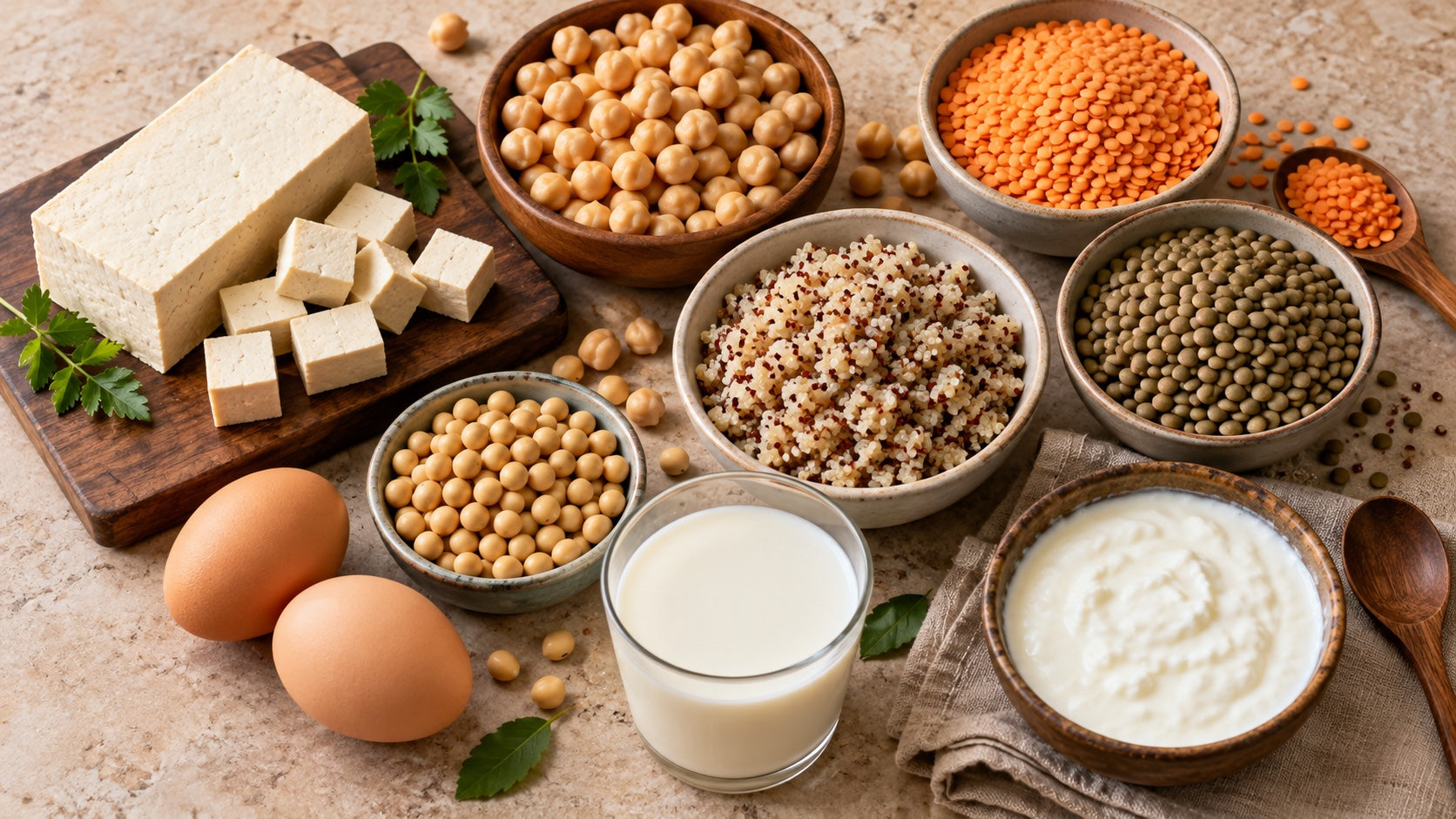
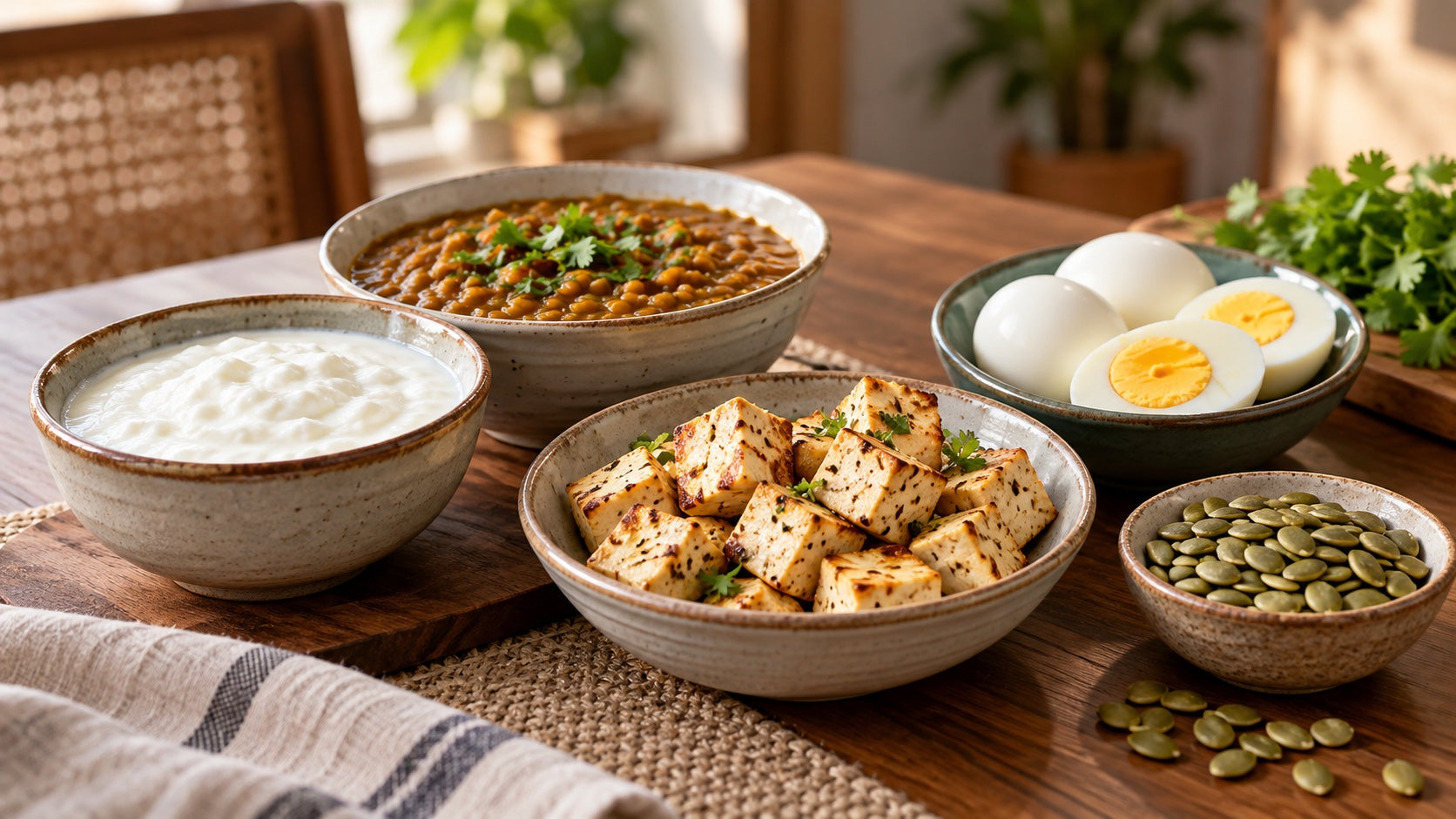
Foods such as pulses, tofu, eggs, fish, dairy and meat can supply protein alongside other nutrients. The combination differs between foods. Pulses also provide fibre and carbohydrate; dairy foods can contribute calcium; other foods have their own useful nutrient profiles.
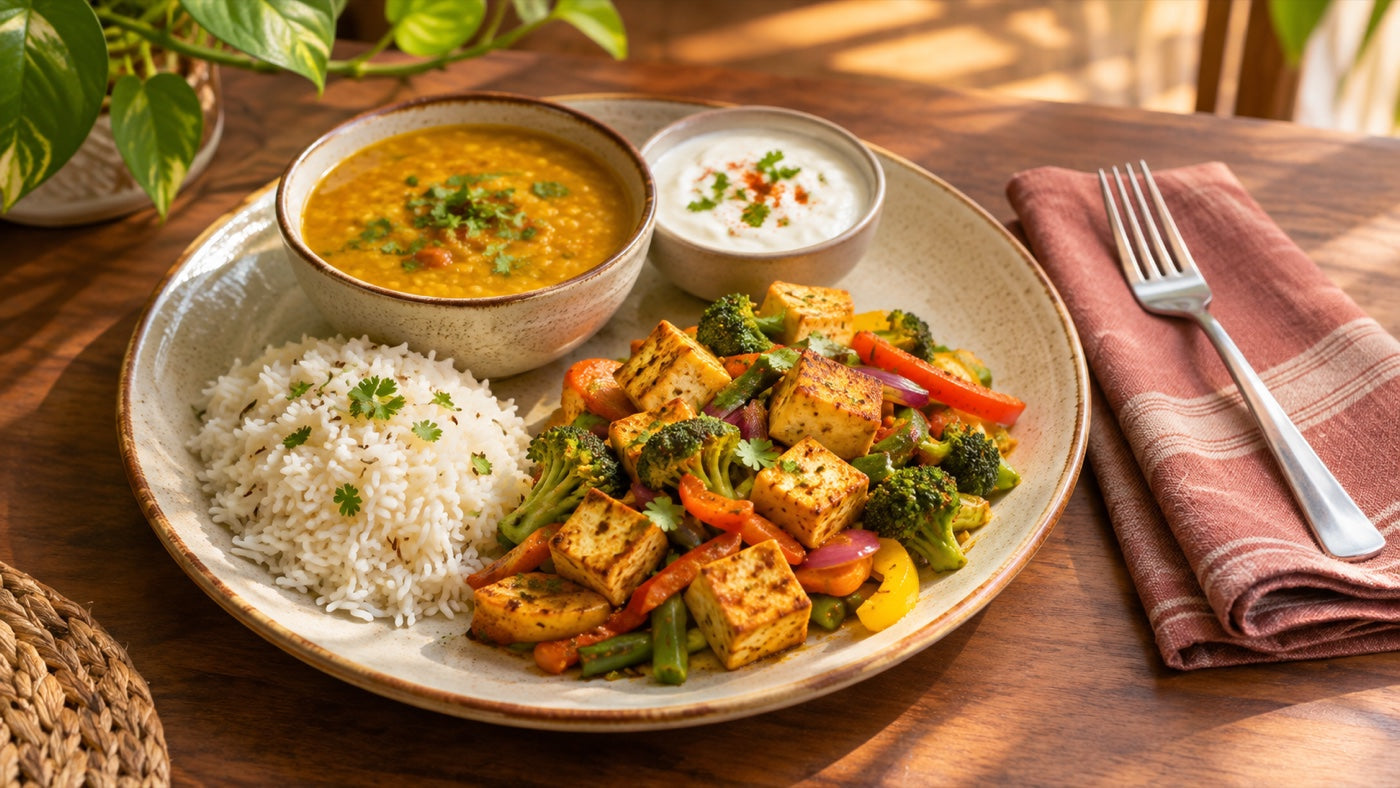
Food also gives meals structure, flavour and variety. A dal-and-rice lunch with vegetables is a different eating experience from a drink. Some people find a solid meal more satisfying, while others appreciate a lighter drink at a particular time. Appetite is a practical consideration, not a measure of discipline.
In Ohio State's discussion of protein powder and whole foods, the nutritional value beyond protein is a central consideration. That is a useful distinction: matching protein grams does not make two foods identical in their wider nutrition.
What a protein supplement does well
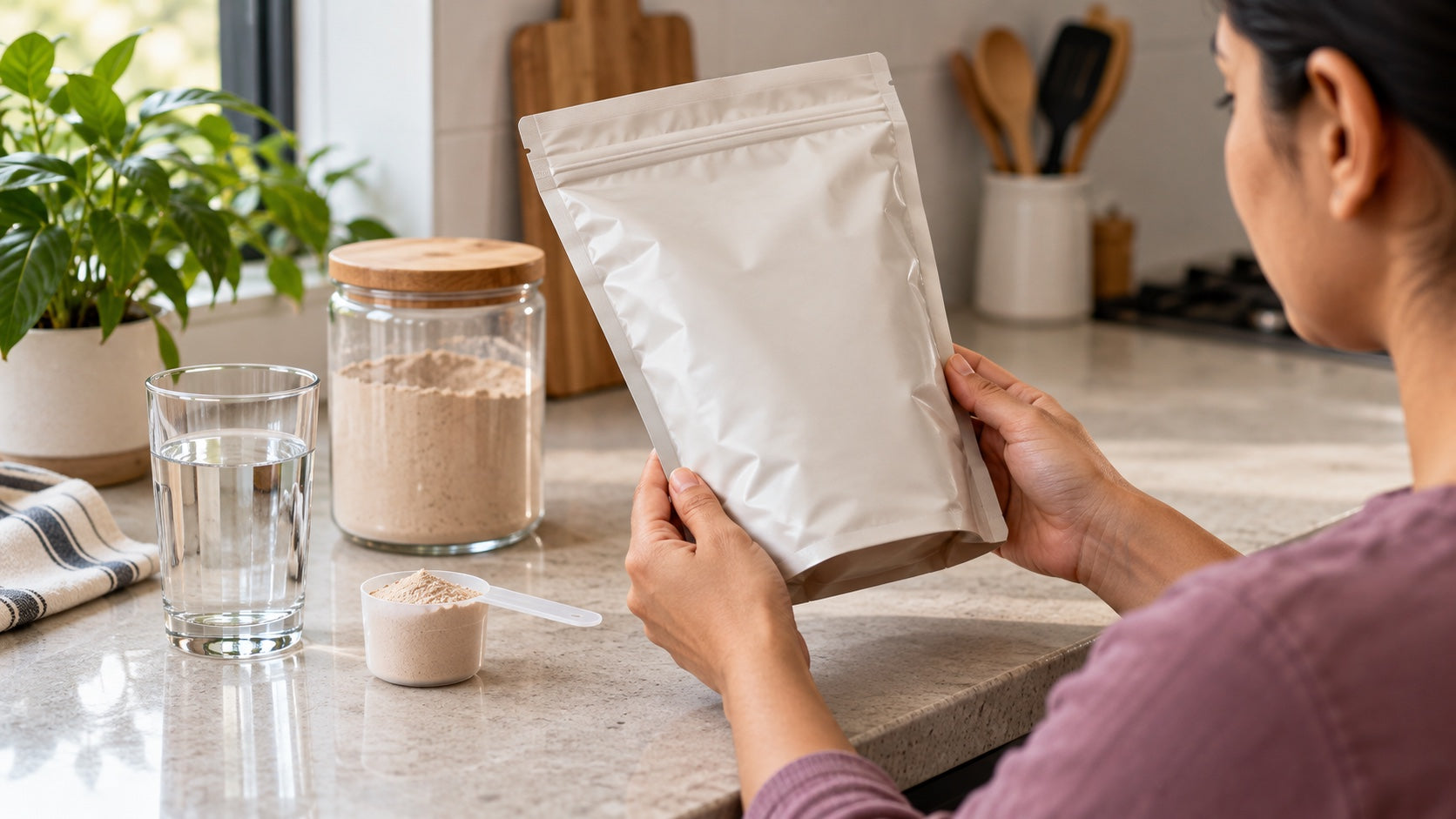
A powder gives you a concentrated, measurable protein serving with little preparation. You can keep a dry portion ready and prepare it according to the pack when needed. That can be useful when another cooked dish is impractical or a full meal would be too large for the moment.
You also know the intended serving contribution. Food recipes can be estimated well, but “one bowl” changes between kitchens. A measured product serving can make one part of the day easier to count, provided you also account for whatever you mix into it.
A powder is not automatically nutritionally superior to food. It is also not automatically poor quality because it has been processed. Assess the actual source, amount, ingredients and suitability. A whey protein and a collagen powder, for example, should not be treated as interchangeable simply because both come in tubs.
For more on amino acids and dietary fit, read our guide to protein quality.

Three situations, three sensible decisions
1. You can cook and your meals already work
Keep the routine that works. There is no need to replace a satisfying protein-containing meal with a shake just to make the diet look more athletic. You can still keep a suitable supplement as an occasional backup if that is useful.
Before buying, decide when you would use it. A product that solves a specific workday problem is more likely to earn its place than several products bought without a plan. Check whether a different food portion would be equally convenient and enjoyable.
2. Your meals are good, but the afternoon is difficult
This is where a convenient supplement can make sense. You may have a proper breakfast and lunch but struggle to arrange food between an early lunch and evening training. A suitable drink can provide protein without another cooking session.
One Science Nutrition Premium Whey can fit that role. Its Chocolate Charge serving contributes 25 g of protein in 32.5 g of powder, with 117 kcal. Plan that contribution alongside your usual meals rather than treating the shake as permission to ignore dinner.
3. Food portions feel too large
Some people find it difficult to eat another full portion of a protein food. A powder may offer a smaller-volume option at one eating occasion, but persistent poor appetite or unexplained weight change deserves professional assessment.
Do not reduce the whole diet to drinks because they are easy. Review total energy, fibre and variety, and use individual advice where necessary. The convenience should support eating well rather than gradually replace it.
Two convenient options for different preferences
One Science Nutrition Premium Whey combines whey concentrate and isolate. It can suit adults who consume dairy and want a convenient milk-derived protein serving. Flavours such as Chocolate Charge and Vanilla Swirl give you choices for an everyday drink without needing a complex recipe.
One Science Nutrition Premium Whey contains milk and soy. It is unsuitable for milk allergy, and it is not recommended for children, pregnancy or breastfeeding. Dietary fit comes before the appeal of the protein figure.
One Science Nutrition Fermented Yeast Protein provides 26 g of protein in its 36 g serving, with 144.57 kcal. Its protein comes from yeast produced through fermentation. That gives you a different source to consider when whey is not your preferred option.
Choose One Science Nutrition Fermented Yeast Protein according to the selected flavour's ingredients, allergens, directions and warnings. The fact that its source differs from whey does not establish suitability for every restricted diet. Both products are convenient protein options rather than complete replacements for a varied meal.
You do not need to use both. Choose One Science Nutrition Premium Whey if the whey blend fits your requirements, or explore One Science Nutrition Fermented Yeast Protein if a fermentation-derived protein is the more useful choice. Let preference and actual suitability guide the purchase.
Does food protein build muscle as well?
Protein foods and suitable supplements both supply amino acids used by the body. Muscle growth also requires a training stimulus and sufficient overall nutrition. A shake cannot guarantee results that the same person would never achieve with adequate food.
The ISSN protein-and-exercise position stand recognises that active people can meet needs through whole foods and that supplementation can offer practical help. It does not make owning a protein supplement a condition of effective training.
Compare the plan over weeks. Are you eating adequately, training progressively and recovering? Those questions matter more than whether every gram arrived on a plate or in a shaker. Use the format that makes a suitable routine easier to maintain.
Check cost without comparing unlike portions
A tub's price and a packet of dal's price are not directly comparable. One may represent many servings of concentrated powder, while the other needs cooking and includes other nutrients. Use actual portions and current prices rather than a headline price per kilogram.
For protein value, divide the price of the portion by the protein it provides. For meal value, also consider the rest of its nutrition, preparation time, storage and enjoyment. A powder can be convenient without being the cheapest complete meal, because that is not what it is designed to be.
Buy a supplement for the task it does well. Keep foods you enjoy, prepare enough meals and use One Science Nutrition Premium Whey or One Science Nutrition Fermented Yeast Protein when a suitable measured serving makes your day easier. Choose the format that helps you eat consistently on busy days.