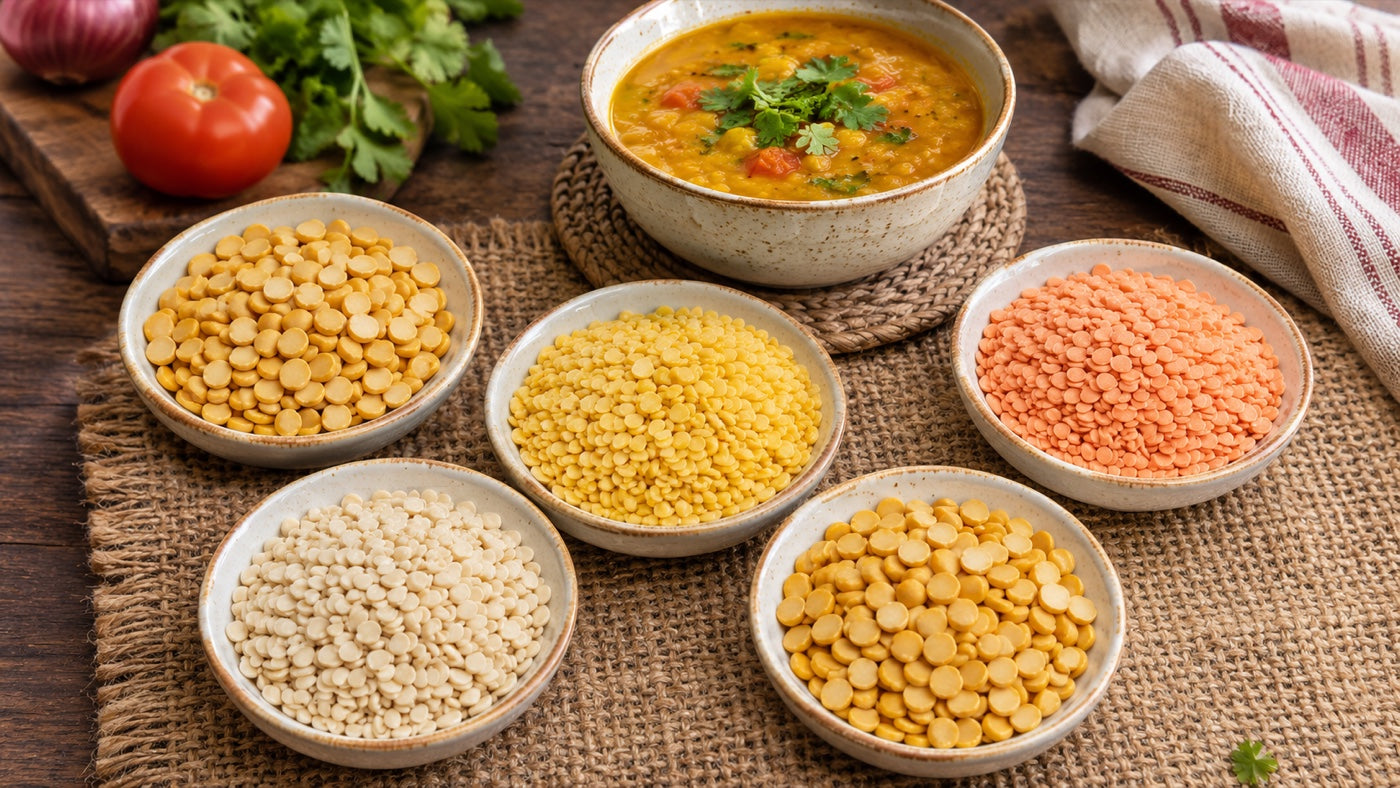
Protein in dal is easier to understand once you separate the dry ingredient from the bowl you eat. The five split dals compared here provide roughly 21.6 to 24.4 g of protein per 100 g dry in the Indian Food Composition Tables. Cooking adds water, so the amount in your katori depends on how much dry dal went into it.
You can keep dal at the centre of an Indian protein-rich diet and still use a convenient shake when you need one. One Science Nutrition Premium Whey and One Science Nutrition Pea Protein offer different options for the days when preparing another protein food is awkward. The choice doesn't have to mean replacing familiar meals you enjoy.
Protein in dal: five familiar Indian varieties
The comparison uses the raw, dry split-dal entries in the ICMR-NIN Indian Food Composition Tables 2017, prepared by T. Longvah and colleagues. These averages give you a reliable starting point for comparing the ingredients, while allowing for the natural variation between foods rather than treating every packet as identical.
| Dal |
Protein per 100 g dry |
Protein from a 30 g dry portion, approximately |
| Chana dal, split Bengal gram |
21.6 g |
6.5 g |
| Urad dal, split black gram |
23.1 g |
6.9 g |
| Moong dal, split green gram |
23.9 g |
7.2 g |
| Masoor dal, split lentil |
24.4 g |
7.3 g |
| Toor or arhar dal, split red gram |
21.7 g |
6.5 g |
The 30 g column shows what that dry amount contributes. It isn't a standard katori, because the water you add and the number of people sharing the pot change what each bowl contains. Rice, vegetables and tadka add their own nutrients when you turn the dal into a meal.
Masoor has the highest protein per 100 g dry among these five entries, but the difference becomes smaller in an ordinary portion. You can enjoy toor, moong or chana without feeling you've chosen the wrong dal. Having enough of a protein food at the meal matters more than swapping one familiar pulse for another by a small margin.
Why a cooked bowl gives a different answer
Think about a thick dal and a thinner dal made from the same pulse. They can fill the same bowl while containing different amounts of dal, because water changes the volume and weight without adding protein. That's why the bowl alone can't give you the answer.
A claim such as 'one bowl of dal has 24 g of protein' may have started with a dry-food chart. Around 24 g can describe 100 g of dry dal, while a cooked bowl may contain only part of that amount. Once you see the two portions separately, the apparent contradiction disappears.
You don't have to weigh every spoon for the rest of your life. Work out how much dry dal you normally put in the pot and how many portions it makes. After doing that with a familiar recipe, your usual bowl becomes a much more useful estimate than a number copied from an unrelated chart.
For more on amino acids and dietary fit, read our guide to protein quality.

A simple shared-pot calculation
Suppose a hypothetical pot starts with 100 g of dry toor dal. That dry ingredient contributes about 21.7 g of protein before accounting for cooking losses or other recipe ingredients.
If you divide the finished pot into four equal portions, each portion contains approximately 5.4 g of protein from the toor dal. The protein from onion, tomato or other additions would be counted separately if you needed a detailed total.
Now imagine adding more water to the same pot. If the same four people still share all of it equally, each person gets a similar estimated amount of pulse protein, just in a thinner dal. If you use it to serve twice as many bowls instead, each bowl contains a smaller share of the original ingredient.
Choosing between moong, masoor, chana, urad and toor
Taste, texture, price and the dish you're making deserve a place in the choice too. You may prefer moong in one preparation, chana when you want more texture and urad for another recipe. Rotating the dals you enjoy gives you variety without making dinner feel like a ranking exercise.
Match the food chart to what you actually bought. Whole green gram isn't the same entry as split moong dal, and kala chana isn't the same entry as chana dal. Using the matching ingredient is a small habit that makes your estimate much more useful.
Preparation changes comfort from person to person. Follow suitable soaking, cooking and food-storage practices, and adjust the meal with professional help if persistent digestive symptoms interfere with eating. No single dal is guaranteed to suit everyone's stomach.
Make the whole meal contribute
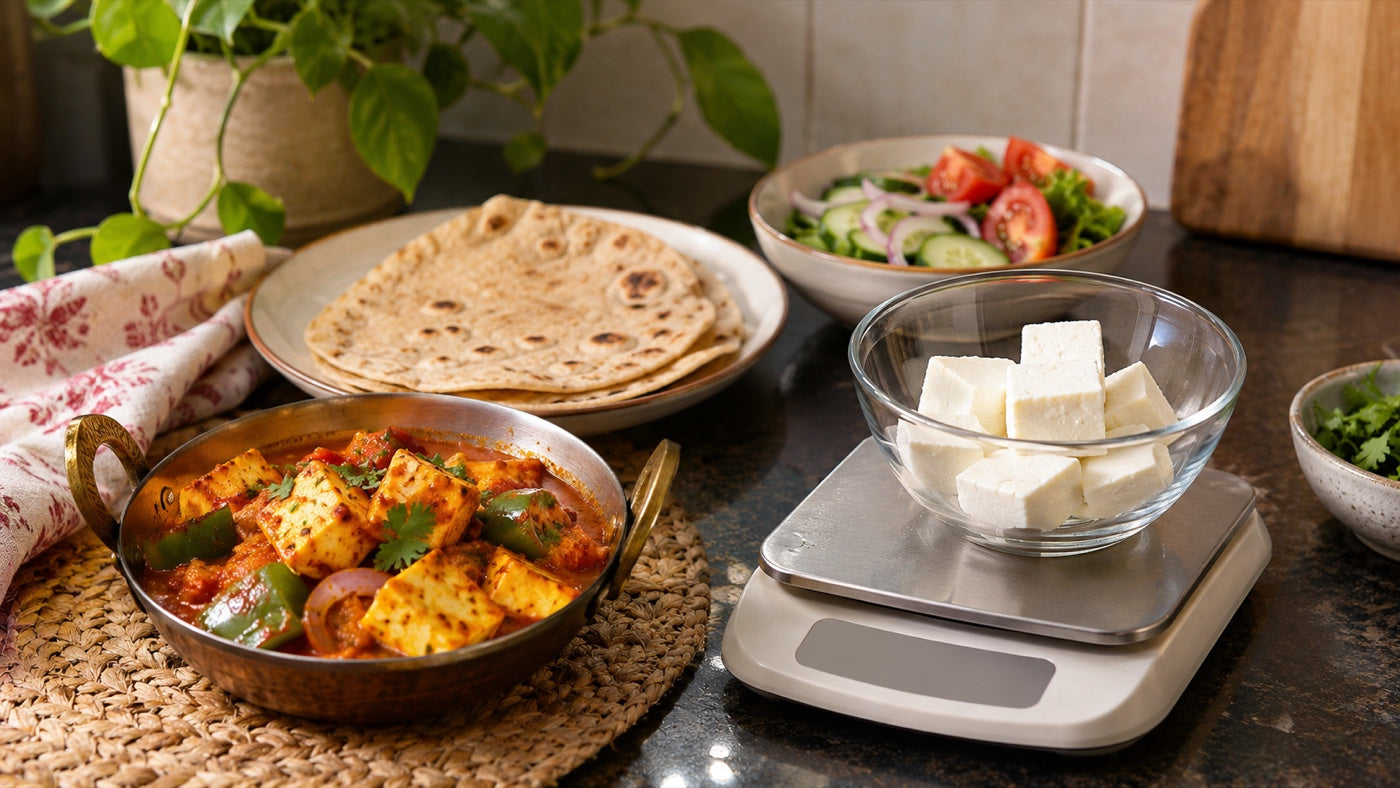
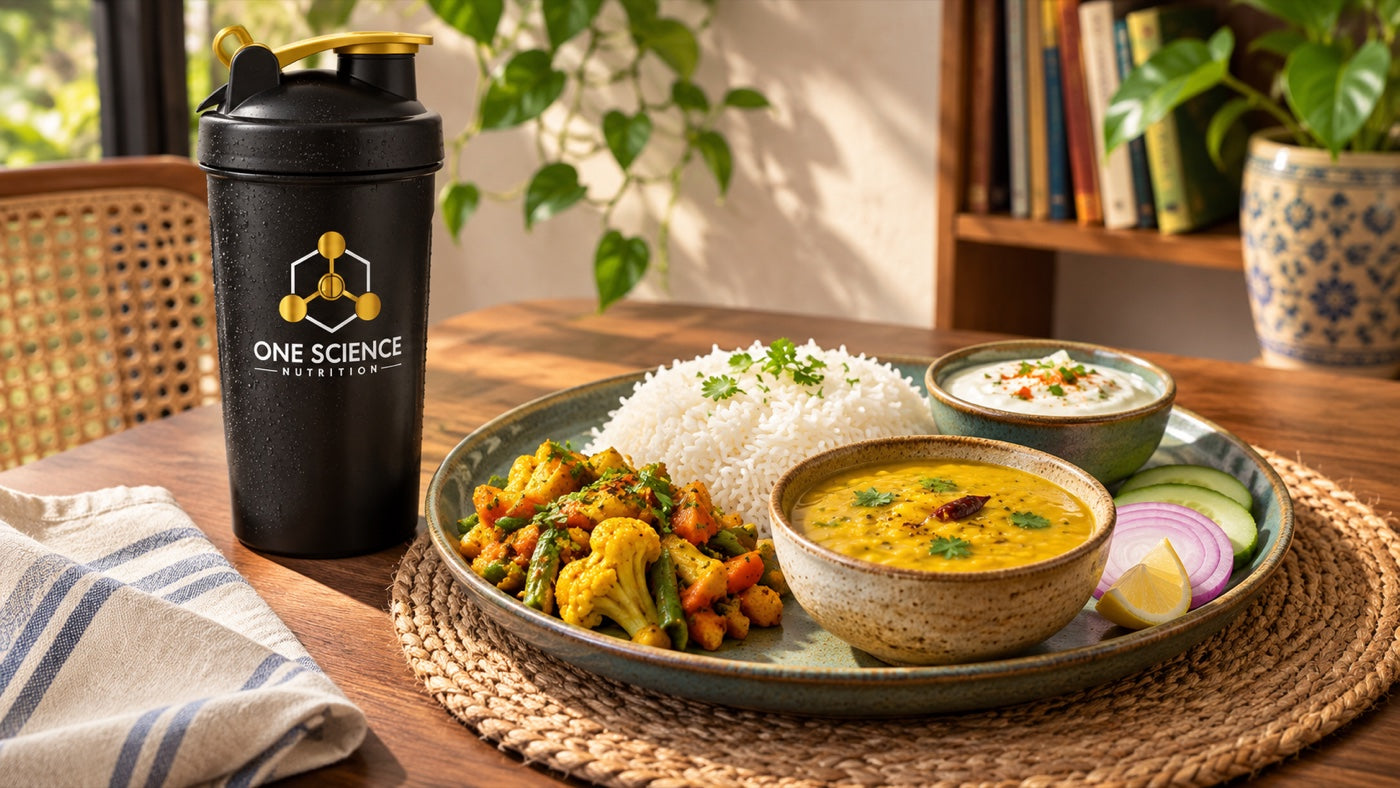
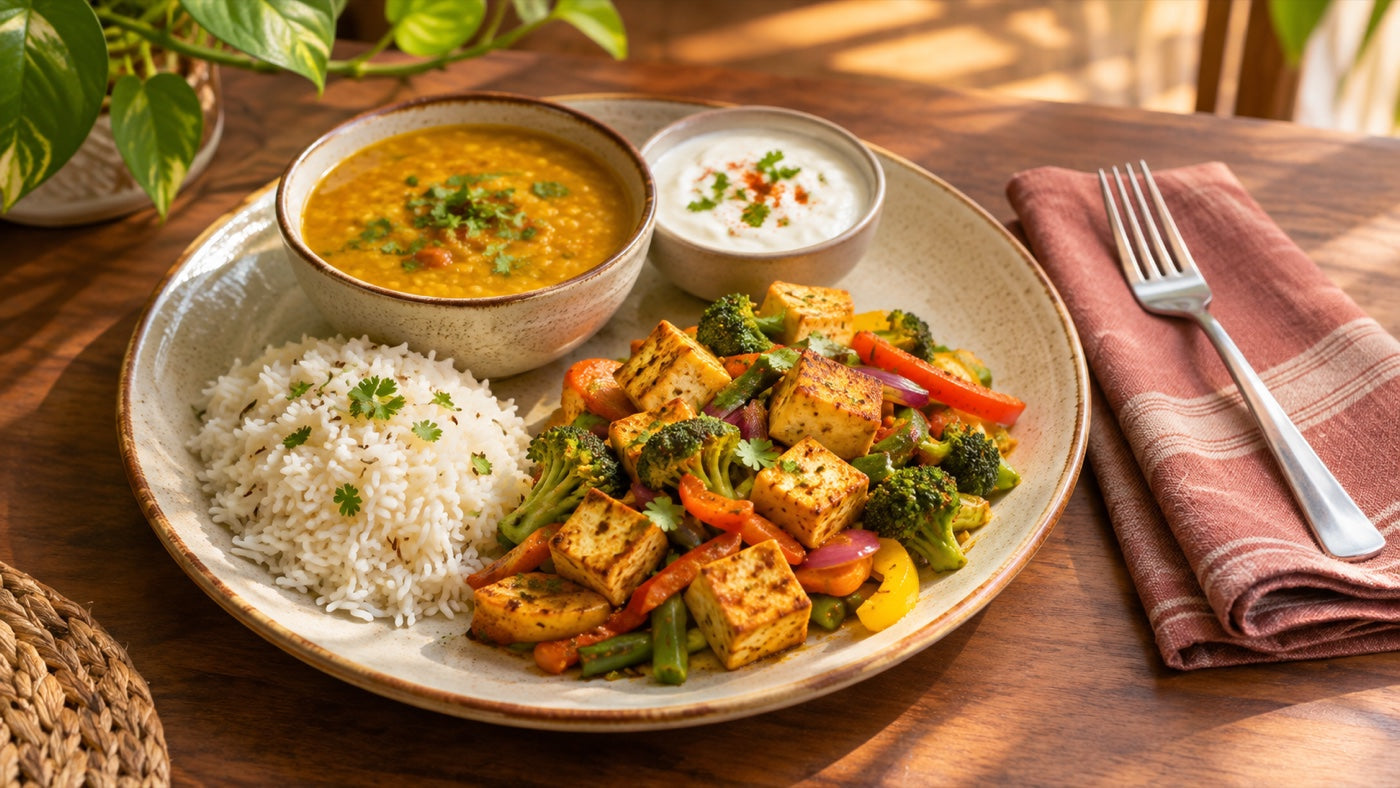
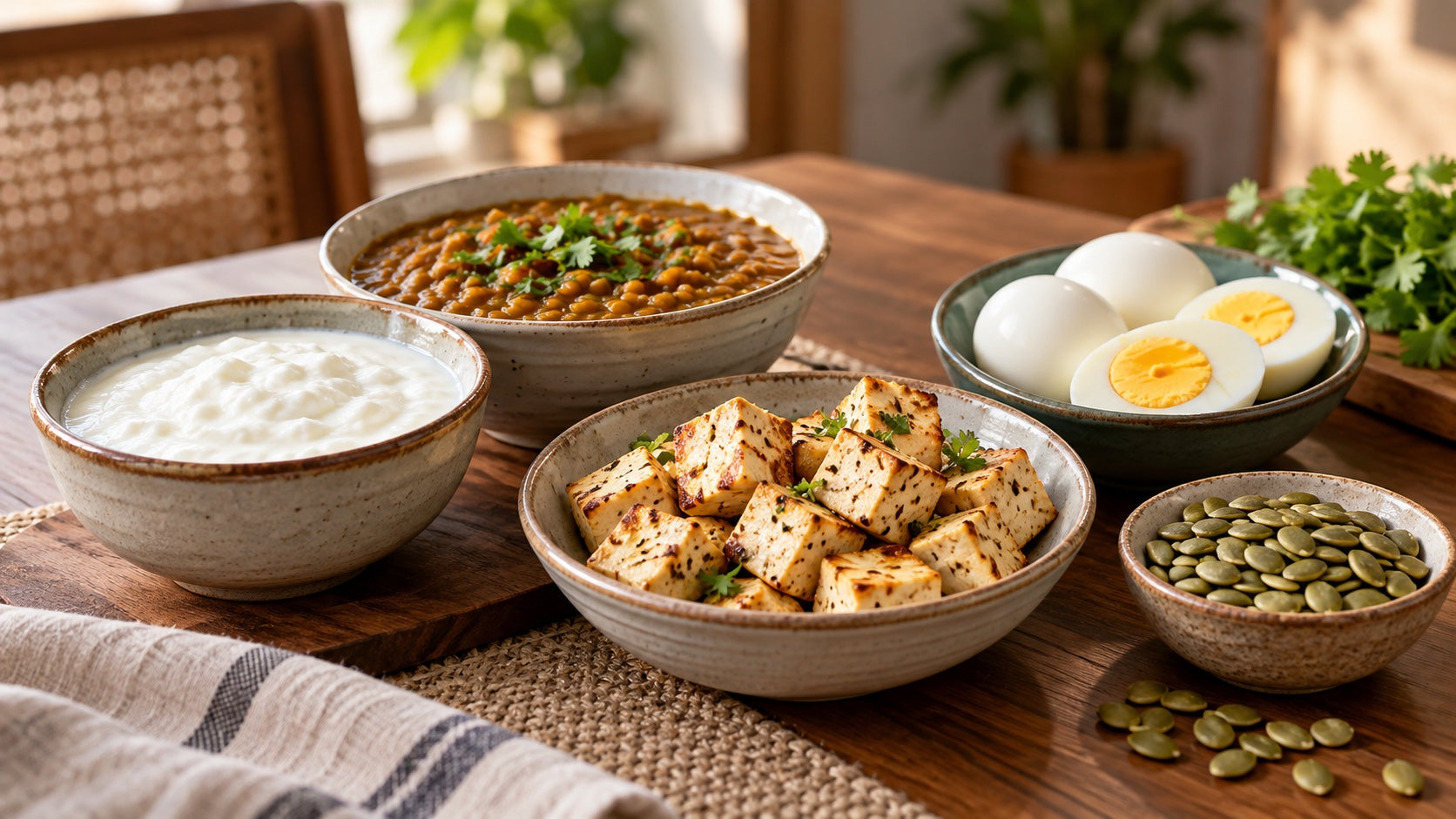
A dal meal can include rice or roti, vegetables and suitable foods such as curd, paneer, tofu or eggs. Choose the combination you enjoy and can comfortably eat. Looking at the whole plate gives you more ways to build a useful protein intake than asking one bowl to provide everything.
Cereals and pulses have different amino-acid proportions, so variety across the day helps bring those contributions together. You don't need a precise rice-to-dal ratio at every lunch. You do need enough food and a pattern that you can repeat beyond the days when you're carefully planning each meal.
If lunch is mostly rice with a little thin dal, you could make the pulse portion more substantial or include another suitable protein food. Making the same amount of dal larger with water won't have the same effect. Keep vegetables and enough overall food in the meal while adjusting the part you want to improve.
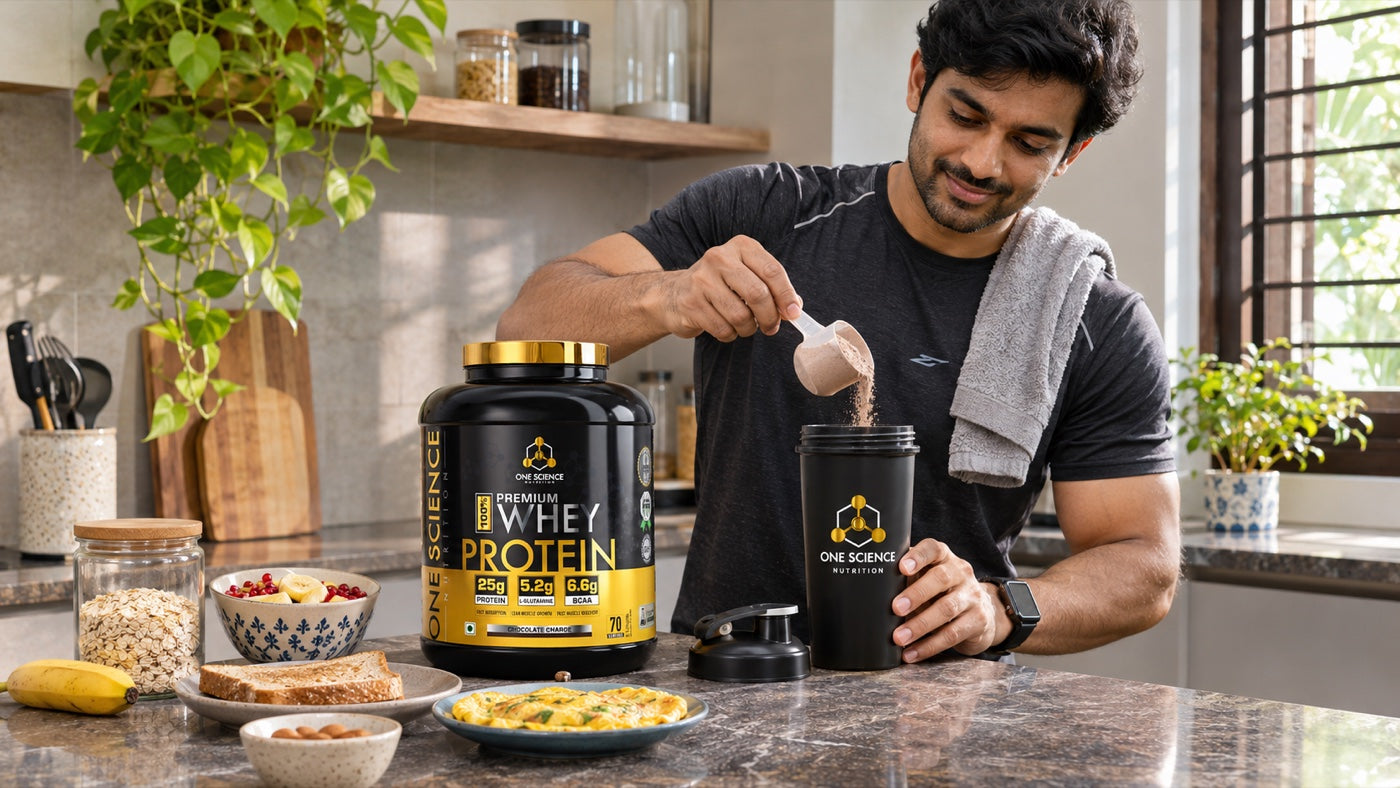
The Chocolate Charge serving of One Science Nutrition Premium Whey provides 25 g of protein in 32.5 g of powder, with 117 kcal, from whey concentrate and isolate. It gives you a convenient protein serving when making another cooked dish would be the difficult part of your day.
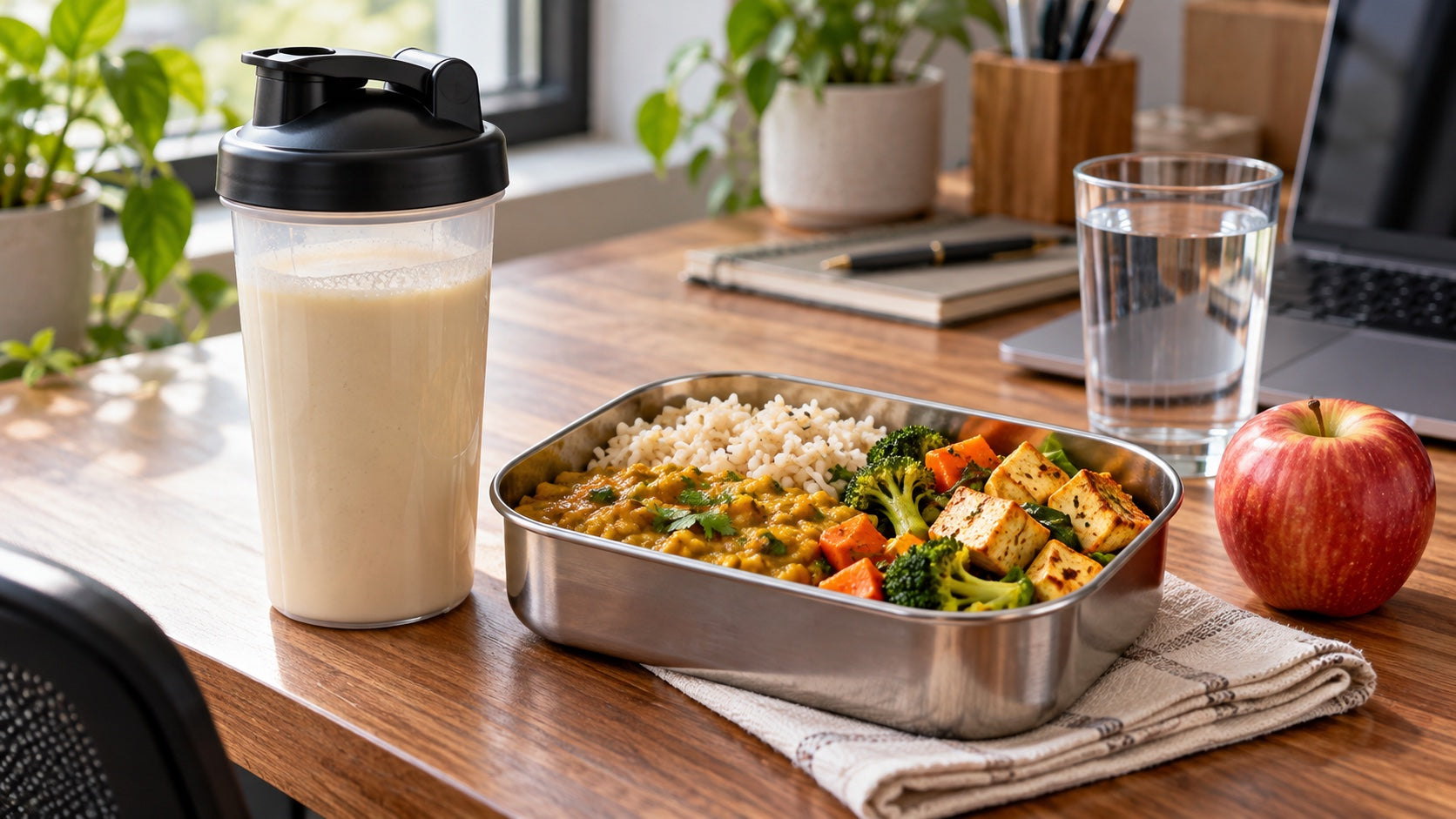
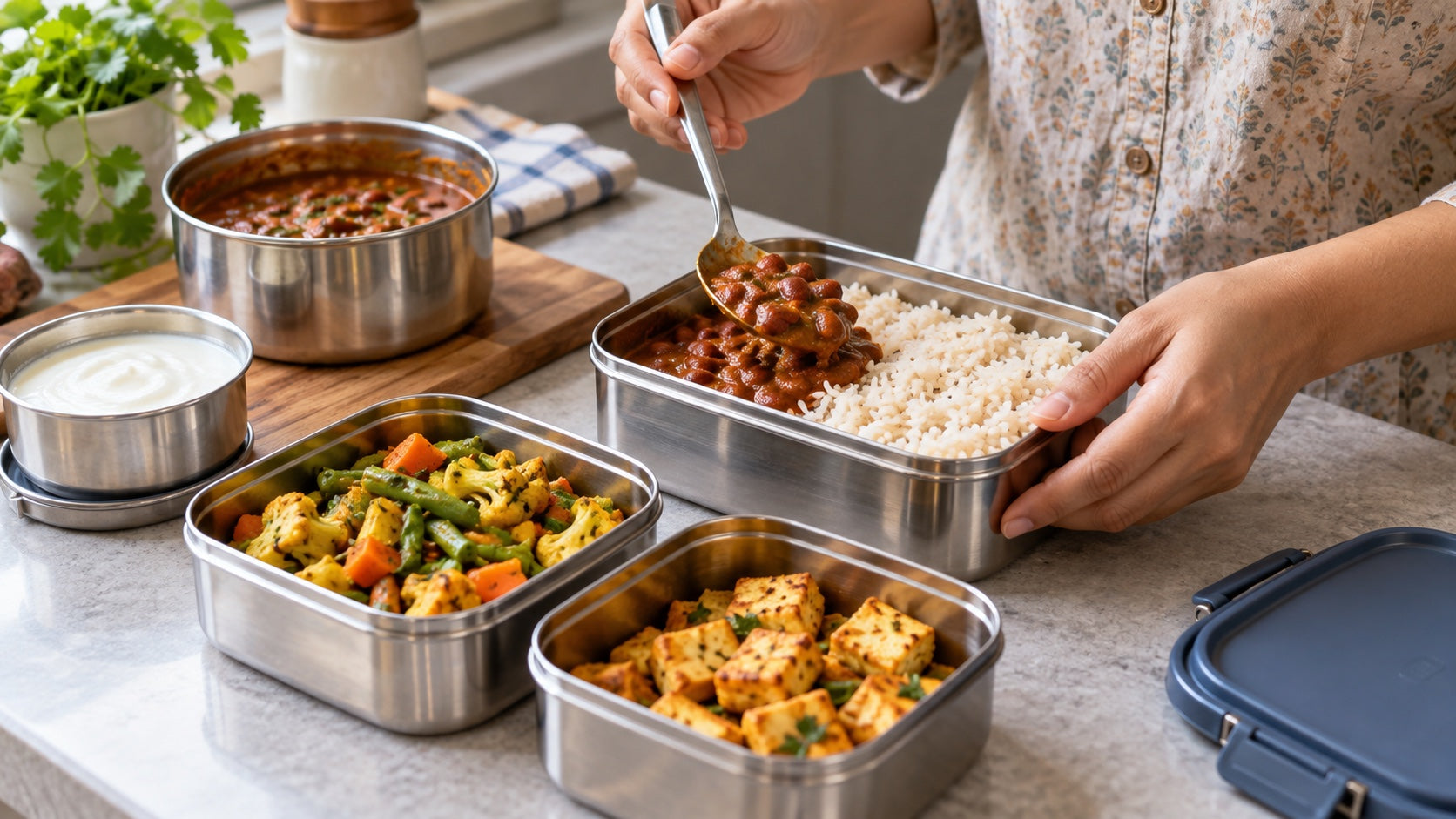
For example, you might carry dal and rice to work, then prefer a separate shake later instead of packing another food container. That lets One Science Nutrition Premium Whey help with the afternoon while lunch stays the meal you enjoy. The shake adds convenience without turning dal into a food you need to give up.
One Science Nutrition Premium Whey offers flavour choices including Chocolate Charge, Vanilla Swirl and Alphonso Mango. Choose one you would enjoy using regularly and follow its preparation directions. It contains milk and soy and is not recommended for children, pregnancy or breastfeeding. It is unsuitable for milk allergy.
One Science Nutrition Pea Protein gives you a pea-derived alternative, with 25 g of protein, 154.52 kcal and 5 g of fibre in its 40 g serving. If you'd prefer a plant-derived shake alongside your meals, it's another option to consider rather than having to choose whey.
You can use One Science Nutrition Pea Protein on the day when preparing or carrying another protein food is inconvenient, while keeping dal, beans, soy foods and the rest of your meals varied. Choose the shake for the practical help it offers, rather than expecting it to replace all the benefits of eating different foods.
Flavours include Rich Chocolate, Iced Coffee and Unflavoured. Check the full ingredients, allergens and warnings of the selected flavour before choosing One Science Nutrition Pea Protein. Even with a plant-derived shake, check for ingredients you need to avoid and choose a preparation you tolerate comfortably.
A useful number for your own kitchen
For your own kitchen, start with the dry amount, use the matching food value and divide by the share you eat. Keep that approach consistent for the recipe you normally cook. It gives you a number you can use without having to guess whether the chart meant raw dal, cooked dal or someone else's bowl.
Enjoy the dals you like and give them a proper place in your meals. If a convenient shake would help on busier days, explore One Science Nutrition Premium Whey for a whey blend or One Science Nutrition Pea Protein for a pea-derived option, choosing the product that suits how you eat.