Muscle protein synthesis is the process your body uses to make new muscle proteins. Resistance exercise encourages that process, and dietary protein supplies amino acids used to build those proteins. Repeating suitable training, eating and recovery habits over time is what makes the mechanism useful for muscle growth.
One Science Nutrition ISO Gold can provide a convenient whey serving within that plan. For suitable adult men who want protein and included creatine in one formula, One Science Nutrition Nitra Whey offers a different option. The two products solve different practical needs; neither replaces the training that gives your muscles a reason to adapt.
Your muscles are being renewed, even at rest
Muscle tissue is active. Its proteins are continually made and broken down, a process called turnover. Protein synthesis is the building side; protein breakdown is the other side. Both are normal parts of maintaining living tissue.
Breakdown is not simply a failure to prevent. It helps remove and replace proteins as tissues renew themselves. Trying to stop every moment of breakdown would misunderstand how the system works. What matters for growth is the accumulated balance and adaptation over time.
Think of repairing and extending a building while some worn material is removed. New material is needed, but the work also needs direction and energy. The comparison is simplified, yet it explains why drinking protein alone cannot dictate how much larger a muscle becomes.
What resistance training changes
Lifting, pushing and pulling against a suitable resistance create a stimulus. Muscle responds through processes involved in repair and adaptation. A sensible programme gradually develops the challenge while allowing enough recovery to keep training well.
You do not need to chase soreness as proof of muscle protein synthesis. An unfamiliar workout can make you sore without establishing that it was the most useful session. Equally, a productive training session may not leave you barely able to walk.
In their review of nutritional regulation of muscle protein synthesis, researchers Tyler Churchward-Venne, Nicholas Burd and Stuart Phillips describe how resistance exercise and amino acid availability work together. The practical lesson is to pair training with adequate nutrition rather than treating them as separate projects.
Our guide to protein and its role in the body explains how dietary protein supports more than muscle alone.

What protein contributes after you eat it
Digestion breaks food proteins into smaller components, including amino acids. After absorption, those amino acids become available for many tissues and functions. Muscle building is one destination, not the only one.
Nine amino acids are called essential because your diet must supply them. A useful muscle-building diet provides enough protein and a suitable balance of those essential amino acids. That can involve varied foods and, where convenient, a suitable supplement.
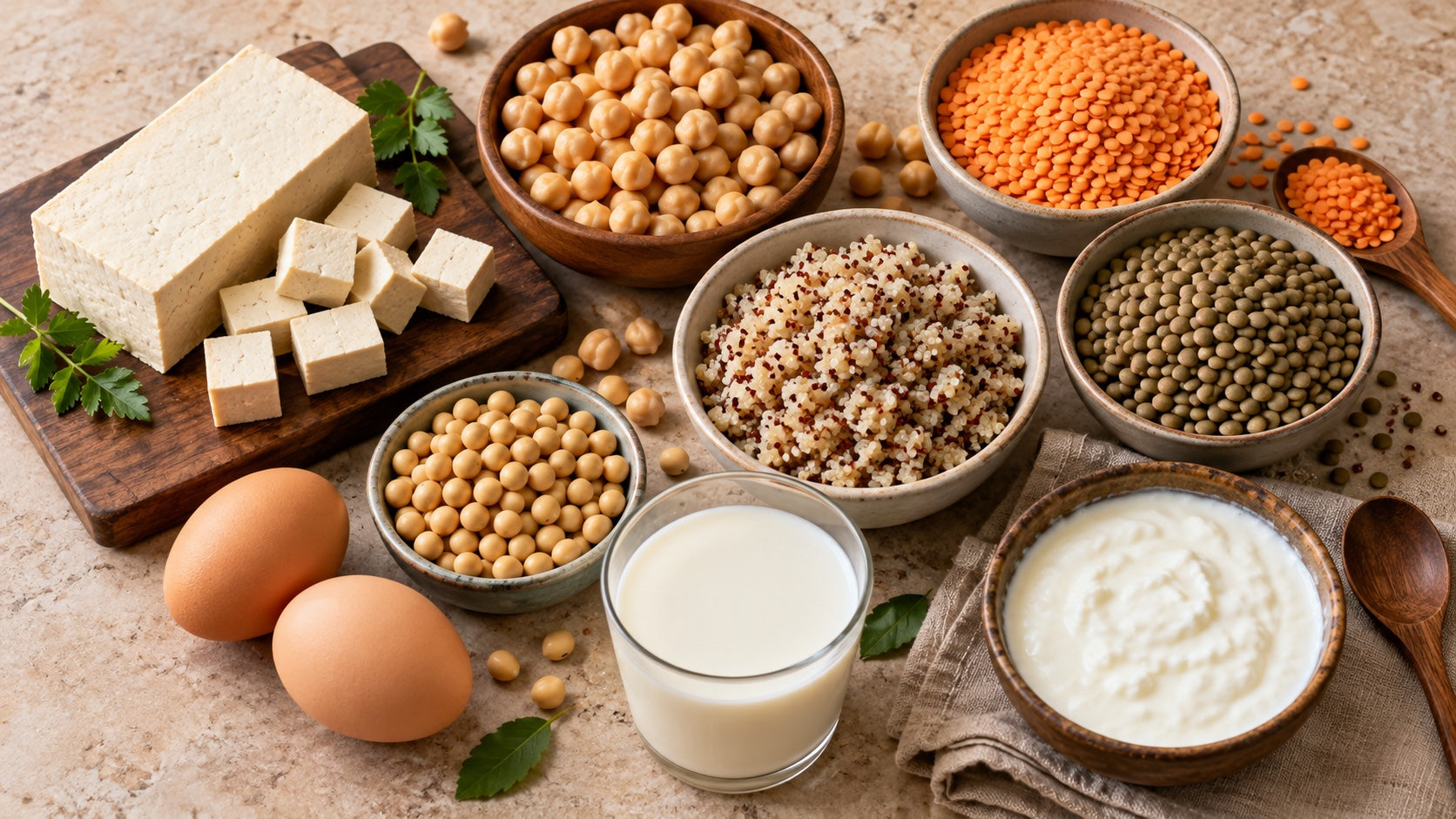
Whey is one protein source that provides all nine essential amino acids. Other foods also contribute. You do not need to dismiss dal, grains or plant foods because they differ in amino acid proportions. Build a varied diet and make the total amount appropriate for your needs.
Leucine starts part of the conversation, but it is not the whole meal
Leucine is an essential amino acid involved in signals that help regulate muscle protein synthesis. That signalling role has made it popular in supplement discussions. But signalling and building are not the same job.
The body still needs the other essential amino acids as building material. Adding leucine to a diet that is missing adequate overall protein does not automatically create a complete muscle-building plan. Nor does a bigger number on one amino acid claim establish better long-term growth.
For most people planning meals, it is more useful to choose adequate portions of suitable protein foods than to manage a separate amino acid calculation at every sitting. If supplements help, choose a clear formula with a role you understand.
Why a short study does not predict your transformation
Researchers can measure muscle protein synthesis over hours using specialised techniques. That helps explain responses to exercise and feeding. It is different from measuring how much muscle someone gains after months of training.
A higher short-term response does not, by itself, prove that a product will produce a particular percentage more muscle. The participants, diet, exercise, measurement period and comparison all matter. Results from one isolated ingredient are also not automatically results for a finished flavoured supplement.
For personal progress, track repeatable training performance and longer-term changes with appropriate methods. One strong workout, a temporary pump or a heavier scale reading the next morning cannot tell you how much new muscle protein you have retained.
One Science Nutrition ISO Gold combines whey protein isolate and hydrolysed whey protein. Its Chocolate 32.5 g serving supplies 27 g of protein, with 113 kcal, 0.5 g carbohydrate and 0.3 g fat. It offers a concentrated protein contribution when another food portion is inconvenient.
That can be useful after an evening workout when you need a convenient serving before a later meal, or during a workday when meal preparation is awkward. Count it within the day's intake. You do not need an extra serving at every possible training-related moment.
Choose One Science Nutrition ISO Gold if that formula, flavour and serving fit your diet. Its low fat and carbohydrate amounts describe the serving; they do not make carbohydrate or fat unnecessary in the rest of your meals. Training and recovery require enough overall food.
One Science Nutrition ISO Gold is milk-derived and unsuitable for milk allergy. It is not recommended for children, pregnancy or breastfeeding. Hydrolysed whey in the formula does not establish that it is safe for milk allergy or guarantee comfortable digestion.
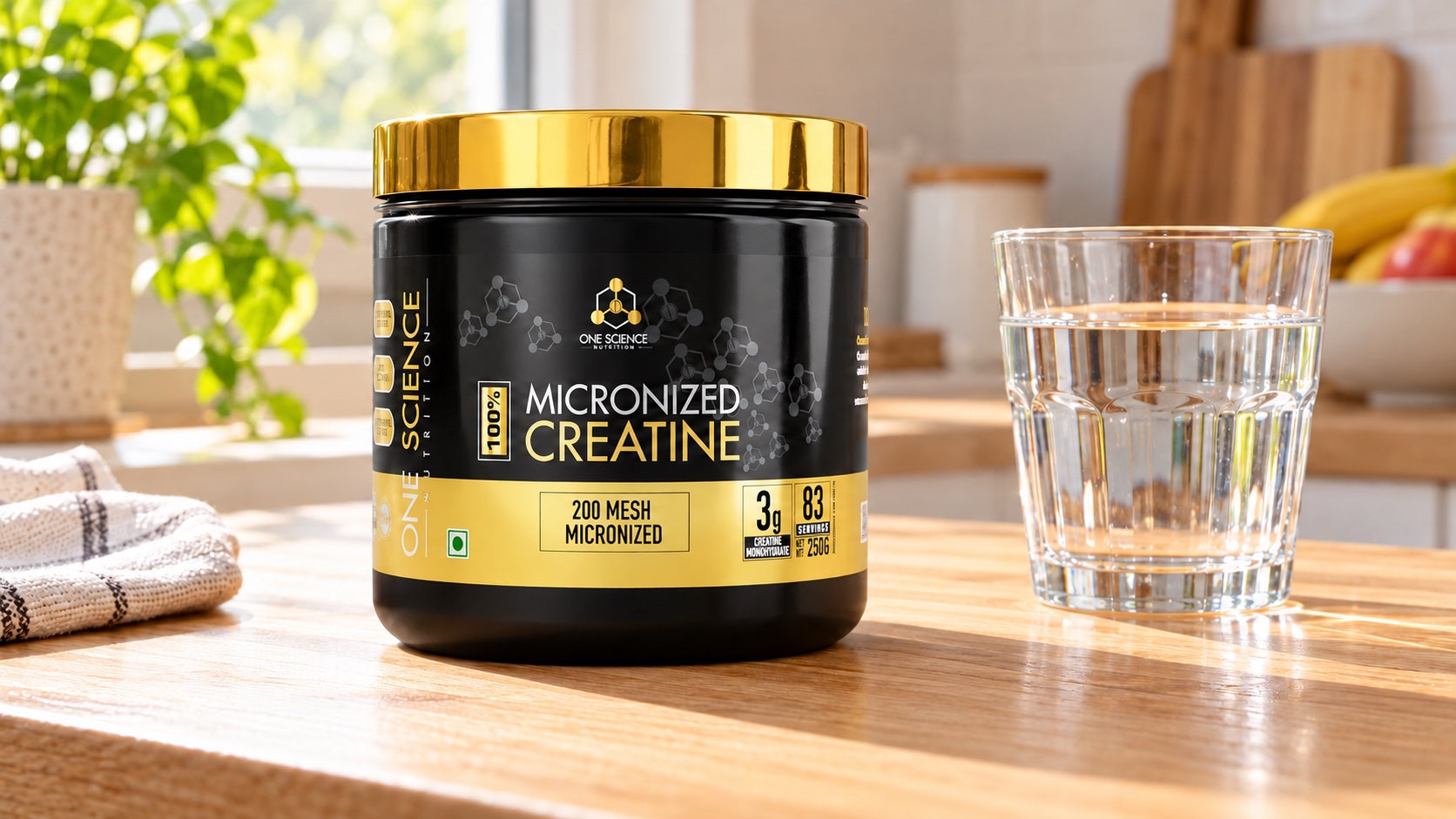
One Science Nutrition Nitra Whey combines whey concentrate and isolate with creatine monohydrate and other ingredients. Its Chocolate Brownie 34 g serving provides 27 g of protein and 3 g of creatine monohydrate. The included creatine matters when deciding whether you need a separate creatine product.
Protein supplies amino acids; creatine has a different role in rapid energy regeneration during demanding exercise. Having both in One Science Nutrition Nitra Whey can simplify a routine for someone who already wants both contributions. It does not mean creatine counts towards a dietary protein target.
One Science Nutrition Nitra Whey also contains maca, tribulus, L-aspartic acid, boron and an enzyme blend. Review the complete ingredients before choosing it, especially if you use other supplements.
One Science Nutrition Nitra Whey contains milk and soy. It is not recommended for children or women. It is an option only for suitable adult men within those restrictions. Follow the pack's one-serving directions and account for the included creatine before considering anything additional.
Give the process a workable routine
You cannot make muscle protein synthesis run at its highest rate every minute of the day. Plan meals you can eat comfortably, train consistently and allow recovery. Avoid turning normal gaps between meals into a fear that your muscles are disappearing.
If progress stalls, review the training stimulus, food quantity, sleep and consistency before multiplying products. A qualified coach or dietitian can help identify the actual issue. Supplements work best when they support a clear plan rather than compensate for an unclear one.
Explore One Science Nutrition ISO Gold for a concentrated whey serving, or consider One Science Nutrition Nitra Whey if its combined formula and adult-men-only restrictions fit your requirements. Choose one for its practical role and keep building the habits that give the protein somewhere useful to go.