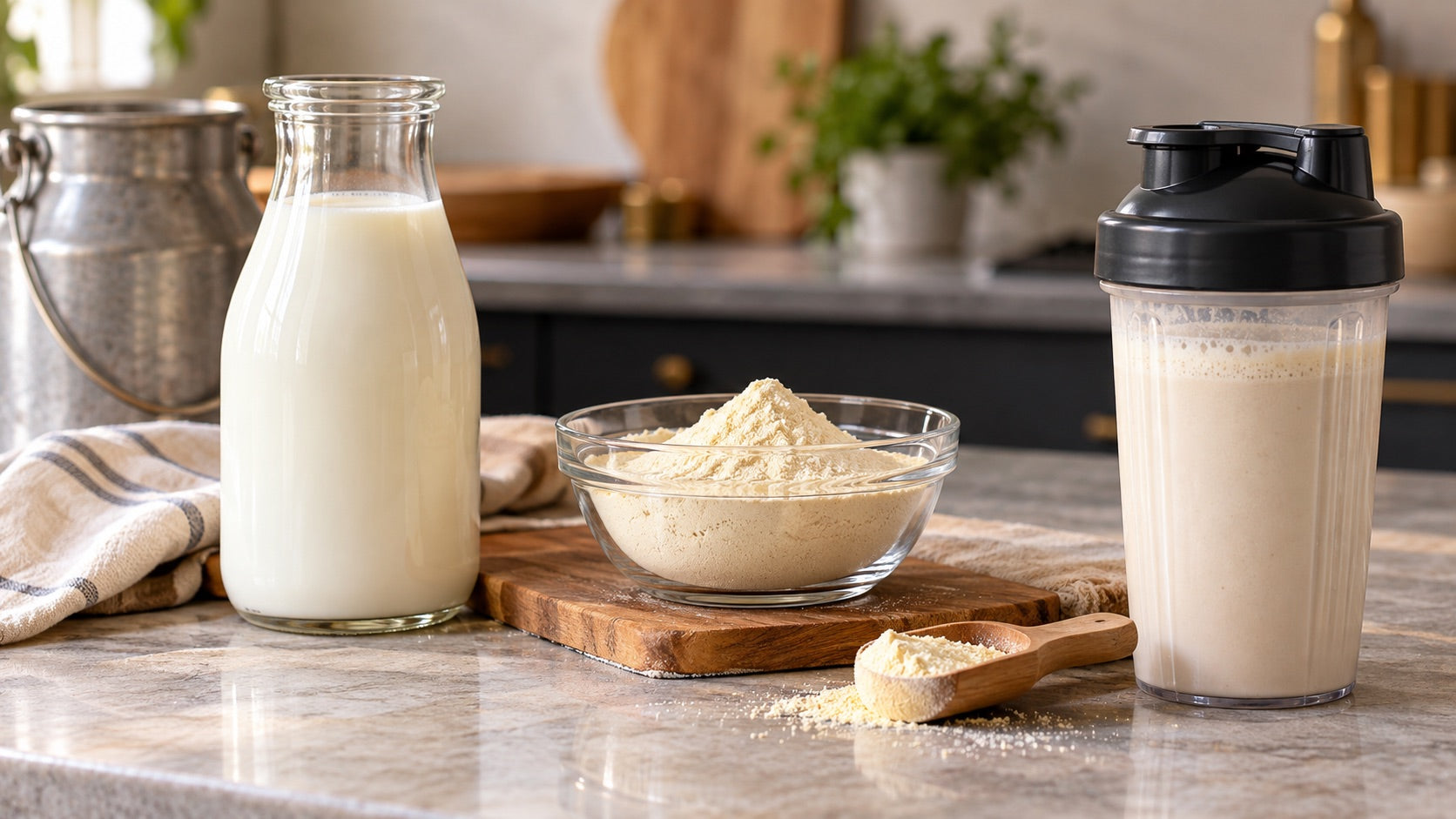
Protein is a nutrient made from amino acids. Your body uses those amino acids to build and repair tissues and make proteins that keep cells working. You get dietary protein from foods such as dal, beans, milk, eggs, fish and soy, as well as protein powders. It matters whether you train or spend most of your day at a desk. MedlinePlus explains the dietary basics.
When meals leave a protein gap, a convenient drink can help you close it. One Science Nutrition Premium Wheyoffers a measured dairy-protein serving, while One Science Nutrition Pea Protein gives you a different protein source. Choose the source that fits your meals, taste preferences and dietary needs.
What is protein made of?
Proteins are chains of smaller units called amino acids. The sequence and shape of each chain help determine its job. That is why a protein involved in muscle movement does something different from an antibody, even though both are built from amino acids. MedlinePlus Genetics describes how protein structure relates to function.
In everyday nutrition, “protein” means the nutrient in food. Inside the body, there are many different proteins doing specific jobs. Those two uses of the word are related, but they are not interchangeable.
Eating paneer does not send ready made muscle proteins straight into your biceps. Digestion breaks dietary protein into smaller parts, which the body can then use.
What does protein do for your body?
Protein contributes to more than muscle. Some proteins provide structure, some carry substances, and others help cells communicate or perform chemical reactions.
| Function |
A simple example |
| Structure and movement |
Proteins help support cells and allow muscles to contract |
| Chemical reactions |
Enzymes help reactions happen in cells |
| Defence |
Antibodies recognise particular foreign particles |
| Communication |
Certain hormones carry messages between tissues |
| Transport and storage |
Proteins help move or store substances the body needs |
These examples show why protein matters beyond the gym. Meet your needs consistently through an overall diet that suits you.
How does your body use the protein you eat?
Your digestive system breaks food protein into amino acids. The small intestine absorbs digested nutrients, and the bloodstream carries them onward. The body uses these nutrients for growth, repair and other work. NIDDK explains the digestion and absorption process.
That process is one reason the protein value on a food label matters more than the size of the food alone. A 100 g portion of a food is not necessarily 100 g of protein. Most foods contain a mixture of nutrients and water.
The same rule applies to protein powder. The Chocolate Charge label for One Science Nutrition Premium Whey lists 25 g protein in 32.5 g powder. One Science Nutrition Pea Protein provides 25 g protein in 40 g powder. Both servings supply 25 g protein, with different amounts of powder to measure.
What are essential amino acids?
Essential amino acids must come from the diet because your body cannot make them. Other amino acids can be produced within the body. “Essential” describes that nutritional requirement; it does not mean the remaining amino acids are unimportant. MedlinePlus explains the distinction.
For meal planning, think beyond one fashionable ingredient. Include a variety of protein containing foods that fit your dietary preferences, appetite and budget. Choose meals you enjoy and can prepare regularly.
What are protein foods you can use every day?
Animal and plant foods can contribute to your intake. Common choices include milk products, eggs, fish, meat, beans, lentils and soy foods. You do not have to eat animal products to obtain dietary protein. MedlinePlus lists both plant and animal sources.
For an Indian household, useful meal planning options might include these:
| Meal |
Protein containing food to consider |
| Breakfast |
Curd, eggs, milk or a besan based dish |
| Lunch |
Dal, rajma, chana, tofu, paneer, fish or chicken |
| Snack |
Curd, milk, roasted chana or another suitable option |
| Dinner |
A deliberate portion of pulses, soy, dairy, eggs, fish or meat |
These are meal ideas. Their protein content depends on the recipe and portion. A thin bowl of dal can contain less dal than a thick one, so the dish name alone is not enough for tracking.
If you want to check your intake, write down what you actually eat. Include serving sizes. Then use the relevant package label or a reliable food database instead of guessing from the dish name.
How much protein do you need?
Your daily amount depends on factors such as body size, activity and life stage. A general adult reference and a sports nutrition target answer different questions. Cleveland Clinic explains why protein needs vary.
Avoid copying a friend's number simply because you train together. A smaller beginner, a larger experienced lifter and someone with a medical nutrition plan may need different approaches.
Start by identifying your goal. Then choose an appropriate guideline and translate it into meals you can repeat. Someone managing a health condition should use advice tailored to that condition rather than a generic gym target.
What is protein powder, and how does it fit your diet?
Protein is the nutrient. Protein powder is one way to consume it.
For example, suppose your planned intake is 100 g and your usual meals provide 80 g. The planning question is how to close a 20 g gap. You could adjust your meals or use a supplement that fits your diet. Those numbers are an illustration, not a prescribed target.
Choose a One Science Nutrition protein source for your routine
One Science Nutrition Premium Whey: a milk-based protein drink
One Science Nutrition combines European formulation expertise with options for Indian fitness routines. Choose One Science Nutrition Premium Whey when dairy fits your diet and you want a convenient protein drink. It combines whey concentrate and isolate, with 25 g protein and 117 kcal in a 32.5 g Chocolate Charge serving. Alpha-amylase and papain are also included in the formula.
Flavours include Chocolate Charge, Cafe Mocha and Vanilla Swirl. For Chocolate Charge, mix one 32.5 g serving with 150 to 200 ml liquid, once per day. Water adds no calories; milk adds its own protein and energy. The formula contains milk and soy. The product is not recommended for children or pregnant or breastfeeding women.
One Science Nutrition Pea Protein: a different source, with its own serving
One Science Nutrition Pea Protein uses pea protein isolate and provides 25 g protein, 5 g fibre and 154.52 kcal per 40 g serving. It gives you a plant-protein option in flavours including Iced Coffee and Rich Chocolate.
Choose One Science Nutrition Pea Protein when you prefer a pea-based shake. Measure its 40 g serving rather than borrowing the scoop size from another powder. If you have an allergy, check the selected flavour's complete ingredient and allergen information before buying.
Choose a flavour of One Science Nutrition Premium Whey for a dairy-based option, or explore One Science Nutrition Pea Protein for a pea-based option. Count the serving towards your daily protein intake alongside your meals.