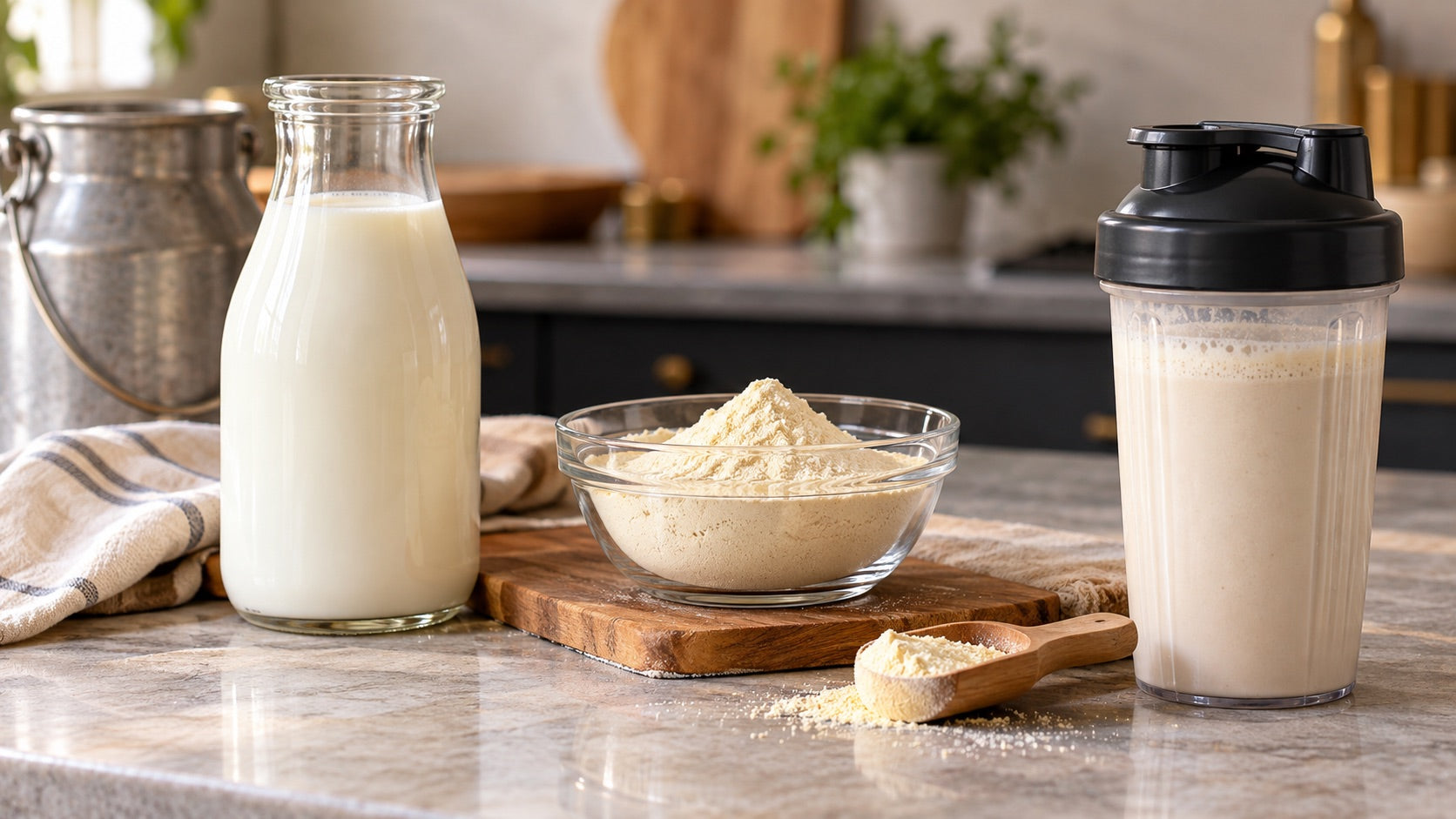
Protein can make a weight-loss plan easier to follow by helping you feel satisfied and supporting muscle maintenance. It still counts towards your calories. Losing weight depends on your overall eating pattern and energy balance, not on adding a protein shake to an unchanged diet.
For a convenient protein top-up, One Science Nutrition Premium Whey provides 25 g of protein and 117 kcal per 32.5 g serving in Chocolate Charge. Those numbers make it easier to plan a shake around your meals. They do not turn it into a fat burner.
The useful question is simple: where will the protein fit, and what else goes into the glass?
Why protein can help you feel full
A meal that leaves you hungry an hour later is hard to repeat. Protein can help with that, although appetite varies between people and between meals.
A 2020 systematic review of protein and appetite found improvements in short-term fullness and hunger measures after higher-protein meals. Its longer-term findings were less clear. Think of protein as one useful part of a satisfying meal, alongside fibre-rich foods and a portion that suits you.
In an Indian kitchen, that might mean adding curd to breakfast, making dal a proper part of lunch, or including tofu, paneer, eggs, fish or chicken at dinner according to your food preferences. You can keep rice and roti. A protein-rich diet does not require removing every carbohydrate.
Convenience matters too. If a busy afternoon repeatedly leaves you choosing whatever snack is nearest, a planned serving of One Science Nutrition Premium Whey can make your protein intake easier to organise. Pair that decision with the rest of the day's food, rather than treating the shake as an extra reward for eating less.
Weight loss and muscle maintenance are different goals
The scale measures your total weight. It cannot tell you exactly how much fat or muscle has changed.
During a calorie deficit, adequate protein and resistance training help support muscle maintenance. That is one reason protein deserves attention when you are trying to change body composition. The objective is to lose weight while keeping a useful training routine and eating enough to function well.
The International Society of Sports Nutrition's protein position stand discusses protein needs in healthy exercising adults. Your own target should reflect your activity, body size, health and the size of your calorie deficit. A generic scoop count cannot replace that assessment.
If you are losing strength, feeling drained or cutting out more foods every week, review the whole plan with a qualified dietitian. More powder may not solve the problem.
Does protein burn fat or boost metabolism?
Your body uses energy to digest and process food, including protein. That does not make any individual protein food a shortcut to weight loss.
The NIDDK explanation of factors affecting weight puts food, activity, sleep, medicines and health conditions in context. Calories from drinks and snacks still contribute to your intake.
For example, mixing a protein serving with water gives you the powder's calories. Adding milk, oats, banana and nut butter adds their calories too. That larger shake may be useful for someone struggling to eat enough. It may be a poor fit for someone trying to reduce their intake while leaving every other meal unchanged.
No protein powder selectively burns belly fat. Choose a product for its nutrition and practicality, then make the daily plan work.
How to add protein without overlooking calories
Start with the meal or snack that needs improvement. Give the change a specific job.
| Everyday situation |
A practical change |
What to account for |
| Breakfast is usually tea and biscuits |
Add a protein food such as curd, eggs or tofu |
The full meal, including spreads and cooking fat |
| Lunch contains rice and vegetables but little protein |
Include dal, beans or another protein source |
Actual cooked portions and the recipe |
| An afternoon snack regularly leaves you hungry |
Plan a protein-containing snack or a suitable shake |
Whether it replaces the snack or is added on top |
| You want a shake after training |
Use a serving that fits your protein gap |
Powder, mixer and every extra ingredient |
Here is a hypothetical comparison. Suppose your usual snack provides 250 kcal. Replacing it with a 117 kcal serving of One Science Nutrition Premium Whey mixed with water would reduce that snack's energy by 133 kcal. Adding the same shake while keeping the snack would increase your intake by 117 kcal.
The decision depends on hunger, your overall diet and whether the replacement is realistic for you. A shake is not a complete substitute for a varied meal.
One Science Nutrition Premium Whey or One Science Nutrition ISO Gold?
Both can help you add a measured amount of protein. Compare what the selected serving actually contributes.
These figures describe the named flavours, before adding milk or other ingredients. Check the nutrition for the flavour you buy.
One Science Nutrition Premium Whey combines whey concentrate and isolate. Choose it when you want a whey blend with a clear protein contribution that you can fit around ordinary meals. Chocolate Charge is one option if a chocolate shake suits your routine.
One Science Nutrition ISO Gold lists whey isolate and hydrolysate. Its Chocolate serving provides slightly more protein and less fat and carbohydrate than the serving above. That may suit someone comparing those specific nutrients, but the 4 kcal difference does not establish better weight-loss results.
Both formulas include alpha-amylase and papain. That ingredient detail does not promise a particular digestive experience. Whey is milk-derived; neither product is suitable for a milk allergy. One Science Nutrition Premium Whey also declares soy. Their directions use one daily serving, and the selected labels exclude children and pregnant or breastfeeding women. Check suitability before use if you have a medical condition or take medicines.
Common questions about protein for weight loss
Do I need whey protein to lose weight?
No. You can get protein from food. Whey is useful when convenience helps you meet a planned protein intake, especially on days when meals are difficult to organise. It does not create a calorie deficit on its own.
Is isolate always the best protein for weight loss?
No single protein type guarantees better fat loss. Compare serving protein, calories, ingredients, allergens and the complete shake. One Science Nutrition ISO Gold offers a different formula from One Science Nutrition Premium Whey, rather than an automatic weight-loss advantage.
Should I drink a protein shake instead of dinner?
A protein shake alone does not provide the variety of a balanced dinner. If you need a meal-replacement plan, work with a qualified dietitian rather than building it around a protein supplement.
Can I use protein on days I do not train?
Yes, your body still needs dietary protein. Whether you need a supplement depends on the food you eat and the product's directions, not simply on whether you visited the gym.
Choose the shake for the gap you actually have. Explore One Science Nutrition Premium Whey for a concentrate-and-isolate blend, or compare One Science Nutrition ISO Gold when its serving nutrition fits your preferences.