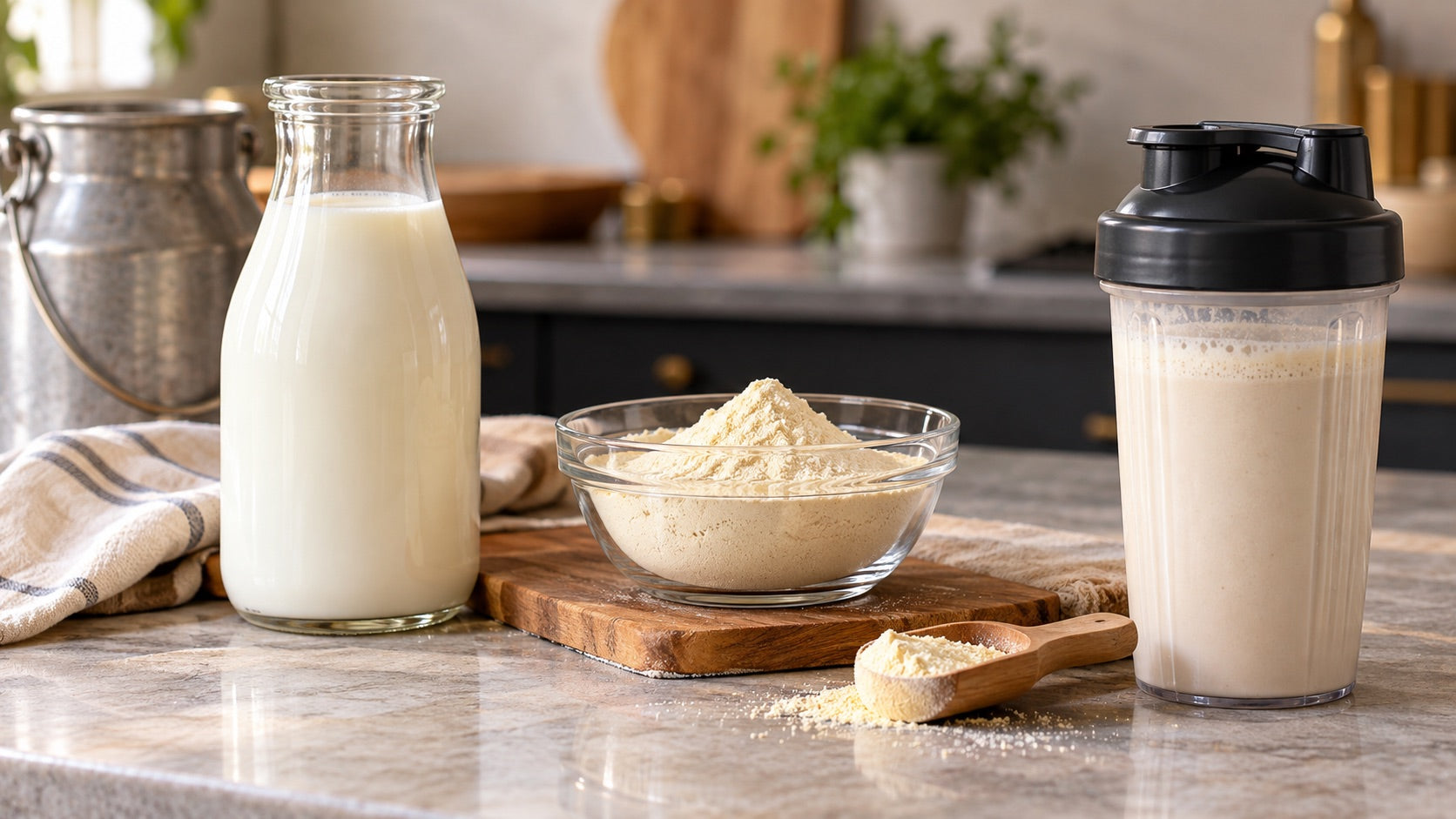
Start with the food you already eat. Protein is a nutrient your body needs for everyday functions and muscle maintenance; protein powder is one convenient way to add it. Being new to the gym does not automatically mean you need a supplement stack.
If a shake would make your routine easier, One Science Nutrition Premium Whey offers a concentrate-and-isolate blend. If you prefer a plant-based protein source, One Science Nutrition Pea Protein is another option to compare. Choose according to your food preferences, the serving you need and the ingredients that suit you.
What protein does, in plain language
Your body breaks dietary protein into amino acids, the building blocks it uses to make its own proteins. That includes proteins in muscle, other tissues and many everyday processes. The NIDDK guide to digestion explains how nutrients become small enough to absorb and use.
Protein is part of a balanced diet. It works alongside carbohydrate, fat, vitamins, minerals and fluids. A scoop of powder cannot replace that whole picture.
Useful food sources include dal, beans, chickpeas, tofu, curd, paneer, eggs, fish and meat, depending on what you eat. You do not have to build every meal around chicken or give up a vegetarian diet to pay attention to protein.
Your first step: look at a normal day
Before choosing a tub, write down breakfast, lunch, dinner and snacks for a few ordinary days. Include what you actually eat on busy days. That is more useful than describing an ideal diet you rarely follow.
Ask three questions:
- Does each main meal contain a meaningful protein source?
- Are there long stretches where you eat very little and then struggle to catch up?
- Would a food change or a convenient shake solve the specific gap?
For example, tea and biscuits at breakfast may leave you with little protein early in the day. Adding curd, eggs or tofu changes that meal. If cooking is difficult at that time, a suitable serving of One Science Nutrition Premium Whey may be a convenient alternative for adding protein alongside breakfast.
A food log does not need to become a permanent chore. Use it to find the decision worth making.
How much protein does a gym beginner need?
Training experience alone does not determine your target. Body size, activity, goals and health matter.
The International Society of Sports Nutrition position stand gives 1.4 to 2.0 g of protein per kg of body weight per day as a range sufficient for most healthy exercising adults. That means total protein from food and supplements, not that amount of powder. It is not a prescription for children, pregnancy or people needing a medical diet.
As an illustration, a healthy 60 kg adult using 1.4 g/kg would plan 84 g of protein across the day: 60 × 1.4 = 84. The target would still need to suit that person's situation. You do not have to aim at the highest number simply because you have started lifting.
If an appropriate target were 84 g and food provided 59 g, the gap would be 25 g. A serving supplying 25 g of protein could cover that gap. If food already covered the target, adding a shake would be a choice for convenience or taste rather than a requirement.
Protein powder is not the same as protein grams
A serving of powder includes more than protein alone. It may also contain flavourings, carbohydrate, fat and other ingredients.
One Science Nutrition Premium Whey's Chocolate Charge serving weighs 32.5 g and supplies 25 g of protein. One Science Nutrition Pea Protein's serving weighs 40 g and supplies 25 g of protein. The powder weights differ even though the labelled protein contribution is the same.
That is why a generic instruction to take one scoop tells you very little across different products. Use the serving weight and directions for the product you choose.
Two One Science Nutrition options for your first purchase
One Science Nutrition combines European formulation expertise with nutrition built around real training needs. Your first purchase should still come down to the source, serving and flavour that fit your day.
| Decision |
One Science Nutrition Premium Whey |
One Science Nutrition Pea Protein |
| Protein source |
Whey concentrate and isolate |
Pea protein isolate |
| Serving used here |
32.5 g, Chocolate Charge |
40 g |
| Protein per serving |
25 g |
25 g |
| Energy per serving |
117 kcal |
154.52 kcal |
| A useful reason to compare it |
A dairy-based shake with a measured protein contribution |
A pea-based option for a plant-focused routine |
The table describes selected label values. Read the current flavour's ingredients and allergens before buying, especially if you have a food allergy.
One Science Nutrition Premium Whey for a dairy-based routine
One Science Nutrition Premium Whey makes sense to compare when you eat dairy and want a straightforward whey blend. Chocolate Charge provides 25 g of protein, 117 kcal, 1.6 g of carbohydrate and 2.1 g of fat per 32.5 g serving.
Its ingredients include alpha-amylase and papain, as well as soy lecithin. An ingredient list can help you choose a product; it cannot promise that a particular person will never feel bloated.
The directions use 32.5 g in 150 to 200 ml of water or milk, once daily. Water keeps the shake's nutrition close to the powder values. Milk adds its own protein and calories.
One Science Nutrition Premium Whey contains milk and soy. The selected label excludes children and pregnant or breastfeeding women. Whey is unsuitable for a milk allergy, even if a product contains isolate.
One Science Nutrition Pea Protein for a plant-focused routine
One Science Nutrition Pea Protein provides 25 g of protein in a 40 g serving, with 154.52 kcal and 5 g of fibre. Rich Chocolate and Iced Coffee are flavour choices to check on the current listing.
Consider it when a pea-based protein source fits how you eat. A plant-based ingredient does not automatically mean an entire finished product is suitable for every allergy or medical situation. Check the full ingredients, allergy information and directions for the selected pack.
Flavour preference matters because you need a routine you will use. Chocolate and coffee-style options give you a choice that fits your taste.
When should a beginner take protein?
Use the time that helps you organise your day. A shake with breakfast, after training or during a busy afternoon can all be practical when the product's directions and your meals allow it.
Do not panic if you cannot drink one immediately after your final set. A consistent food routine is more useful than buying a supplement and forgetting meals for the rest of the day.
Keep the first purchase simple. Choose one suitable product, understand its serving and see whether it solves the gap you identified. You do not need both whey and pea protein, several amino-acid drinks and a pre-workout simply because you are a beginner.
Common beginner questions
Can I build muscle without protein powder?
Yes. Protein powder is optional if food meets your needs. Muscle gain also requires an appropriate training programme, enough food overall and recovery. A supplement makes protein more convenient; it does not do the training for you.
Is a product called beginner protein necessary?
No. The name alone does not establish suitability. Look at the protein source, serving, ingredients, allergens and directions, then match them to your routine.
Should I take more on training days?
Avoid changing scoop counts by guesswork. Plan total dietary protein across your routine and stay within the selected product's directions. Rest days still involve ordinary protein needs.
What if a shake upsets my stomach?
Check the portion, mixer and ingredients. Do not keep increasing the serving or assume isolate will solve every problem. Stop using a product that causes a concerning reaction, and seek clinical advice for persistent symptoms or suspected allergy.
For a dairy-based option, explore One Science Nutrition Premium Whey. For a plant-focused choice, compare One Science Nutrition Pea Protein. Start with the choice that fits your day.