Creatine is a compound your body makes and stores mainly in muscle. It helps your muscles quickly replenish ATP, a molecule that supplies energy during short, hard efforts. Creatine monohydrate supplements can increase muscle creatine stores and support performance in activities such as resistance training and repeated sprints.
It is not protein powder. It is not a steroid. And it does not do the training for you. The ISSN creatine position stand describes its physiology and the evidence behind sports use.
For a first product choice, compare One Science Nutrition Micronized Creatine with One Science Nutrition Creatine Matrix. One is plain creatine monohydrate; the other is a flavoured formula combining monohydrate and HCl. Reading those ingredients gives you a clearer start than choosing by the largest scoop or boldest promise.
What does creatine do during a hard effort?
Think about the difference between walking to the gym and completing a demanding set. Your muscles need energy for both, but the speed of that demand differs.
Your muscles use phosphocreatine, a stored form of creatine, to replenish ATP quickly. Increasing those stores can help with repeated high-intensity work, such as hard sets and sprints. The benefit depends on the activity and your training.
The potential benefit is support for the work you perform. Better training capacity can matter over time, but there is no honest way to promise a fixed amount of muscle from a tub of powder. Training quality, food, recovery and individual response still shape the outcome.
Creatine and protein solve different problems
| Question |
Creatine |
Dietary protein |
| What is its main role here? |
Supports rapid energy regeneration in muscle |
Supplies amino acids used by the body |
| Does it count towards your protein target? |
No |
Yes |
| Does it replace meals? |
No |
A supplement is not a complete meal |
| What should you assess first? |
Training goal and suitability |
Dietary intake and any shortfall |
You do not need to choose between them as if they were equivalent products. You also do not need to buy both because they appear together in a gym routine. Make each decision on its own merits.
What is creatine monohydrate, and why consider it first?
Creatine monohydrate has the largest body of research among creatine forms. A higher price alone does not mean another creatine form will work better.
Keep the label easy to interpret. Check how many grams of creatine the serving supplies. “One scoop” is a measuring instruction, not a standard quantity across brands.
If the product combines creatine with other ingredients, read every component. A blend may also contain stimulants or other substances with separate directions and cautions. Do not use a claim about creatine to assume the entire blend suits you.
One Science Nutrition Micronized Creatine vs One Science Nutrition Creatine Matrix
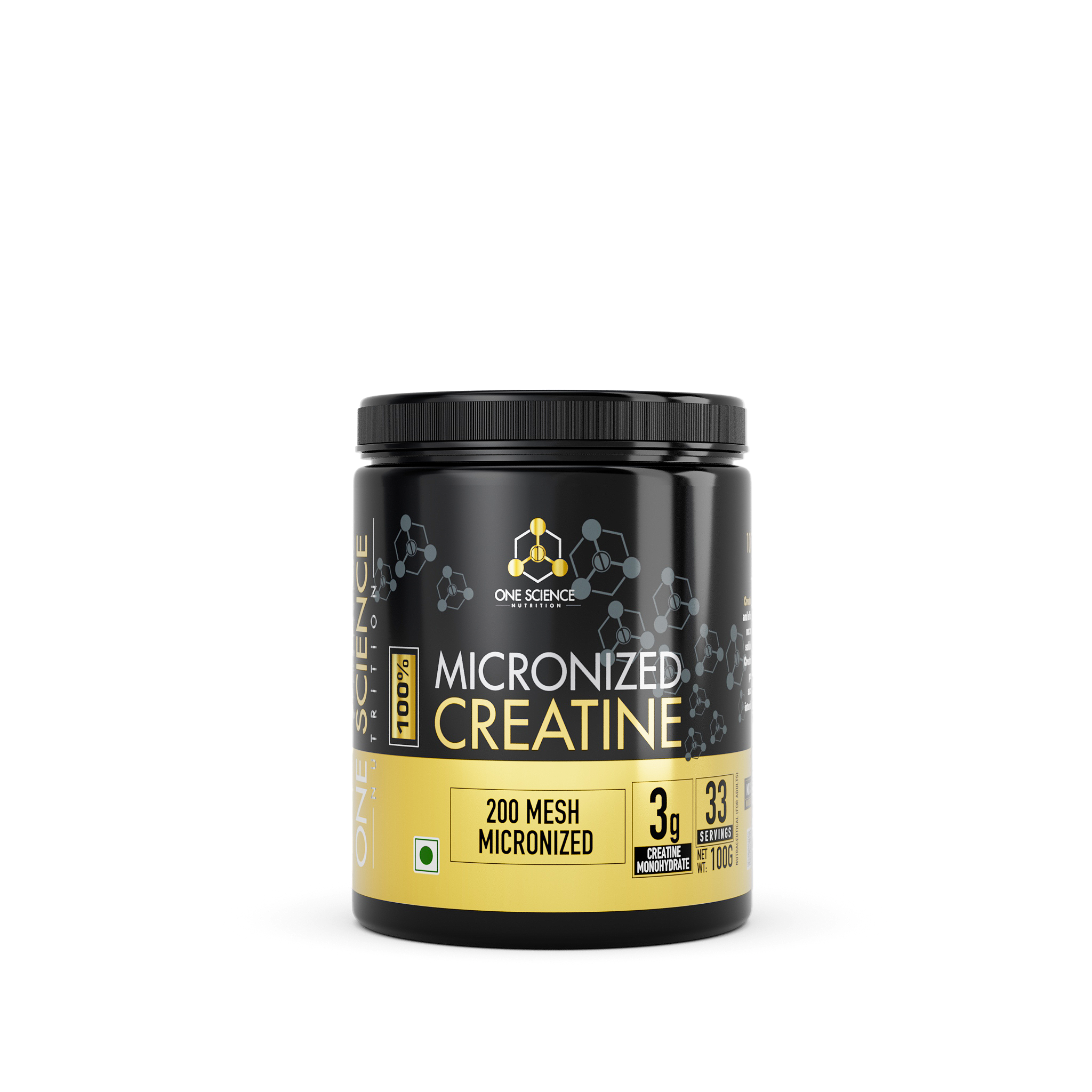
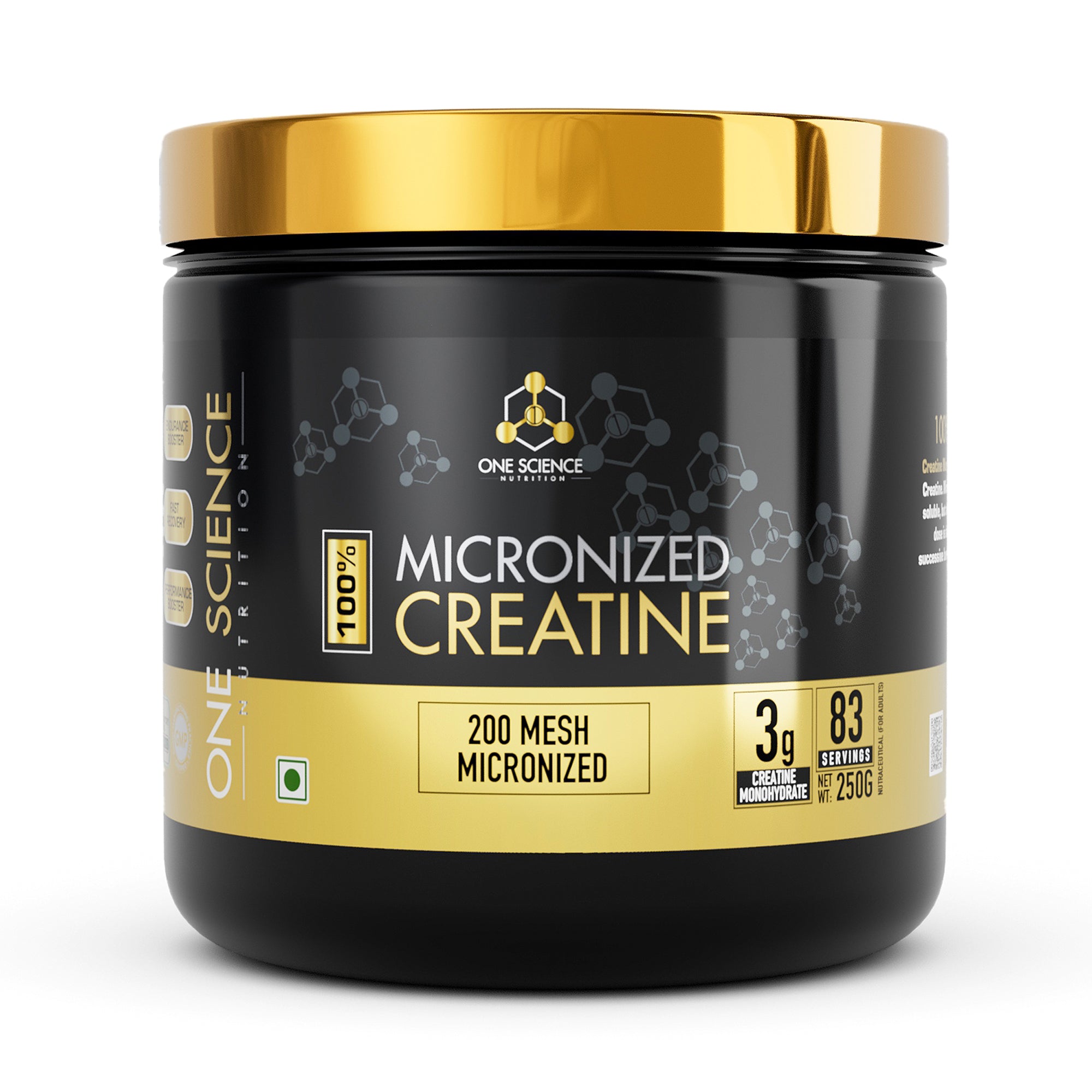
One Science Nutrition Micronized Creatine: a plain monohydrate option
One Science Nutrition Micronized Creatine supplies 3 g creatine monohydrate per 3 g serving. Its 250 g pack contains 83 servings, and creatine monohydrate is the only ingredient. Choose it when you want an unflavoured, single-ingredient product.
The directions specify one 3 g serving daily. It is made in a facility that processes milk and soy. Children, pregnant women and people with medical conditions should consult a healthcare professional before use.
Explore One Science Nutrition Micronized Creatine for a straightforward monohydrate option.
One Science Nutrition Creatine Matrix: a flavoured two-form blend
One Science Nutrition Creatine Matrix combines 2 g creatine monohydrate and 1 g creatine HCl in a 3.5 g Blueberry serving. The 105 g pack contains 30 servings. It also includes ingredients for flavour and sweetness.
Choose One Science Nutrition Creatine Matrix when you prefer a flavoured creatine drink. Mix one 3.5 g scoop with 200 to 250 ml water, following the directions on your pack. It is not recommended for children or pregnant or breastfeeding women. Consult a healthcare professional before use if you have a medical condition or take medication.
| Product |
One Science Nutrition Micronized Creatine, 250 g |
One Science Nutrition Creatine Matrix, Blueberry 105 g |
| Powder serving |
3 g |
3.5 g |
| Creatine ingredients |
3 g monohydrate |
2 g monohydrate plus 1 g HCl |
| Format |
Unflavoured, single ingredient |
Flavoured blend |
| Servings per pack |
83 |
30 |
Compare One Science Nutrition Creatine Matrix if you prefer that format. These are alternative products; choose one rather than automatically combining their servings.
Do you need a loading phase?
No. Loading is optional. Research protocols use it to raise muscle stores faster, but a lower daily intake can build those stores more gradually.
The 2021 review of common creatine questions describes daily intakes of 3 to 5 g and explains that loading is not required. For the featured products, use the serving directions above and follow any personalised advice from your clinician.
| Approach |
Practical distinction |
| Lower daily intake without loading |
Simpler routine; stores rise more gradually |
| Short loading phase followed by maintenance |
Muscle stores rise faster; more servings to manage |
Skipping loading is a valid way to start. Choose a routine you can follow consistently. Do not take a whole day's loading amount in one large serving because the schedule looks inconvenient.
What changes might you notice first?
An early increase on the scale can reflect water associated with higher muscle creatine stores. It is not proof that the same amount of new muscle has appeared, or that you have gained that amount of body fat. The NIH supplement fact sheet discusses this weight response.
Record the start date and use comparable weigh-ins. If you begin creatine, change your diet and start a new training plan in the same week, the scale alone cannot tell you which change caused what.
For performance, track something concrete: the load, repetitions and quality of comparable sessions. Look for a trend over several sessions, rather than judging the product from one good workout or a poor night's sleep.
What about side effects and kidney concerns?
Research in healthy adults using studied doses is generally reassuring about kidney function. That finding does not establish suitability for someone with kidney disease or for every dose and product. Larger servings can cause digestive discomfort. The 2021 evidence review examines these distinctions.
Discuss use with your clinician if you have kidney disease, abnormal kidney tests, a medical condition or medicines that affect the decision. Tell the clinician about creatine before blood testing, rather than trying to interpret results yourself. Children and adolescents, pregnant or breastfeeding readers, and people receiving medical care should not borrow an adult sports protocol without appropriate guidance.
If a supplement causes persistent symptoms, stop treating the discomfort as a sign it is working and seek advice. More powder is not a better response to poor tolerance.
A sensible first purchase checklist
Check the ingredient, amount per serving, manufacturer details, batch information, directions and warnings. Buy through a reliable route and follow the product's storage instructions. If your sport requires banned-substance testing, ask for current product and batch evidence rather than assuming all supplements are covered by a brand-wide claim.
Before adding it to your routine, write down the goal. For example: “I want to assess whether this helps my repeated hard sets while keeping the rest of my plan consistent.” That is something you can evaluate. “I want instant muscle” is a promise the evidence cannot make.
Choose the format that suits your routine: One Science Nutrition Micronized Creatine for plain monohydrate, or One Science Nutrition Creatine Matrix for a flavoured blend. Check the ingredient amounts, directions and warnings on your chosen pack before use.