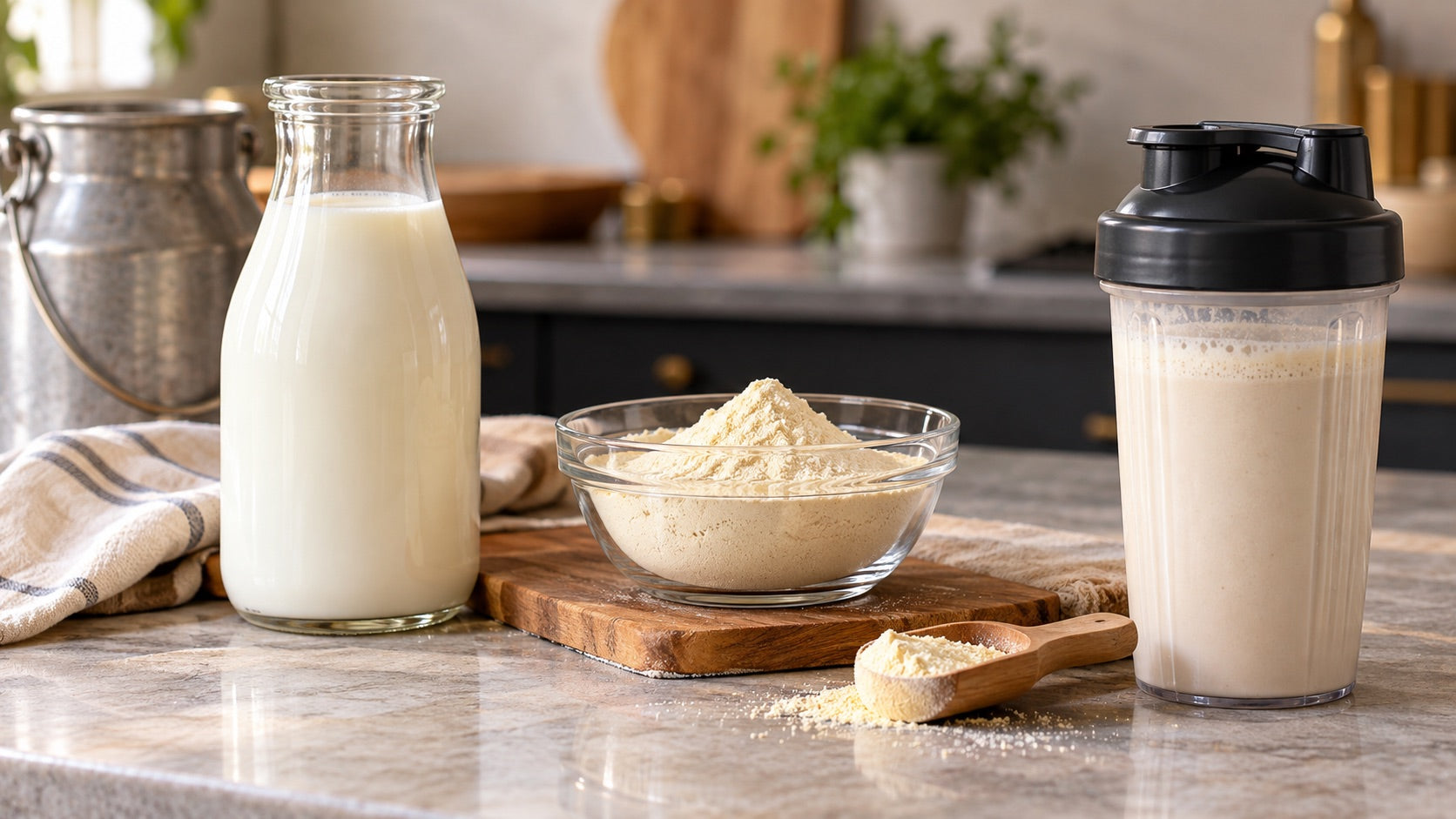
Whey protein can contribute to weight gain when it adds enough energy to create a sustained calorie surplus. It does not automatically cause fat gain, and it does not make you lose weight simply because the label says protein. What you eat across the day matters more than the name on the shaker.
Weight changes also have other influences, including medicines and health conditions. The NIDDK's weight overview explains why calories belong in the picture without being the only factor to consider.
For a useful product comparison, look at One Science Nutrition Premium Whey and One Science Nutrition Anabolic Mass. One Science Nutrition Premium Whey provides 25 g protein and 117 kcal in its Chocolate Charge serving. One Science Nutrition Anabolic Mass provides 22 g protein and 380 kcal in its larger chocolate serving. The right choice depends on whether you need mainly protein or more calories as well.
Start with the calories in the finished drink
The number on the powder label usually refers to the powder serving described there. Your finished drink may contain more.
Use this calculation:
Total shake calories = powder calories + mixing liquid calories + calories from additions.
Here is an example using the Chocolate Charge label for One Science Nutrition Premium Whey. The milk and extra ingredient values are examples; use your own labels when making the drink.
| Ingredient |
Example calories |
| One Science Nutrition Premium Whey, 32.5 g powder, Chocolate Charge |
117 kcal |
| Water |
0 kcal |
| 250 ml milk, using an example label of 60 kcal per 100 ml |
150 kcal |
| A measured addition, using its example label |
100 kcal |
The powder mixed with water totals 117 kcal. With that example milk, it totals 267 kcal. With the milk and the addition, it totals 367 kcal.
The milk calculation is 250 ÷ 100 × 60. Use your own carton and powder labels; changing the type of milk or amount changes the result. A shake with milk and extra ingredients can contain many more calories than the powder alone. Follow your pack's mixing directions when preparing it.
Adding a shake and replacing a snack are different choices
Suppose you add the example 267 kcal shake while keeping every meal and snack unchanged. You have increased the day's planned intake by 267 kcal.
Now suppose the same shake replaces a snack you had counted as 300 kcal. You have counted 33 kcal less, before considering any other changes in what you eat. Neither example predicts your eventual weight. They simply show what was added or replaced.
That distinction is easy to miss. Someone may credit whey for losing weight after using it instead of another snack. Someone else may blame whey for gaining weight after adding a substantial drink to an unchanged diet. The ingredient name alone cannot explain either result.
Check what the shake replaces, if anything. A protein powder by itself is not a complete meal, so regularly replacing a full meal calls for more planning than replacing a snack.
Muscle gain and fat gain are not interchangeable
Appropriate protein intake can support resistance training. The ISSN position stand considers nutrition alongside exercise, rather than promising muscle from extra scoops alone.
Do not assume every extra scoop becomes muscle or that drinking whey without training produces the same result.
A rising scale cannot identify the tissue gained. Keep your goal specific and consider training progress, food intake and comparable measurements over time. Do not turn a few days of weight change into a verdict on one ingredient.
Does whey protein increase belly fat?
Whey does not specifically send calories to your belly. Look at your overall calorie intake, activity and other factors that affect body weight.
Do not assume an isolate is a weight-loss product or a concentrate is a weight-gain product. Compare their actual serving calories. Even products with similar names can use different serving sizes and recipes.
If your waist feels larger because of digestive bloating, that is a different question from fat gain. Persistent symptoms deserve attention rather than an automatic switch to more or less powder.
Water or milk: which should you choose?
Water makes the calorie calculation simpler because it adds no calories. Milk adds its own nutrients and energy, which may fit your plan. There is no universal winner.
If calories are tightly planned, read the milk carton and measure the amount. If you need a more substantial drink, account for the additions intentionally. The decision should follow the meal plan rather than a rule that everyone must use one mixer.
Lactose intolerance and milk allergy also affect this choice differently. The NIDDK explains the distinction. Mixing milk-derived whey with water does not make it suitable for a diagnosed milk allergy. Changing the liquid also does not remove lactose already present in a powder.
Whey protein and mass gainers are different products
A mass gainer may be designed to provide a larger energy serving through its full formula. Do not use its serving values as if they described a standard whey protein powder.
Read the nutrition panel and serving directions for both. Check how many scoops make the serving, and whether values describe the powder alone or a prepared drink. The front of the pack may tell you the intended use; the nutrition panel tells you what you are counting.
One Science Nutrition Premium Whey for protein with a defined calorie contribution
One Science Nutrition Premium Whey combines concentrate and isolate. Its Chocolate Charge serving contains 25 g protein and 117 kcal in 32.5 g powder. Choose this format when you want to add protein while keeping the drink's contribution clear. The formula contains milk and soy, plus alpha-amylase and papain. It is not recommended for children or pregnant or breastfeeding women.
Flavours include Chocolate Charge, Cafe Mocha and Vanilla Swirl. The label directions mix 32.5 g in 150 to 200 ml liquid; follow your chosen pack and count the mixer. See One Science Nutrition Premium Whey's current optionsfor a protein-drink choice.
One Science Nutrition Anabolic Mass when the plan needs more energy as well
One Science Nutrition Anabolic Mass is a different purchase. Its chocolate serving provides 380 kcal, 22 g protein and 64 g carbohydrate in a 100 g, two-scoop serving. That is a much larger powder amount than One Science Nutrition Premium Whey's serving. Consider it when your eating plan needs more calories as well as protein.
One Science Nutrition Anabolic Mass also provides 2 g creatine monohydrate per serving. Count that if you use other creatine-containing products. The formula includes milk ingredients and botanicals; it is not interchangeable with plain whey. The label directions use 100 g in 200 to 300 ml water, with one serving daily. The label says it is not for children or people who are pregnant or breastfeeding.
| Per powder serving |
One Science Nutrition Premium Whey |
One Science Nutrition Anabolic Mass |
| Powder amount |
32.5 g |
100 g, two scoops |
| Protein |
25 g |
22 g |
| Energy |
117 kcal |
380 kcal |
| When to consider it |
Add protein in a smaller powder serving |
Add more calories as well as protein |
The serving sizes differ: 32.5 g for the whey and 100 g for the mass gainer. Use the table to compare what you would actually drink, rather than assuming the powders are being compared gram for gram. Explore One Science Nutrition Anabolic Mass when extra energy is genuinely part of your plan. More calories do not automatically mean more muscle.
Review your routine before changing the product
Check these five things:
- Record the actual powder amount, not just “one shake”.
- Add the liquid and every measured extra to the calorie total.
- Note whether the shake replaces food or is additional.
- Use consistent conditions when tracking your weight.
- Reassess the whole eating plan if the trend differs from your goal.
If body weight changes unexpectedly or alongside concerning symptoms, discuss it with a clinician. Avoid treating every change as a supplement problem.
Choose the product for your calorie and protein plan
One Science Nutrition offers different formats for real training needs. A whey drink and a mass-gainer drink fill different roles in your eating plan.
Choose One Science Nutrition Premium Whey when the need is a counted protein drink. Consider One Science Nutrition Anabolic Mass when your plan also calls for its larger energy contribution. Check the current flavour label, then count the whole prepared drink. Neither product promises automatic fat loss or a fixed rate of weight gain.