How much protein you need each day depends on your weight, activity, age and health. For healthy adults, the European Food Safety Authority's 2012 guideline is 0.83 g per kilogram of body weight. For most healthy adults who exercise, the International Society of Sports Nutrition's 2017 guidance is 1.4 to 2.0 g per kilogram. These are daily amounts; choose the guidance that fits your situation. EFSA adult reference, ISSN exercise guidance.
Once you have that daily amount, make the remaining gap easy to count. One Science Nutrition Premium Wheyprovides a measured protein-drink option; One Science Nutrition High Protein Oats gives you a breakfast format. Choose a shake or a breakfast option based on where your meals need more protein.
How much protein do I need each day?
A general adult guideline gives you a starting point. Someone lifting weights to build muscle may need a different amount.
The European Food Safety Authority (EFSA) gives 0.83 g per kilogram for healthy adults. The ISSN's higher range is for healthy people who exercise. Use the guidance that fits your activity and health.
Your training and health matter too. If you have a medical condition or a prescribed diet, ask your clinician or dietitian which target to use.
How much protein per kg of body weight should you plan?
Multiply body weight in kilograms by the chosen protein amount in grams per kilogram per day.
Daily protein in grams = body weight in kilograms × selected guideline.
How much protein does a 70 kg person need?
Suppose a healthy adult weighs 70 kg. Using 0.83 g gives 58.1 g per day. Using 1.4 to 2.0 g gives 98 to 140 g per day. The calculation is simple. The important choice is which guideline suits you.
| Body weight |
EFSA healthy adult reference at 0.83 g per kilogram |
ISSN healthy exercise range at 1.4 to 2.0 g per kilogram |
| 50 kg |
About 42 g daily |
70 to 100 g daily |
| 60 kg |
About 50 g daily |
84 to 120 g daily |
| 70 kg |
About 58 g daily |
98 to 140 g daily |
| 80 kg |
About 66 g daily |
112 to 160 g daily |
| 90 kg |
About 75 g daily |
126 to 180 g daily |
The table uses the two guidelines above and rounds the general adult amounts to whole grams. It is a guide, not a personal diet plan. A dietitian can help if your health or body composition makes the usual weight-based calculation unsuitable.
Use the column that fits your situation. The two amounts are not meant to be added together.
Does everyone need 100 g of protein a day?
No single number fits everyone. In the table, 100 g falls inside the exercise range for some body weights and outside it for others. Even where it falls within a range, that does not prove it is the right target for a particular person.
It is also easy to confuse food weight with protein weight. A 100 g serving of paneer is not 100 g of protein. A scoop of powder is not necessarily the same protein amount across products.
When tracking food, check the unit. “Per 100 g”, “per serving” and “per scoop” describe different things. Enter the amount you ate, not the amount that makes the day's total look tidy.
How can you fit protein into an Indian eating routine?
Start with an ordinary day. Write down breakfast, lunch, snacks and dinner with usable portions. Then estimate the protein using product labels or a reliable food database.
Suppose an appropriate planned target is 110 g. Your logged meals provide 20 g at breakfast, 30 g at lunch, 10 g in snacks and 30 g at dinner. That adds up to 90 g, leaving 20 g to plan for. These are hypothetical meal totals, not the nutrition values of a specific recipe.
In that example, a 25 g protein serving of One Science Nutrition Premium Whey would take your total from 90 g to 115 g. That is slightly above the example target of 110 g. You do not have to hit an exact number every day or add a full serving for every small shortfall. Count the product within your daily intake and follow the directions on your pack.
For instance, someone who regularly skips breakfast might find a planned breakfast more useful than stacking two shakes onto an already substantial dinner. Someone working late may prefer a convenient option that they can reliably prepare.
Keep the rest of the meal in view. NIH ODS describes protein as one part of supporting adaptation and recovery from exercise. A protein total does not describe the whole quality of your diet or training routine.
Do you need whey protein to reach your target?
A target tells you how much total dietary protein to plan for. It does not tell you to obtain all of it from a supplement.
Check the gap first. If food already meets your planned amount, adding a shake simply adds to your existing intake. If there is a consistent gap, compare options on convenience, cost, ingredients and dietary suitability.
One Science Nutrition Premium Whey for a convenient daily shake
One Science Nutrition Premium Whey combines whey concentrate and isolate. The Chocolate Charge label lists 25 g protein and 117 kcal per 32.5 g serving. That gives you a defined contribution for a busy afternoon or a meal plan that regularly falls short. Choose it when a dairy-based shake fits your eating plan.
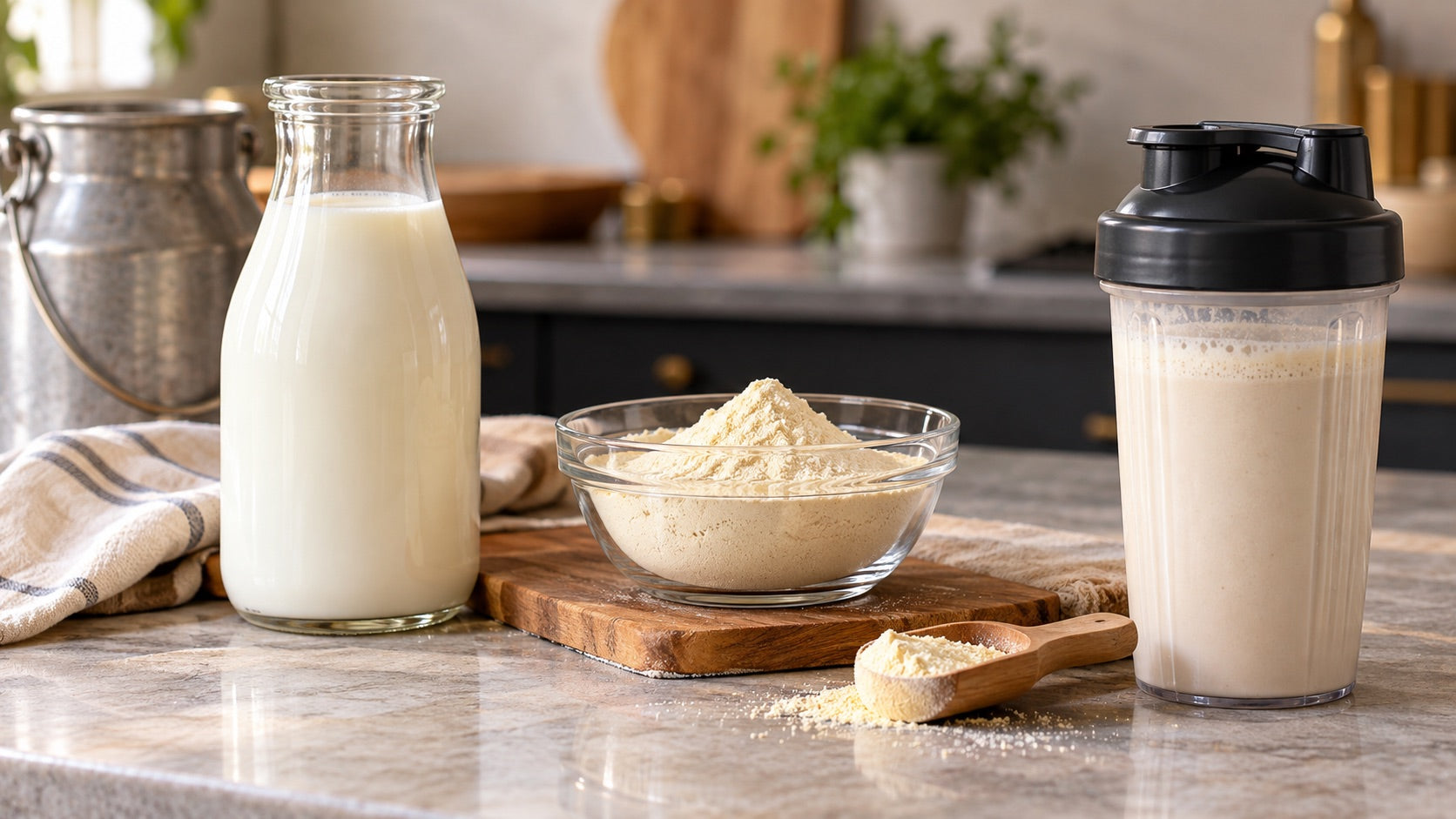
The label directions mix 32.5 g in 150 to 200 ml liquid. Water adds no protein; milk does, so log the milk separately. Options such as Chocolate Charge, Cafe Mocha and Vanilla Swirl let you choose a flavour for regular use. Nutrition may vary by flavour. The product contains milk and soy and is not recommended for children or pregnant or breastfeeding women.
See One Science Nutrition Premium Whey's current flavours and pack details for a shake that makes your daily protein gap easier to fill.
One Science Nutrition High Protein Oats for a higher-protein breakfast
One Science Nutrition High Protein Oats, Dark Chocolate offers a different way to organise that first meal. The nutrition information for its 400 g pack lists 13.3 g protein, 4.1 g fibre and 207 kcal in 50 g dry product. The formula includes oats and soy protein, with jaggery, seeds and other additions. That dry serving also contains 4.5 g added sugar from the recipe. It contains soy and almonds.
With 250 ml cow milk, the published breakfast example provides 21.4 g protein. Your total will vary with the milk you use and any fruit, nuts or other toppings. One Science Nutrition Premium Whey and One Science Nutrition High Protein Oats are useful options for different needs; you do not have to use both to reach a daily target.
Will more protein always build more muscle?
More protein does not keep producing more muscle without limit. In a 2018 analysis of 49 trials involving 1,863 participants, Morton and colleagues found that adding protein supported gains during resistance training. Above about 1.6 g per kilogram per day, there were no further average gains in fat-free mass, which means body weight excluding fat. That result is a guide across groups, not an exact limit for each person. Read the research review.
If progress stalls, a bigger protein number is only one thing to consider. Look at the training plan, consistency and overall diet instead of assuming another scoop must be the answer.
When should the target be personalised?
Pregnancy, breastfeeding, childhood, significant illness and conditions affecting nutrition call for guidance specific to that situation. The adult exercise range above should not be applied automatically.
If you have kidney disease or have been told to follow a medically prescribed diet, ask the clinician or dietitian managing it before changing your protein intake. A generic fitness table cannot account for that treatment plan.
Choose how to fill your daily protein gap
One Science Nutrition offers shakes and breakfast products for different parts of your daily protein plan. Start with what your meals already provide, then choose the option that fills the gap.
If the shortfall is a convenient-drink problem, choose One Science Nutrition Premium Whey. If breakfast needs a more deliberate protein ingredient, explore One Science Nutrition High Protein Oats. Use your selected pack's nutrition and directions to fit that choice into your daily total.