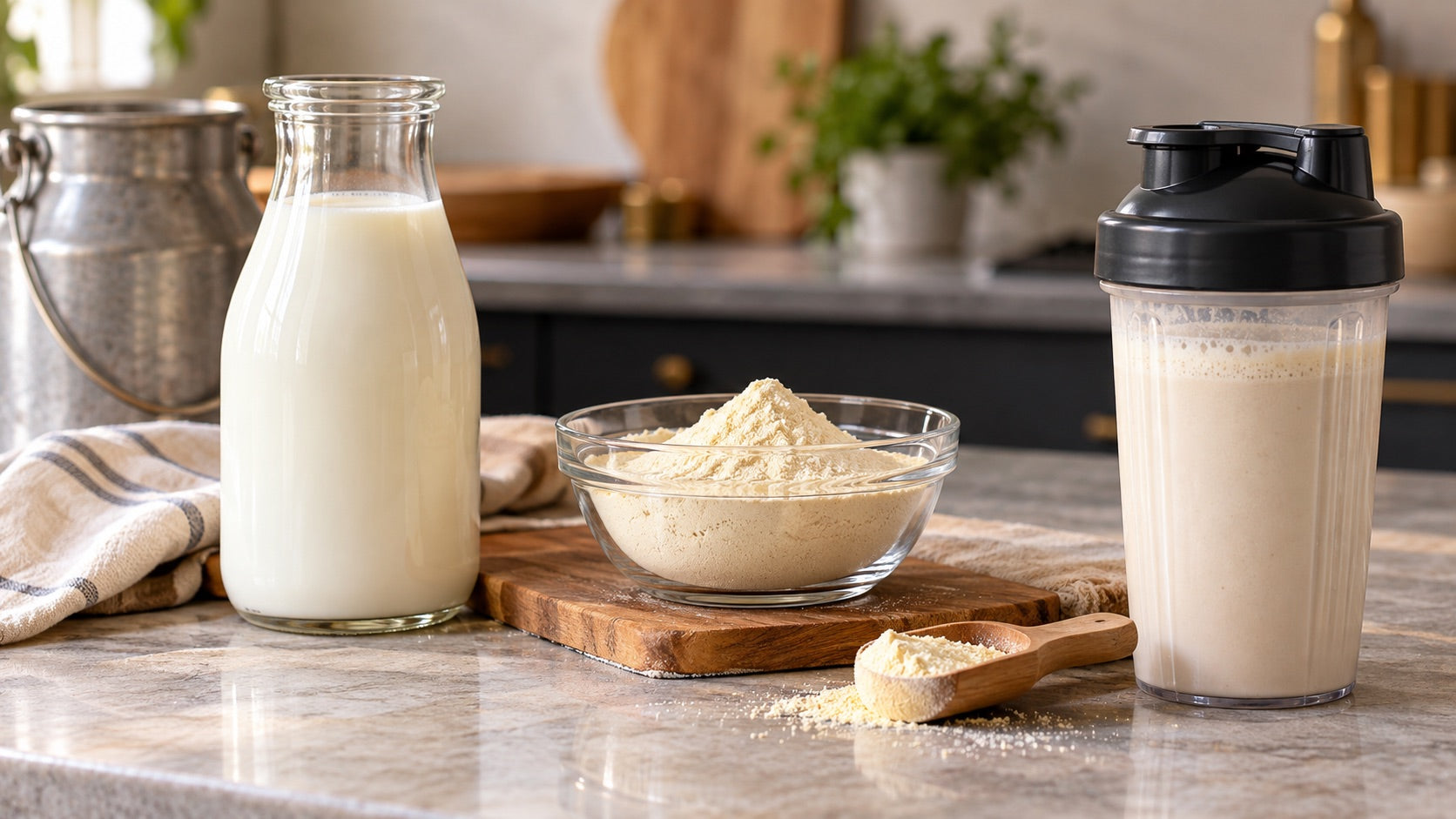
Whey concentrate and whey isolate both come from milk. Isolate undergoes further separation and generally has a higher protein proportion with less lactose and fat at the ingredient level. Concentrate retains more of those milk components. The final powder can also contain flavours and other ingredients, so compare the finished nutrition labels before deciding. This review describes the processing distinction.
When comparing whey concentrate vs isolate, apply the distinction to One Science Nutrition Premium Whey and One Science Nutrition ISO Gold. One Science Nutrition Premium Whey combines concentrate and isolate; One Science Nutrition ISO Gold combines isolate and hydrolysate. Compare their actual formulas and servings, rather than treating either as a single unblended ingredient.
Whey protein isolate vs concentrate: the differences that matter
Both types provide whey protein. Their differences become useful when you compare the same criteria rather than choosing whichever name sounds more advanced.
| Criterion |
Whey concentrate |
Whey isolate |
| Processing |
Concentrates whey protein while retaining some other milk components |
Further separates protein from other components |
| Protein proportion of the ingredient |
Typically lower than isolate |
Typically higher than concentrate |
| Lactose and fat |
Usually more retained |
Usually more removed |
| Finished serving nutrition |
Depends on formulation and serving size |
Depends on formulation and serving size |
| Milk protein allergy |
Milk derived |
Milk derived |
| Useful buying check |
Label, tolerance, cost and dietary fit |
Label, tolerance, cost and dietary fit |
The processing rows describe ingredient categories. They do not give exact values for every brand or flavour. Cleveland Clinic explains whey types and their practical limitations.
Does isolate always contain more protein per scoop?
Not necessarily. Scoop sizes and finished formulations vary.
For example, compare One Science Nutrition Premium Whey in Chocolate Charge with One Science Nutrition ISO Gold in chocolate. One Science Nutrition Premium Whey's Chocolate Charge panel lists 25 g protein in 32.5 g powder; One Science Nutrition ISO Gold's chocolate panel lists 27 g in 32.5 g powder. Here the serving weights match, so the displayed difference is 2 g protein per serving.
Other flavours can differ. Compare the serving you plan to use, along with its ingredients, carbohydrate, fat and price.
Is whey isolate lactose free?
Do not assume it is. Isolate processing removes much of the lactose, but you still need to check the lactose information for the product you buy. Added ingredients can matter too.
Lactose intolerance also differs from milk allergy. Lactose is a sugar; milk allergy involves a response to milk proteins. NIDDK explains why these are separate conditions.
Both concentrate and isolate are milk derived. Someone with milk allergy should not switch to isolate on the assumption that the allergy problem has disappeared. Follow advice from the healthcare professional managing the condition.
If you have a confirmed intolerance, ask about the actual lactose content and your own tolerance. A product name is not enough to establish suitability.
Is whey isolate better than whey concentrate for muscle gain?
Isolate is not automatically better for muscle gain. Your total protein intake and resistance training matter more than the processing name alone.
The ISSN protein position stand treats protein needs in the context of healthy exercising people. That is a more useful starting point than assuming a processing category determines your result.
If two products both fit your needs, the choice may come down to serving nutrition, tolerability, price and convenience. If one does not fit a dietary restriction, that restriction takes priority over a gym goal.
How should you compare value for money?
Compare the amount of protein you get across the tub. Sticker price alone can be misleading when serving counts differ.
Cost per 25 g protein = tub price ÷ total protein grams in the tub × 25.
Take two hypothetical tubs. Tub A costs ₹2,400 and has 40 servings with 24 g protein each. Its total protein is 960 g, so the cost per 25 g protein is ₹62.50.
Tub B costs ₹3,000 and has 40 servings with 27 g protein each. Its total protein is 1,080 g, so the cost per 25 g protein is about ₹69.44.
These numbers are examples, not current prices. Delivery charges, offers and serving accuracy can change a real comparison. Value also includes whether a product suits you; a cheaper option that does not fit your restrictions is not the better purchase.
One Science Nutrition Premium Whey vs One Science Nutrition ISO Gold: compare the actual blends
A blend can include concentrate and isolate in the same formula. Read the ingredients rather than assigning the whole product to one category because a familiar word appears on the front.
| Per powder serving |
One Science Nutrition Premium Whey, Chocolate Charge |
One Science Nutrition ISO Gold, Chocolate |
| Serving weight |
32.5 g |
32.5 g |
| Protein |
25 g |
27 g |
| Carbohydrate |
1.6 g |
0.5 g |
| Fat |
2.1 g |
0.3 g |
| Energy |
117 kcal |
113 kcal |
| Named protein forms |
Concentrate and isolate |
Isolate and hydrolysate |
Choose One Science Nutrition Premium Whey for a concentrate-and-isolate blend with 25 g protein per 32.5 g Chocolate Charge serving. The formula also includes alpha-amylase and papain. Flavour options include Chocolate Charge, Cafe Mocha and Vanilla Swirl. Explore One Science Nutrition Premium Whey's flavours for a blend you can fit into your routine.
Choose One Science Nutrition ISO Gold when its chocolate serving's 27 g protein, 0.5 g carbohydrate and 0.3 g fat better fit your nutrition plan. Its whey ingredients combine isolate and hydrolysate. Compare One Science Nutrition ISO Gold's flavours when those serving values suit you.
Both chocolate formulas use a 32.5 g serving mixed with 150 to 200 ml liquid, once per day. One Science Nutrition Premium Whey contains milk and soy; One Science Nutrition ISO Gold also contains milk-derived protein. Both products are not recommended for children or pregnant or breastfeeding women. Check your chosen flavour's ingredients and count any milk added to the shake.
Which is better: whey concentrate or isolate for your routine?
Choose using the problem you need to solve. If both finished products fit your dietary needs and tolerability, use the cost calculation to compare value. If you need to limit a particular nutrient or lactose amount, verify the relevant label value rather than treating “isolate” as the answer. Milk allergy is a separate concern; neither category is a workaround.
Put the two labels beside each other. Match serving weights, compare protein and the other nutrients relevant to your plan, and read the allergens. Calculate value using the current price and serving count.
If the concentrate-and-isolate blend fits your protein plan, choose One Science Nutrition Premium Whey. If One Science Nutrition ISO Gold's displayed protein, fat and carbohydrate contribution better matches it, explore One Science Nutrition ISO Gold. Use the current price, pack and flavour label for the final comparison. Pay for the ingredients and serving nutrition you need, rather than choosing by the word on the front alone.
For current packs and flavour options, browse the One Science Nutrition protein range, then check the selected product’s ingredients and serving nutrition.