For muscle gain, set an appropriate daily protein target, spread useful protein portions across meals and place one of those meals around training when practical. You do not need to eat by the minute. The daily total and a repeatable routine come first.
One Science Nutrition Premium Whey can fill a gap between work and dinner. One Science Nutrition Fermented Yeast Protein offers a different protein source when that suits your diet. Either should have a clear place in the day, rather than being added automatically after every meal.
Work with three clocks
There is the whole day, the gap between meals and the time around your workout. They answer different questions. Sorting them in that order keeps meal timing useful without turning eating into another full-time job.
Clock 1: the whole day
The ISSN protein position stand by Ralf Jäger and colleagues gives 1.4 to 2.0 g protein per kg body weight per day as a sufficient overall range for most healthy exercising people. Individual needs vary; this is not a prescription for children, pregnancy, breastfeeding or medical conditions.
For a hypothetical healthy 70 kg exercising adult, that range works out to 98 to 140 g across the day. Count protein from meals, snacks and supplements together. A scoop is not an amount that automatically sits outside the daily total.
Once you have a sensible target, the next task is making ordinary meals contribute to it. You do not need a higher target just because breakfast was inconvenient.
Clock 2: the gaps between meals
A practical approach is to give breakfast, lunch and dinner each a meaningful protein source, using a snack if needed. Avoid leaving nearly all the protein for one enormous dinner.
The ISSN nutrient-timing position stand prioritises daily intake with reasonably spaced protein feedings. Its general discussion uses portions around 20 to 40 g and gaps of roughly three hours in healthy exercising adults. These are planning guides, not rigid absorption limits or proof that every body needs the same number of meals.
If your workday only allows three meals, make those meals substantial and plan around that reality. A schedule that you can follow beats a perfect-looking timetable that leaves food uneaten.
Clock 3: the workout
Consider when you last ate and when you can eat next. A morning session after an overnight fast leaves a different gap from an evening session soon after lunch and a snack.
Plan food after training without treating the gym exit as a deadline. If dinner will be ready soon, dinner may do the job. If you have a long commute, a convenient protein serving and some food can bridge the wait.
Two ways an ordinary training day can work
These schedules show meal placement, not fixed-calorie menus or personal protein prescriptions. Portion sizes determine the actual totals.
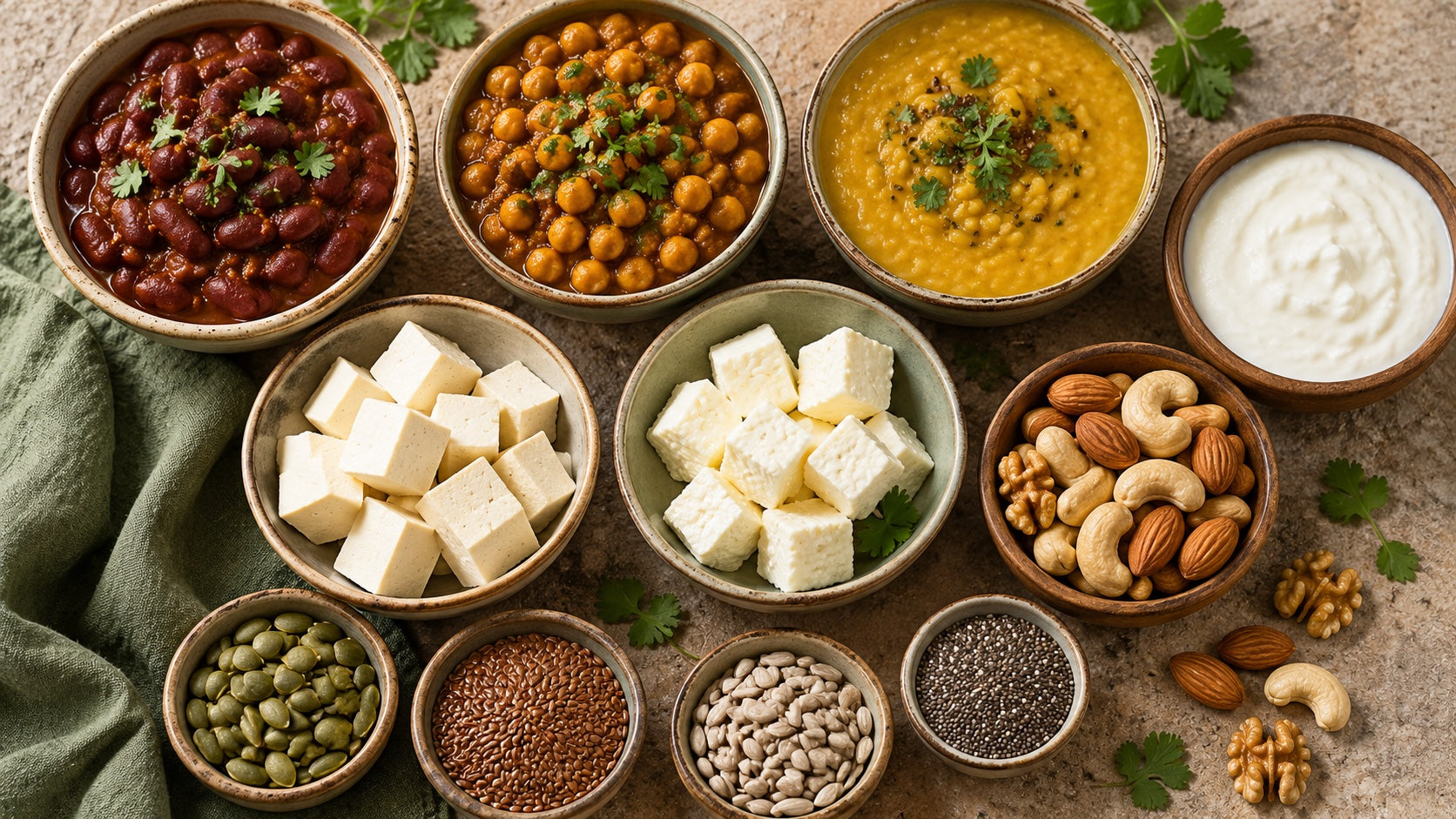
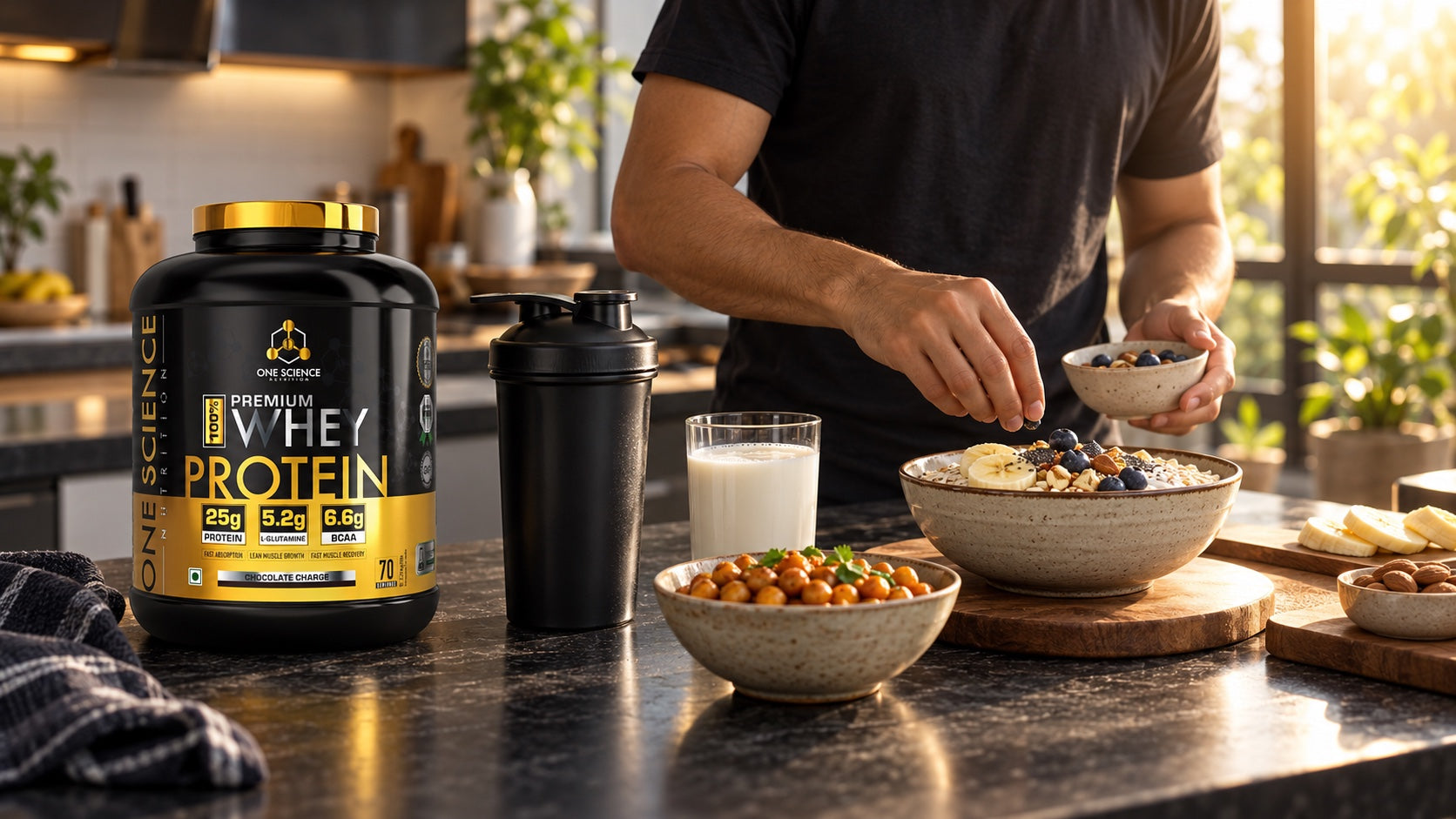
Morning training: Eat breakfast afterwards, including a protein food such as curd, eggs, tofu or paneer. Make lunch a proper meal with dal, beans, dairy or another chosen source. Use an afternoon snack if there is a long gap before dinner. Let dinner contribute its share rather than expecting it to rescue the whole day.
Evening training: Give breakfast and lunch their own protein sources. If lunch is early, plan a suitable afternoon snack. Have dinner after training when practical. Use a shake only if it makes the schedule easier or covers a gap that meals do not.
You can shift these around work, travel and appetite. They do not require an extra supplement at every eating occasion.
One Science Nutrition Premium Whey for the awkward gap
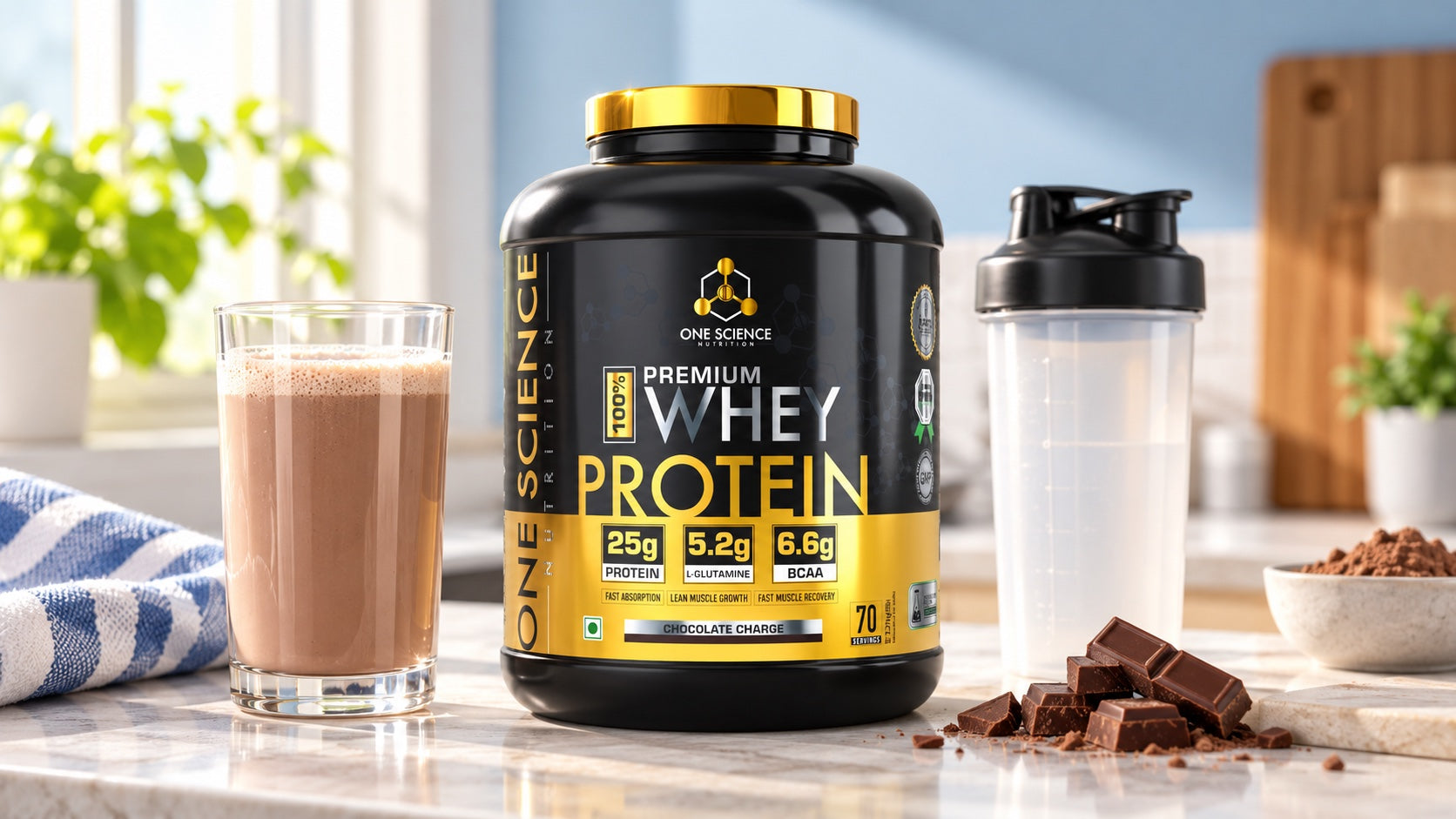
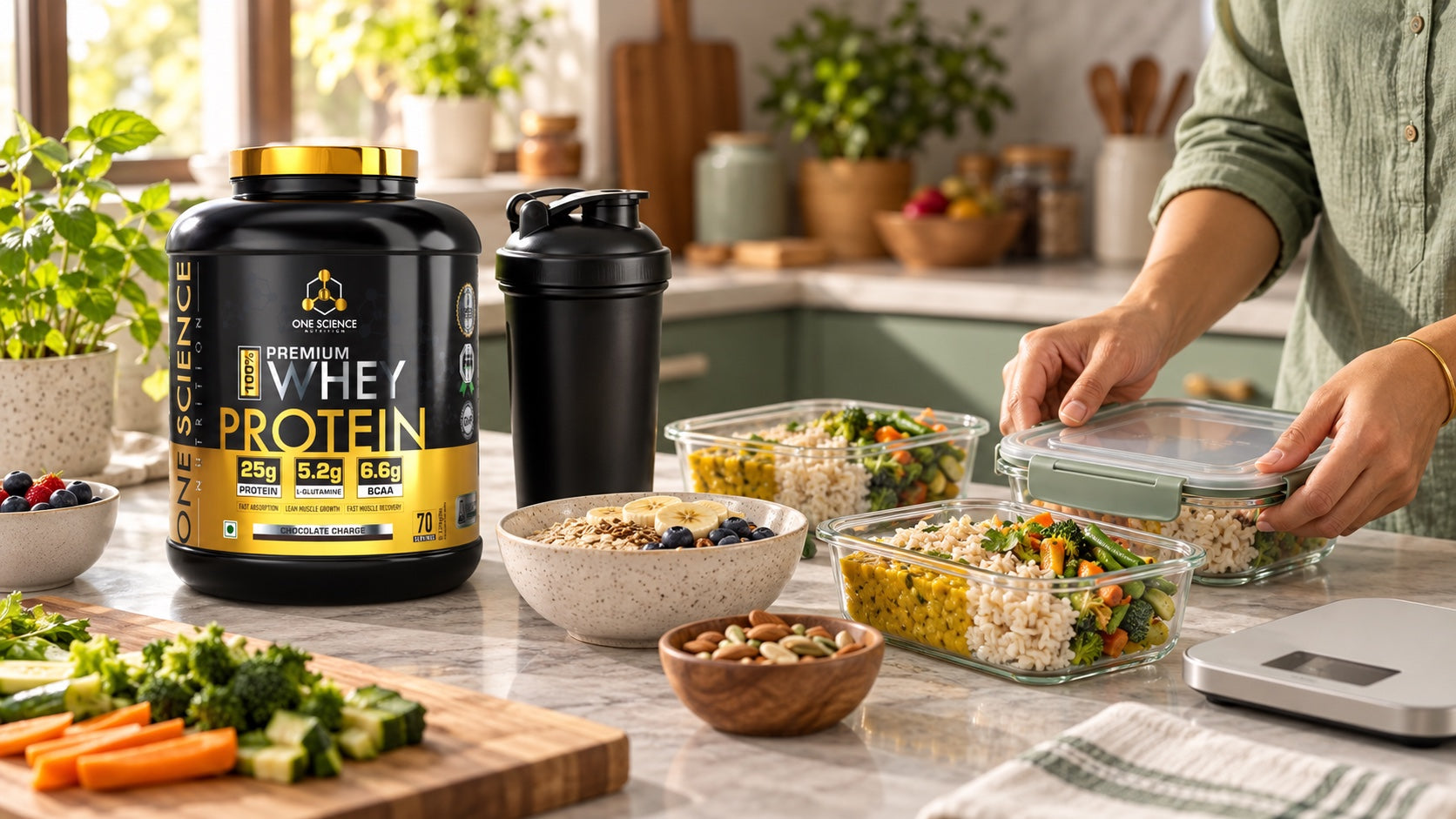
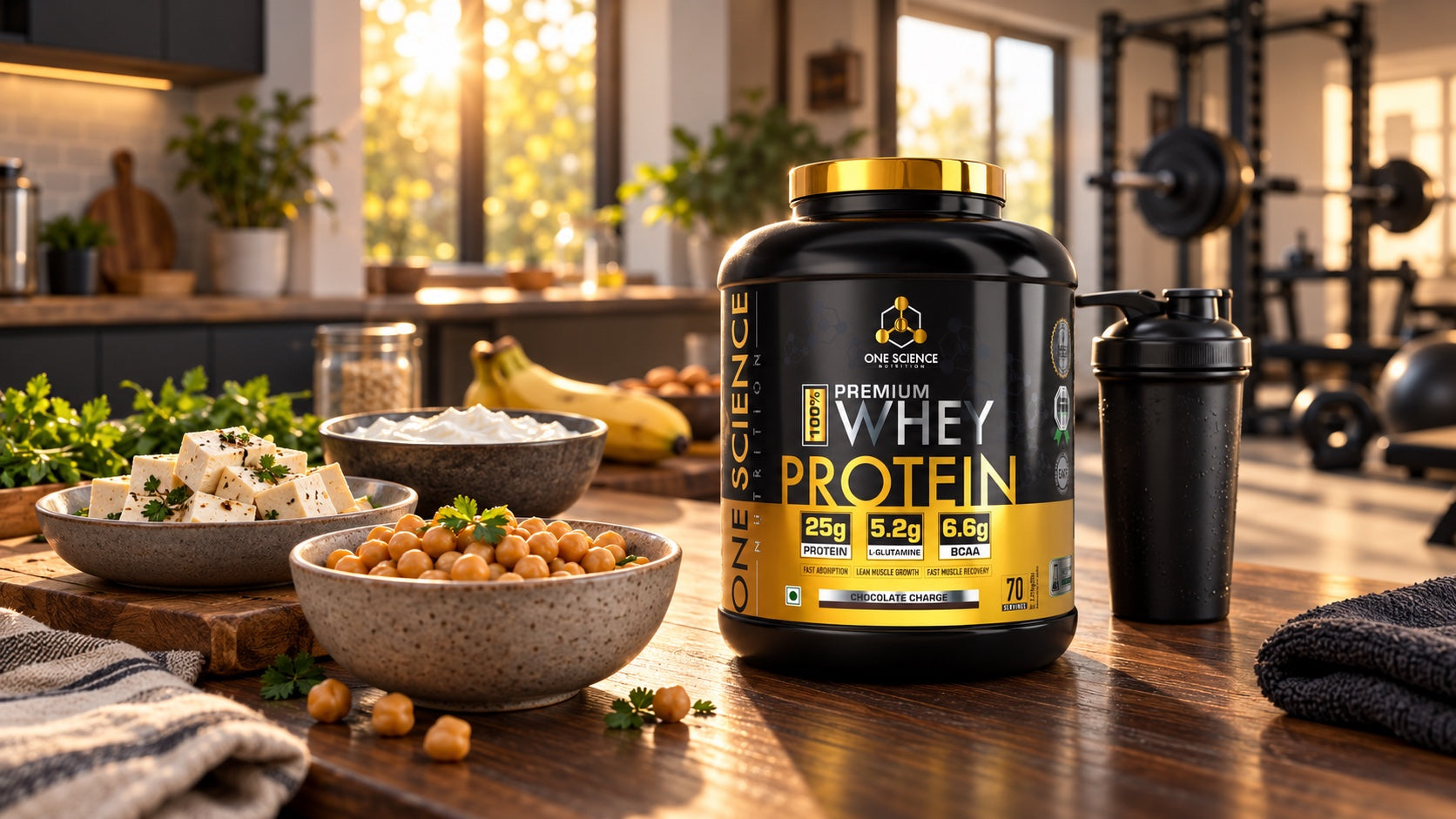
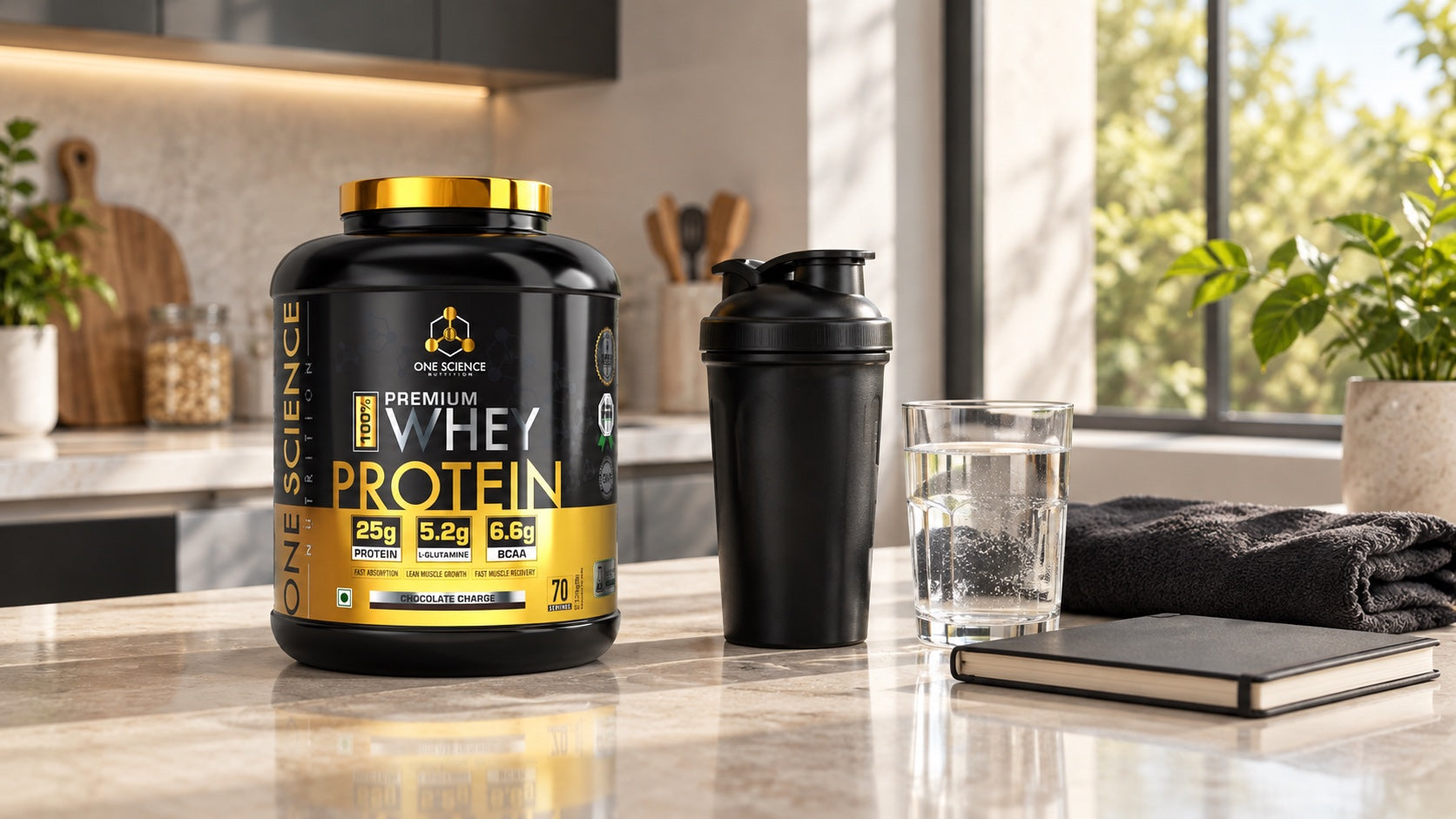
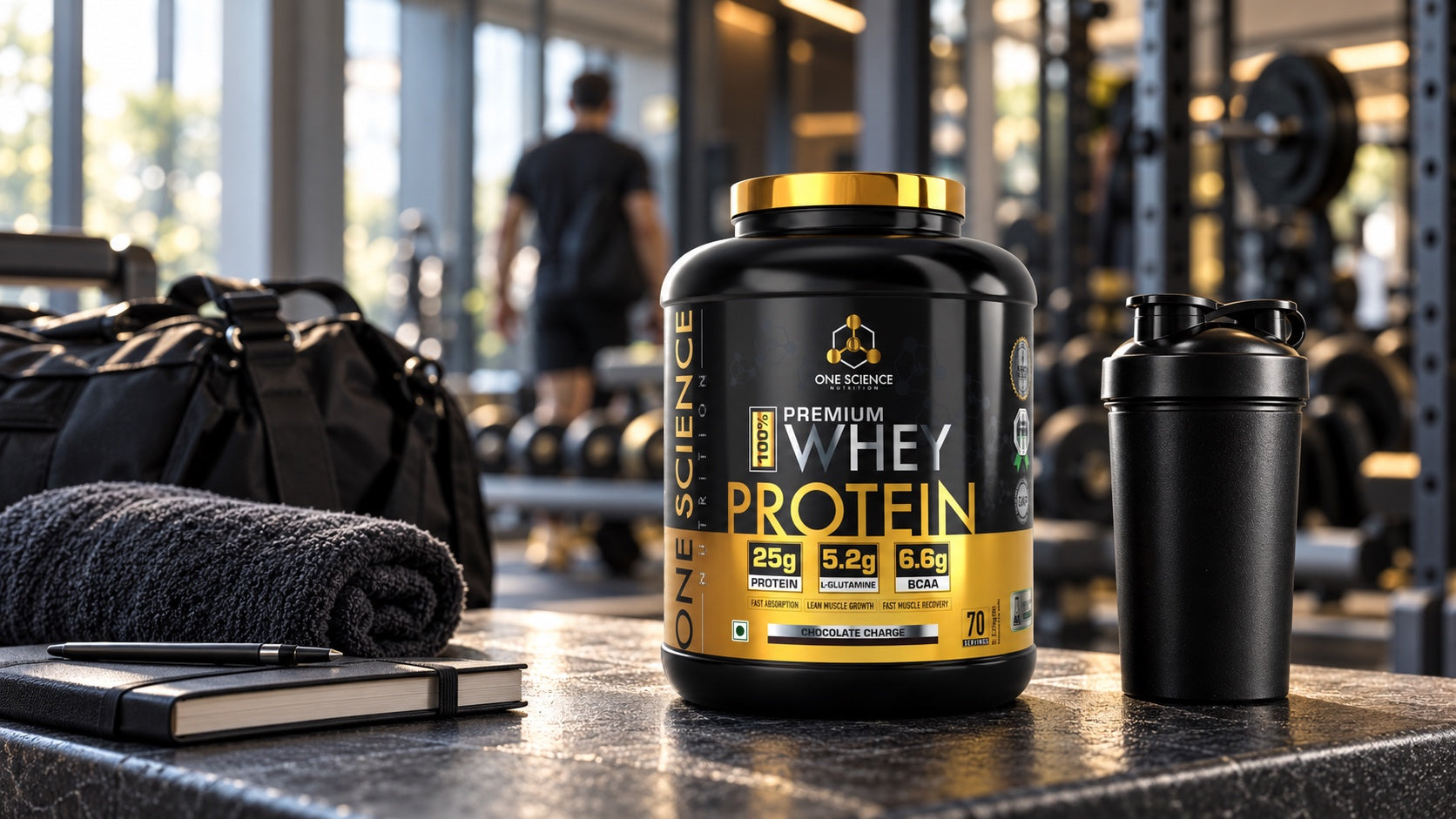
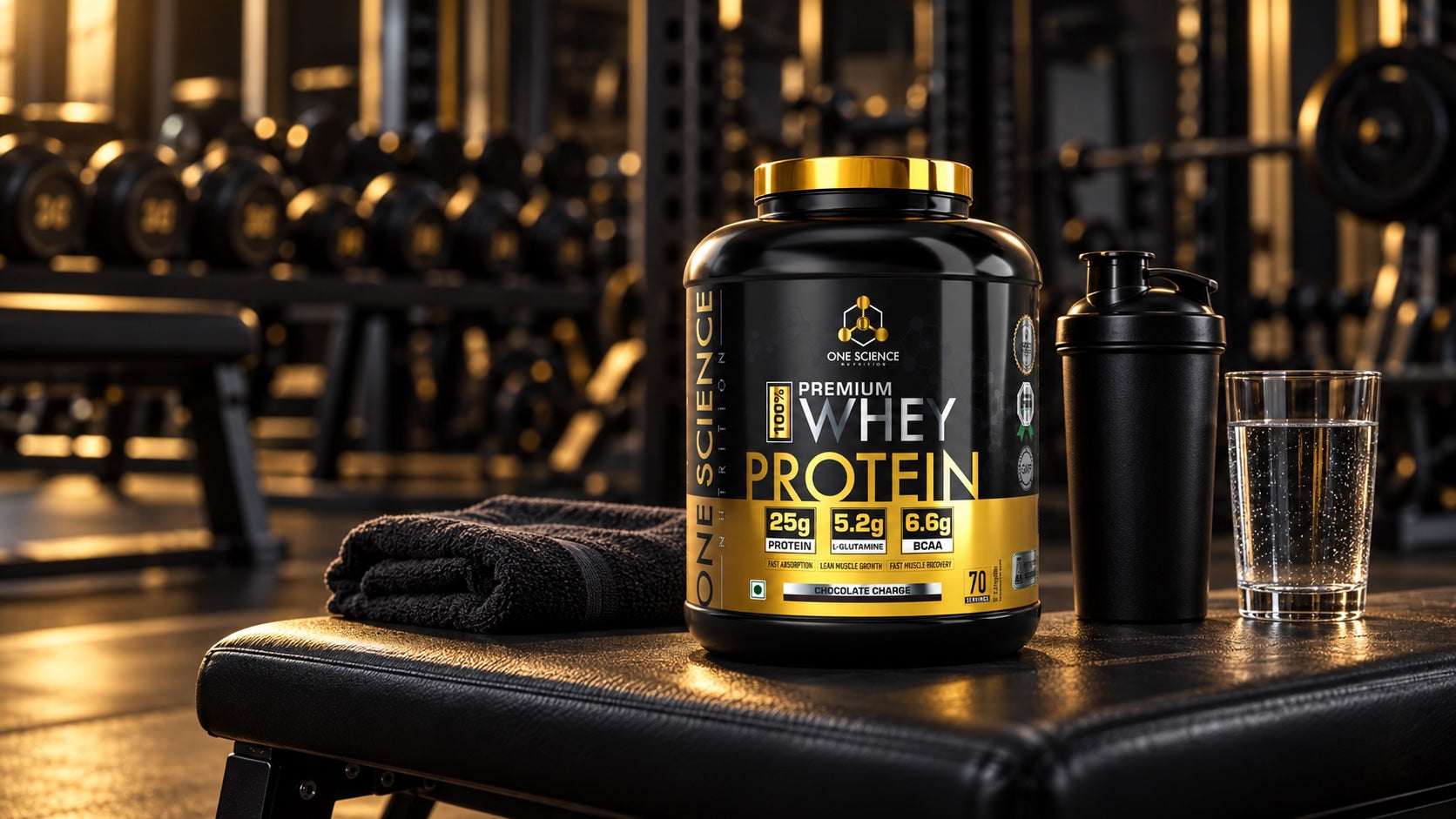
One Science Nutrition Premium Whey combines whey concentrate and isolate. Chocolate Charge supplies 25 g protein and 117 kcal per 32.5 g serving. This gives you a clear protein contribution when a cooked snack is difficult to arrange.
For example, One Science Nutrition Premium Whey can fit between an early lunch and a late dinner if that is where your intake repeatedly falls short. You can also use it at another convenient point within the pack's directions. There is no need to reserve it for the few minutes immediately after training.
One Science Nutrition Premium Whey contains milk and soy, and it is not recommended for children or for use during pregnancy or breastfeeding. Check the flavour you choose and count any milk used for mixing separately.
One Science Nutrition Fermented Yeast Protein for another route
One Science Nutrition Fermented Yeast Protein provides protein from fermented yeast. A 36 g serving supplies 26 g protein and 144.57 kcal. Alphonso Mango, Iced Coffee and Rich Chocolate options are listed.
Choose One Science Nutrition Fermented Yeast Protein if you want to explore a different protein source and a flavoured shake fits your food plan. It can occupy the same kind of practical gap as another protein food. It is an alternative to assess, not a second mandatory shake alongside whey.
For One Science Nutrition Fermented Yeast Protein, check the selected flavour's full ingredients, allergen statement and directions before use, especially if you have an allergy or specific dietary restriction. A different protein source does not establish that every finished flavour suits every consumer.
Rest days still count
Keep protein-containing meals in place when you are not training. Recovery is not restricted to the hour after a workout. A rest day may change your activity and appetite, but it does not remove the body's need for dietary protein.
Look for patterns across a week: a skipped breakfast, a low-protein lunch or an evening meal that keeps getting delayed. Fix that pattern before changing your supplement timing again.
Choose One Science Nutrition Premium Whey for a whey-based serving, or explore One Science Nutrition Fermented Yeast Protein for a yeast-based alternative. Put the serving where it makes your eating pattern easier to follow, then let the rest of the day do its share.