Protein matters because your body uses it to build and maintain tissues, make enzymes and antibodies, carry substances and send signals between cells. Those jobs continue on days when you never step into a gym. Muscle is only part of the story.
The practical challenge is getting enough through a routine you can keep. One Science Nutrition High Protein Oatscan add protein to a planned breakfast, while One Science Nutrition Premium Whey offers a convenient shake when your meals leave a gap. Both belong within a varied diet.
Your body has maintenance work every day
Think about the ordinary things your body does between meals: repairing tissues, moving muscles, digesting food and transporting oxygen. Many of the molecules doing that work are proteins.
Dietary protein is broken down into amino acids. Your body uses those amino acids to make its own proteins, according to what it needs. That is why protein matters for everyday health as well as training.
The Academy of Nutrition and Dietetics puts the basic need plainly:
Anytime your body is growing or repairing itself, protein is needed.
That is why protein deserves regular attention, rather than appearing in your diet only when you start a new workout programme.
The benefits reach beyond muscle
Structure and movement. Proteins help give cells and tissues their structure. In muscle, proteins such as actin help make movement possible. Adequate food and appropriate training support the muscle you use for everyday tasks and exercise.
Digestion and other chemical reactions. Many enzymes are proteins. They help chemical reactions happen, including reactions involved in breaking down food.
Immune functions. Antibodies are proteins that recognise and bind to foreign particles, such as viruses. They are one example of the essential work proteins do beyond your muscles.
Transport and communication. Some proteins carry substances, while others act as messengers. Haemoglobin carries oxygen in red blood cells. Certain hormones are proteins that help cells coordinate their activities.
MedlinePlus Genetics explains these protein functions with examples of the molecules doing each job.
How much protein do you need each day?
There is no single scoop count for everyone. Your needs depend on body size, activity, life stage, diet quality and health.
The ICMR-NIN 2020 summary of nutrient requirements gives a protein RDA of 0.83 g/kg/day for healthy Indian adults, using high-quality protein as the basis. It also notes 1 g/kg/day for cereal-based diets with low-quality protein. Those contexts matter; one number should not be applied to every diet or training goal.
As an illustration, 60 kg multiplied by 0.83 gives 49.8 g of protein per day. That is a general adult reference calculation, not a personalised target for someone training hard or following a medical diet.
For most healthy exercising adults, the International Society of Sports Nutrition's protein position stand discusses 1.4 to 2.0 g/kg/day. Count total protein from meals and supplements. If you have kidney disease or another condition requiring a special diet, follow your clinician or qualified dietitian's plan.
Children, pregnancy, breastfeeding and some older-adult situations need their own assessment. An adult sports supplement is not automatically suitable just because protein itself is essential.
What this looks like in an Indian kitchen
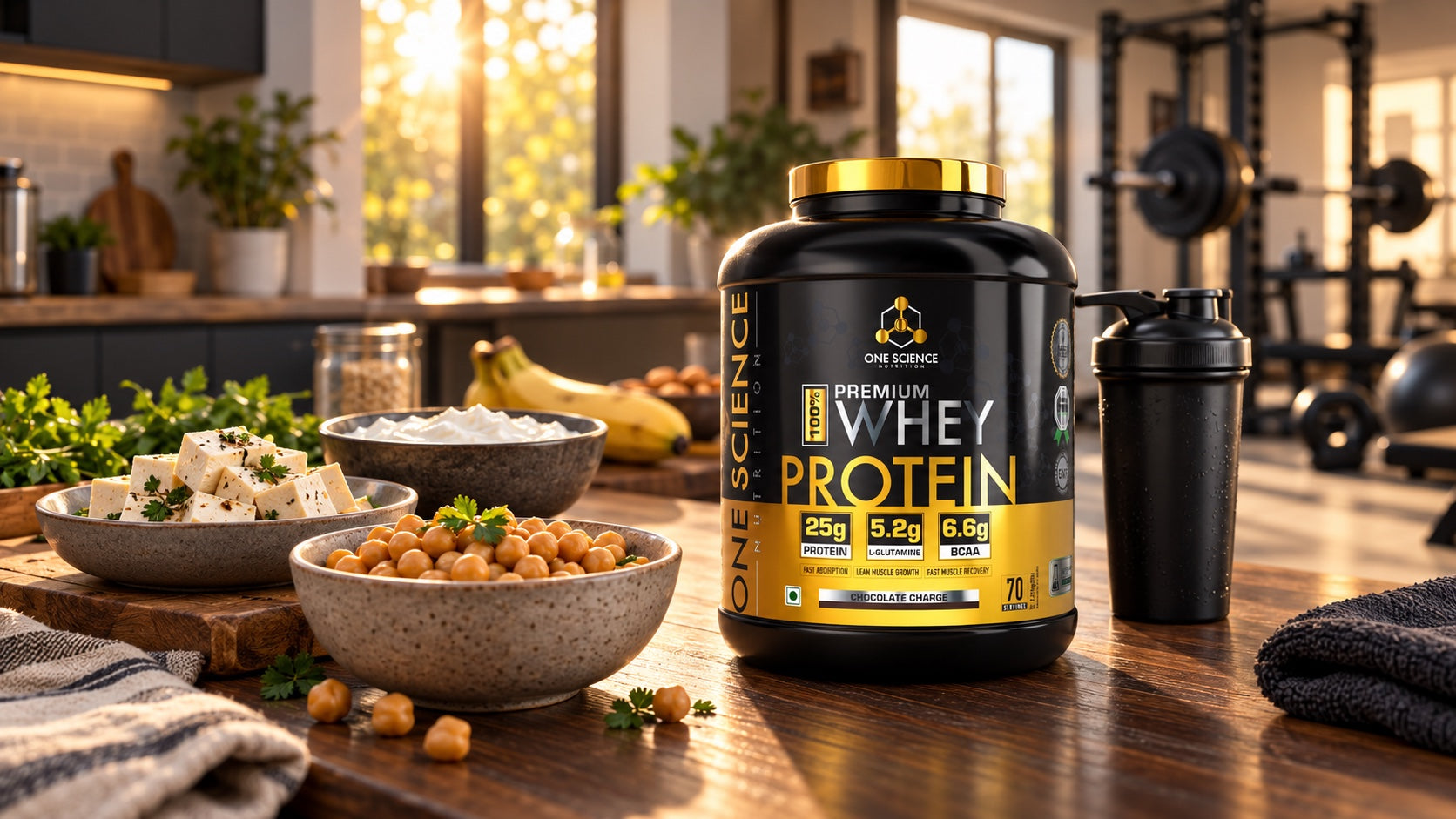
A protein-containing diet can include dal, rajma, chana, tofu, curd, paneer, eggs, fish or meat, according to your preferences. Rice, roti, fruit and vegetables still have a place. You need a balanced pattern, including enough food overall.
Try looking at a normal day rather than hunting for one perfect food. If breakfast is usually just tea, that is one place to improve. If lunch already includes a useful amount of dal and curd, your next decision may be about dinner or a rushed afternoon.
The easiest change is often the one that fits a meal you already eat. You do not have to replace a familiar kitchen with a shelf of supplements.
A breakfast option: One Science Nutrition High Protein Oats
One Science Nutrition High Protein Oats in Dark Chocolate provides 13.3 g of protein per 50 g dry serving. That serving supplies 207 kcal, 4.1 g of fibre and 4.5 g of added sugar.
The milk preparation on the label lists 21.4 g of protein and 390 kcal when 250 ml of cow's milk is added. Those figures describe the combined bowl. Changing the milk or adding fruit, seeds or nut butter changes the nutrition.
Choose One Science Nutrition High Protein Oats when a chocolate oat breakfast is something you would actually enjoy repeating. It contains soy and almonds, so it is unsuitable if those allergens are a problem for you. Keep the portion and preparation consistent with your needs and the purchased pack.
A convenient top-up: One Science Nutrition Premium Whey
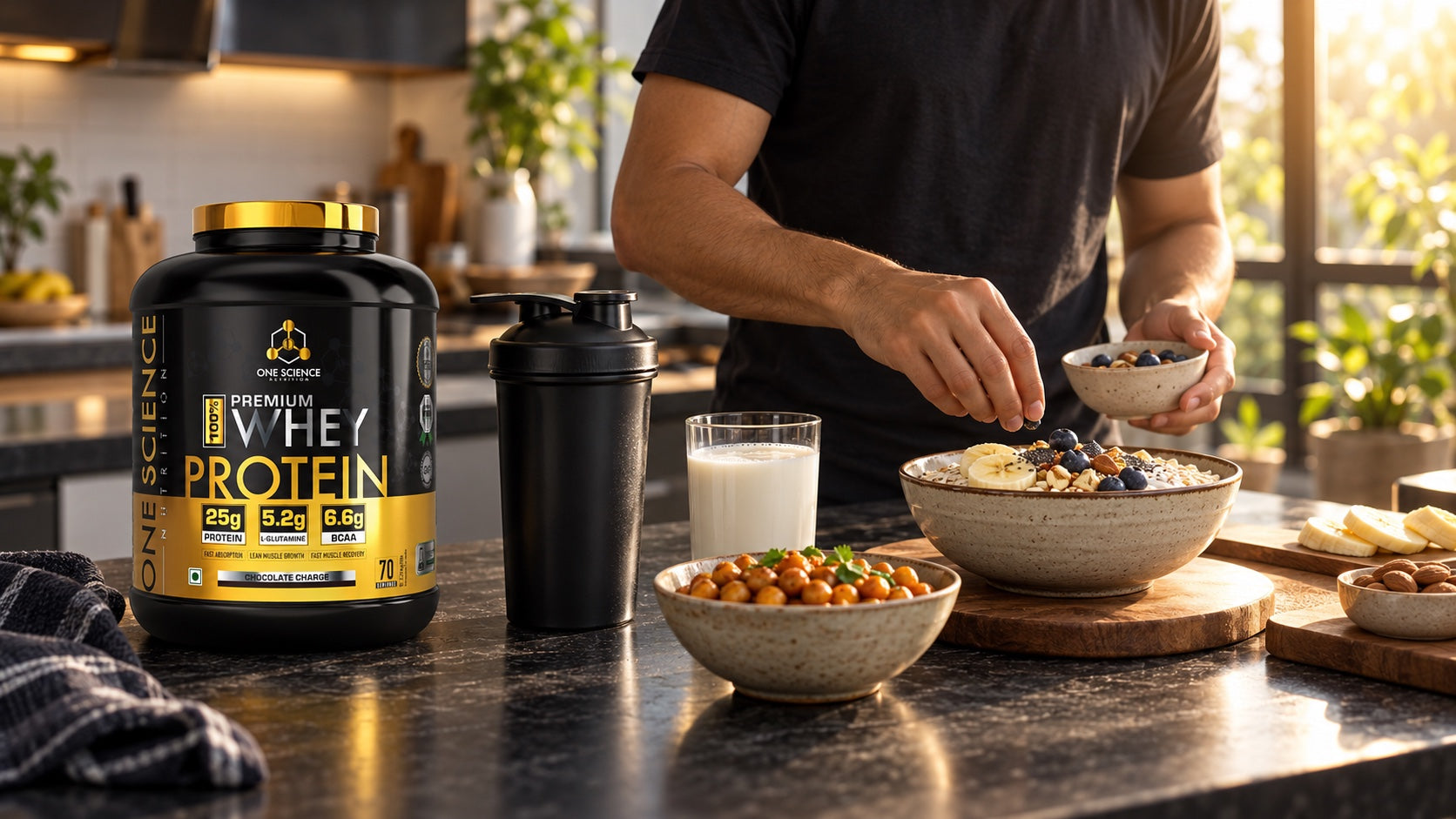
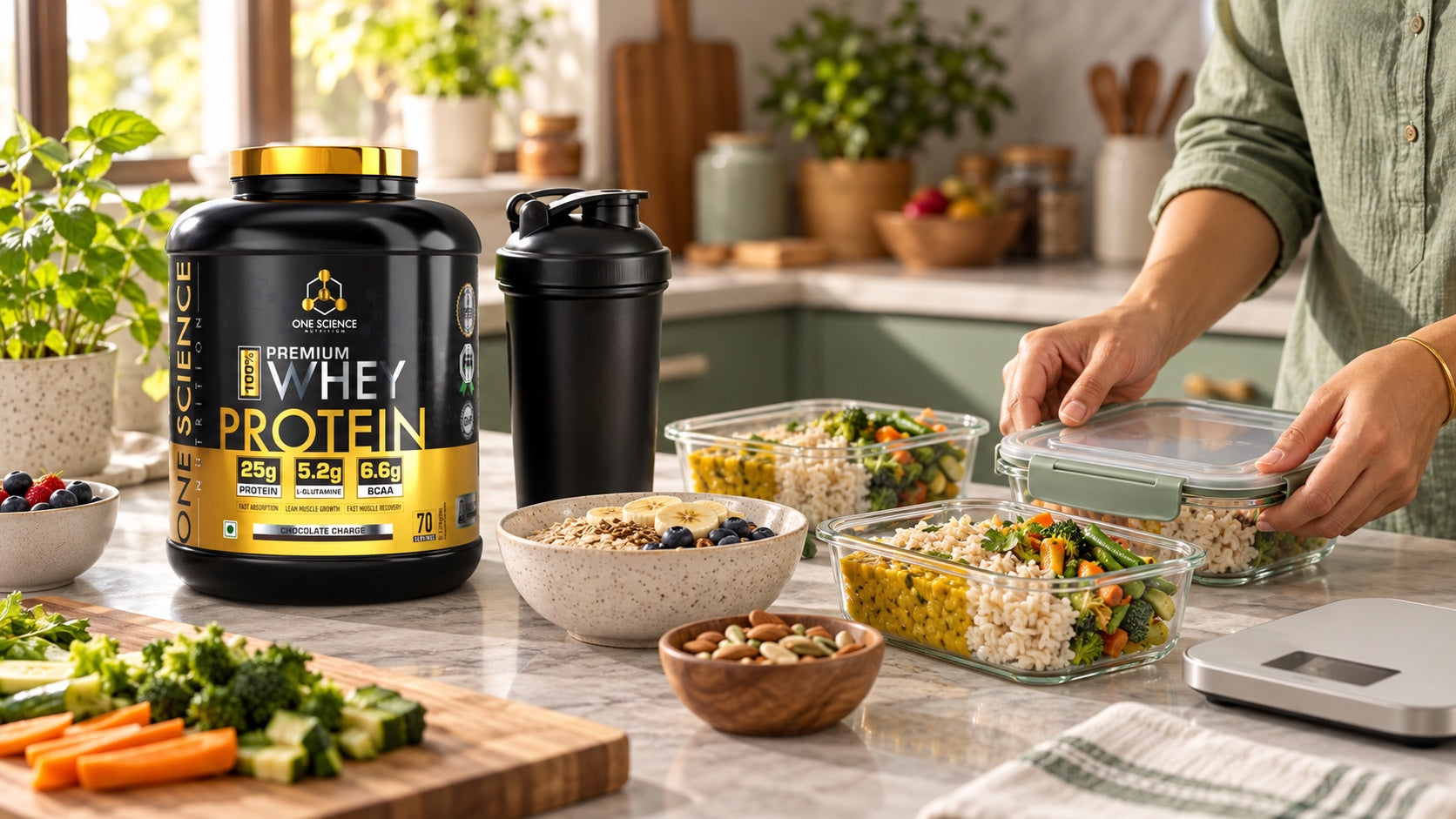
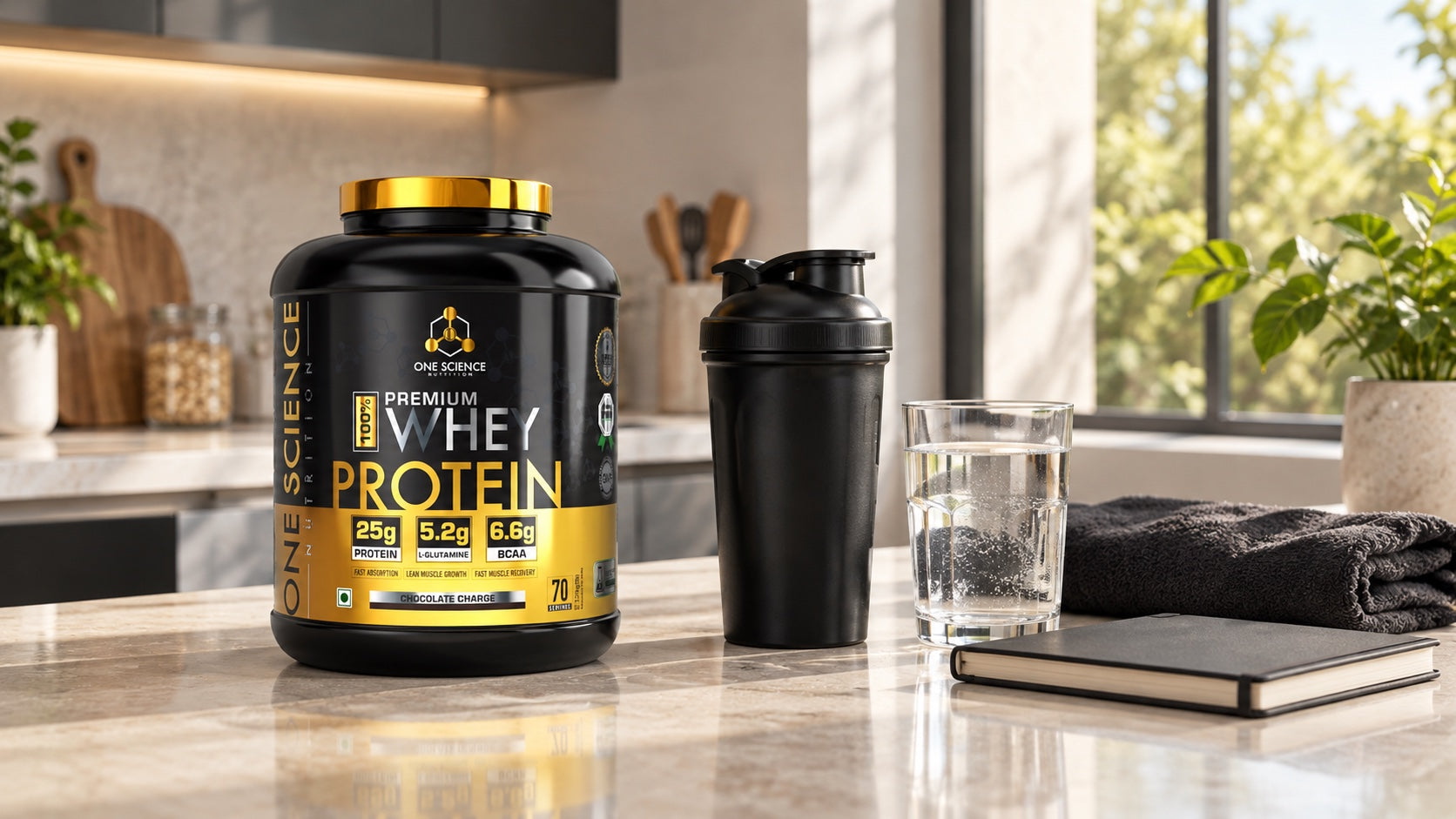
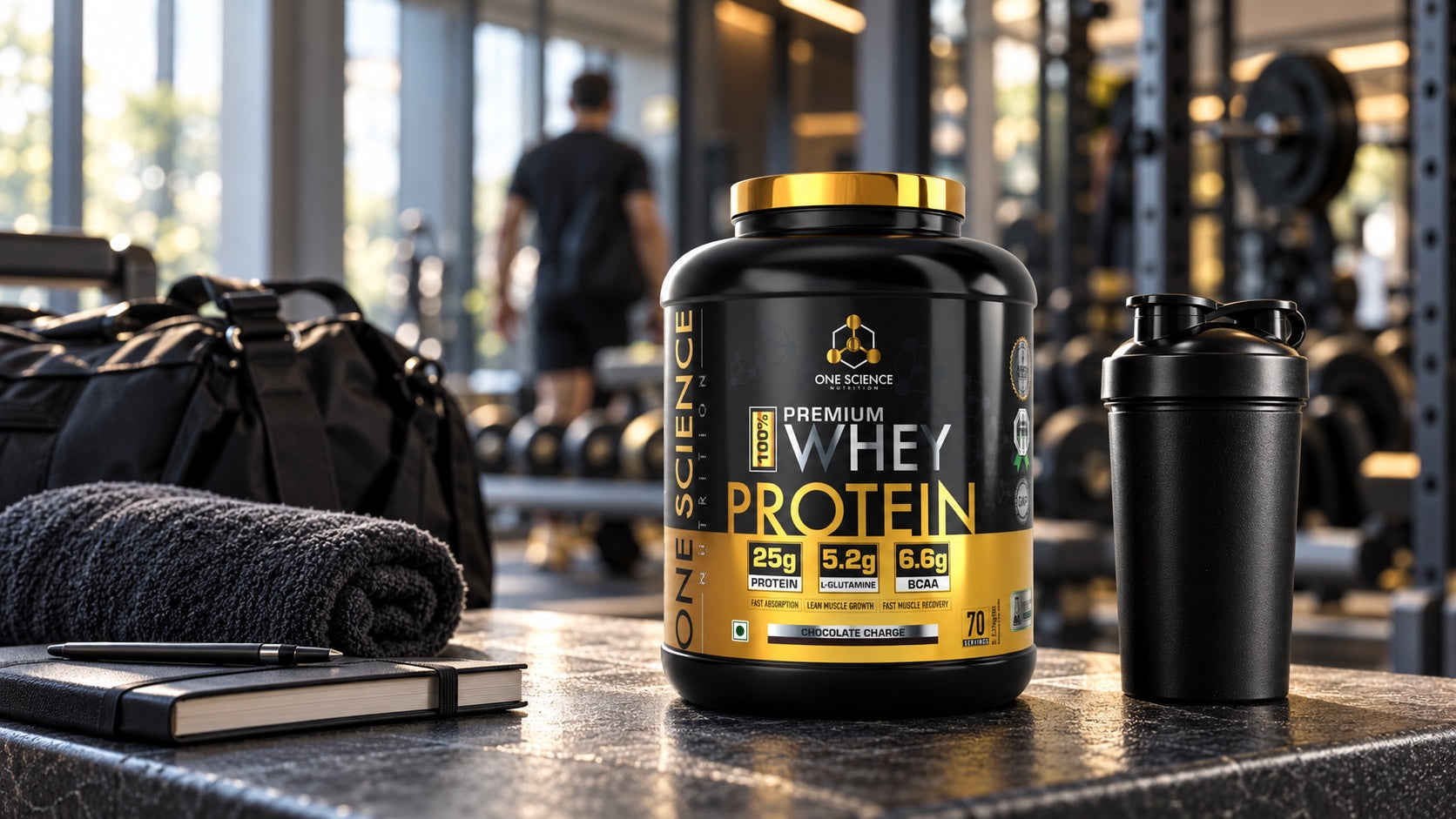
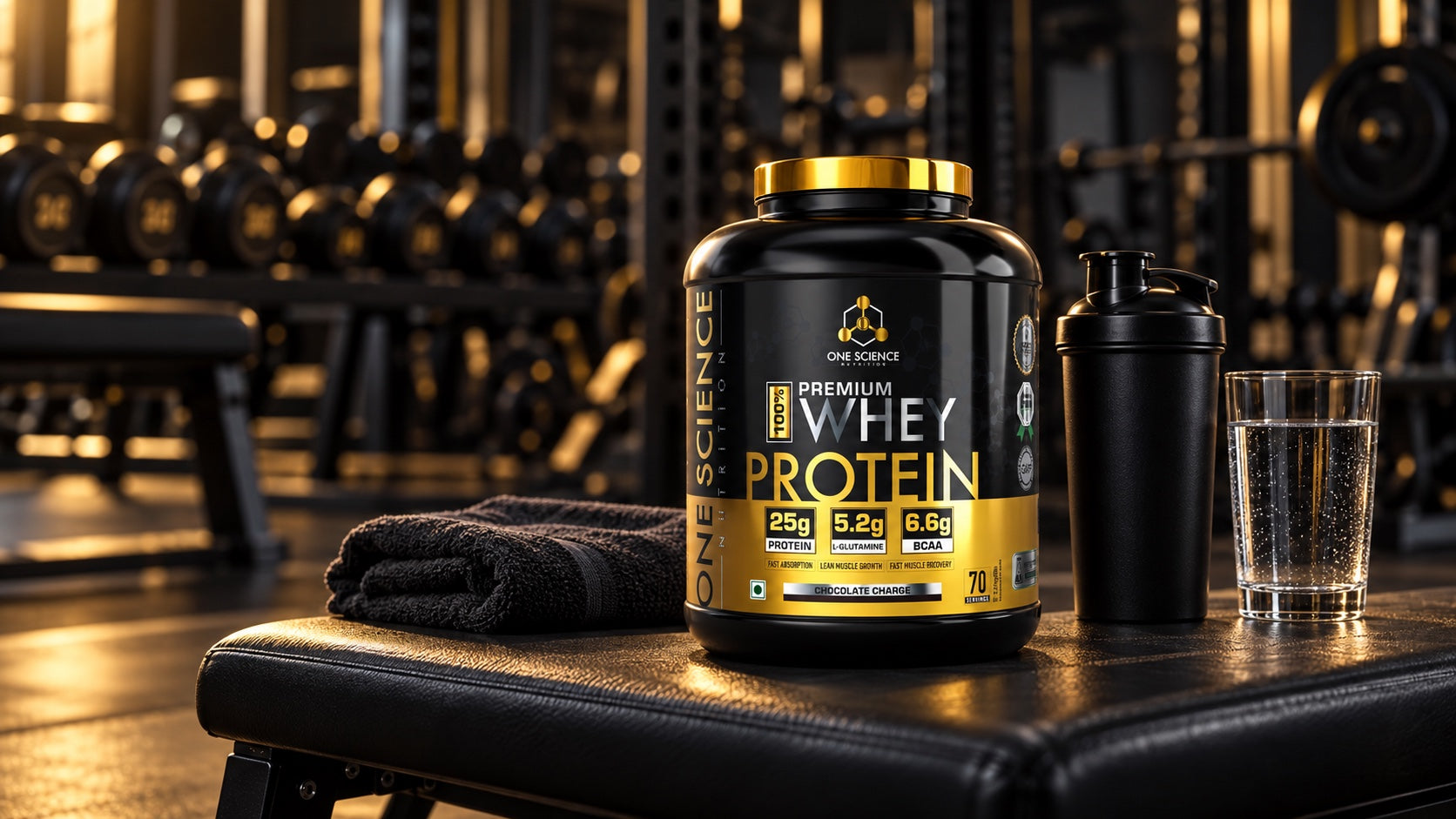
One Science Nutrition Premium Whey combines whey concentrate and isolate. Chocolate Charge supplies 25 g of protein and 117 kcal in a 32.5 g serving, with 1.6 g of carbohydrate and 2.1 g of fat.
That is useful when you want a clear protein contribution without cooking another meal. For example, if a suitable daily target were 90 g and meals supplied 65 g, a 25 g serving would fill the illustrative gap. If your meals already covered your needs, a shake would be a convenience choice rather than an automatic requirement.
The directions use one 32.5 g serving in 150 to 200 ml of water or milk daily. Milk adds its own nutrients.
One Science Nutrition Premium Whey contains milk and soy. It is not recommended for children or pregnant or breastfeeding women. Check with a clinician if a medical condition or medicines affect your choice.
What changes on a rest day?
Your body still repairs, replaces and uses proteins when you are not training. You do not need to remove protein foods from a rest-day menu.
Whether a shake is useful that day depends on what you eat and the product's directions. Avoid swinging between barely eating protein on quiet days and doubling supplements on gym days. A routine that covers your needs is easier to manage.
Protein is essential. More is not automatically better. Start with the meal that needs attention, then choose One Science Nutrition High Protein Oats for a breakfast option or One Science Nutrition Premium Whey for a convenient protein top-up.