You usually do not need a separate BCAA supplement simply because you take protein powder. Whey already supplies the three branched-chain amino acids, alongside the other essential amino acids your body needs. Start with your total dietary protein and the job you want a supplement to do.
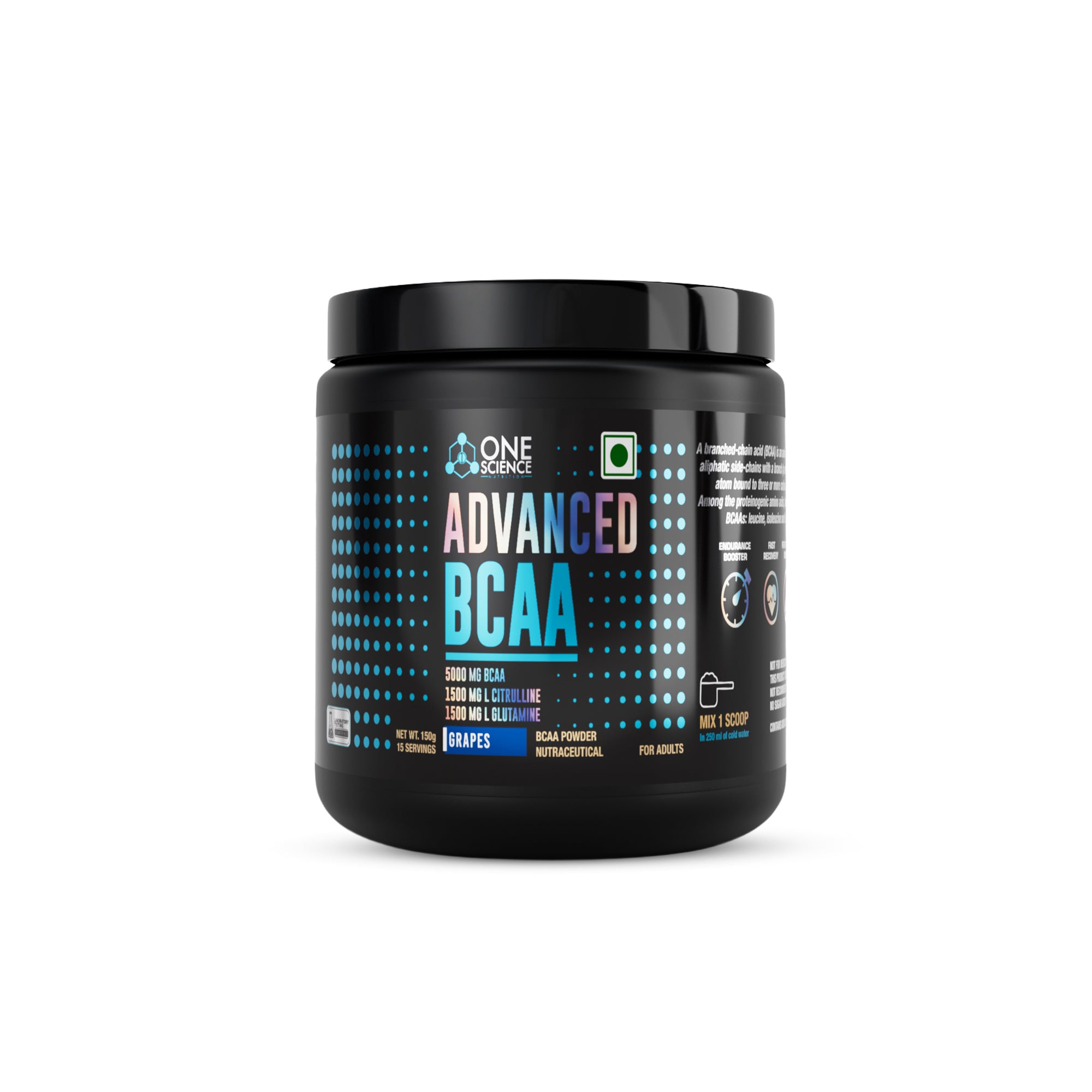
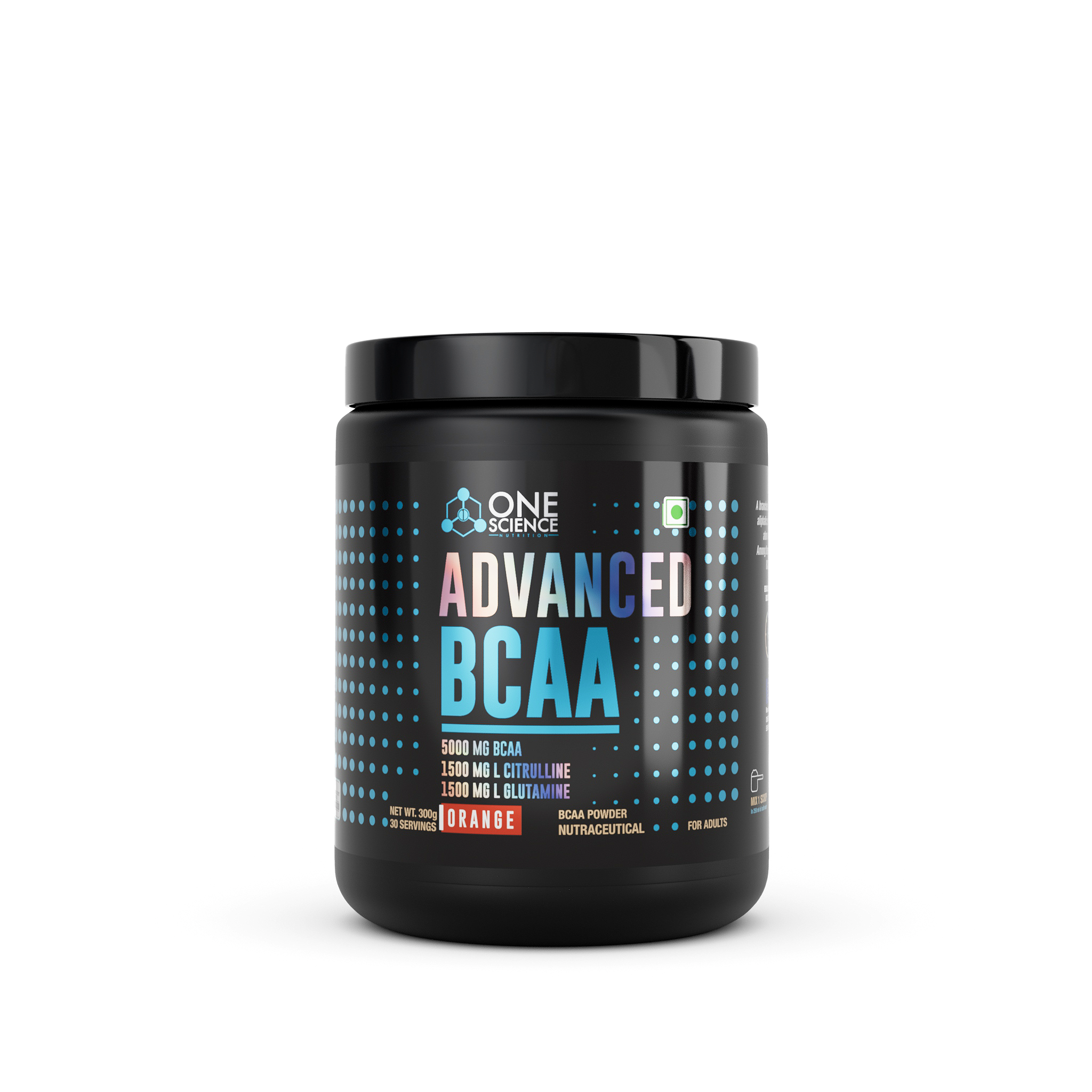
If that job is adding protein, One Science Nutrition Premium Whey is the relevant option to compare. If you want an orange-flavoured amino-acid drink with a disclosed BCAA and electrolyte formula, look at One Science Nutrition Advanced BCAA. They are different purchases, rather than a compulsory pair.
Make the decision before building a stack
Your meals leave a protein gap. Prioritise a protein-containing food or a suitable protein supplement. A BCAA drink does not replace the full range of amino acids provided by dietary protein.
Your meals and whey already cover your protein needs. Do not assume another amino-acid product will produce extra muscle growth. Check whether it adds something you actually want, such as a particular flavoured drink format.
You want something to sip while training. Compare the ingredients, flavour, directions and suitability of the drink. Keep the day's protein meals in place. A supplement containing electrolytes is not automatically a complete hydration plan for every sport or climate.
You train before breakfast. BCAAs still do not become a complete protein source because the session is fasted. Consider your food before and after the session, how you feel and whether fasted training suits you.
What is the difference between BCAA and protein?
BCAAs are leucine, isoleucine and valine. They are three of the nine essential amino acids, which you need to obtain through your diet. Protein foods and whey provide a wider range of amino acids.
Leucine helps signal the muscle-building process, but a signal alone is not the same as supplying all the materials needed to make new muscle protein. Researcher Robert R. Wolfe explains in his 2017 review of BCAAs and muscle protein synthesis: “Muscle protein synthesis will be limited by the lack of availability of any of the EAAs”. EAAs means essential amino acids.
That is the practical distinction. You need the full set, whether it comes from meals, a suitable protein powder or a wider dietary pattern. A BCAA-to-protein comparison should look at what each serving contributes, rather than which scoop has the bigger number on the front.
Compare two One Science Nutrition options by their actual role
| What you are comparing |
One Science Nutrition Premium Whey |
One Science Nutrition Advanced BCAA |
| Formula |
Whey concentrate and isolate blend |
BCAAs with citrulline DL-malate, glutamine and electrolytes |
| Serving used here |
32.5 g, Chocolate Charge |
10 g, Orange |
| Main contribution |
25 g of protein |
5 g of BCAAs |
| Amino-acid scope |
Complete whey protein, including naturally occurring BCAAs |
Three BCAAs; not a complete protein replacement |
| Useful purchase reason |
Convenient protein to help close a dietary gap |
An orange-flavoured amino-acid drink with specified ingredients |
The quantities describe the named flavours. Five grams of BCAAs and 25 g of protein are not interchangeable measurements of the same thing.
When One Science Nutrition Premium Whey fits
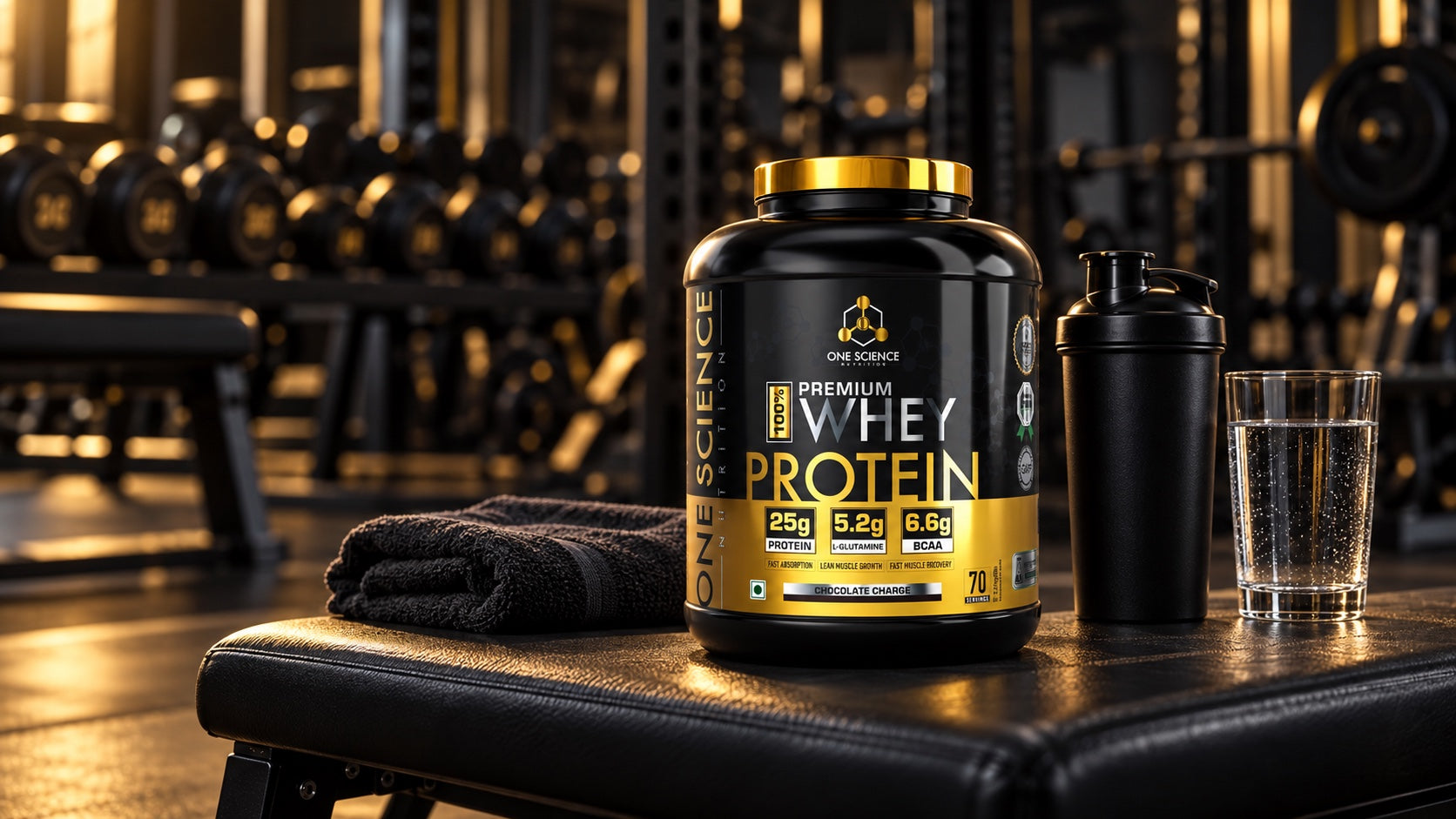
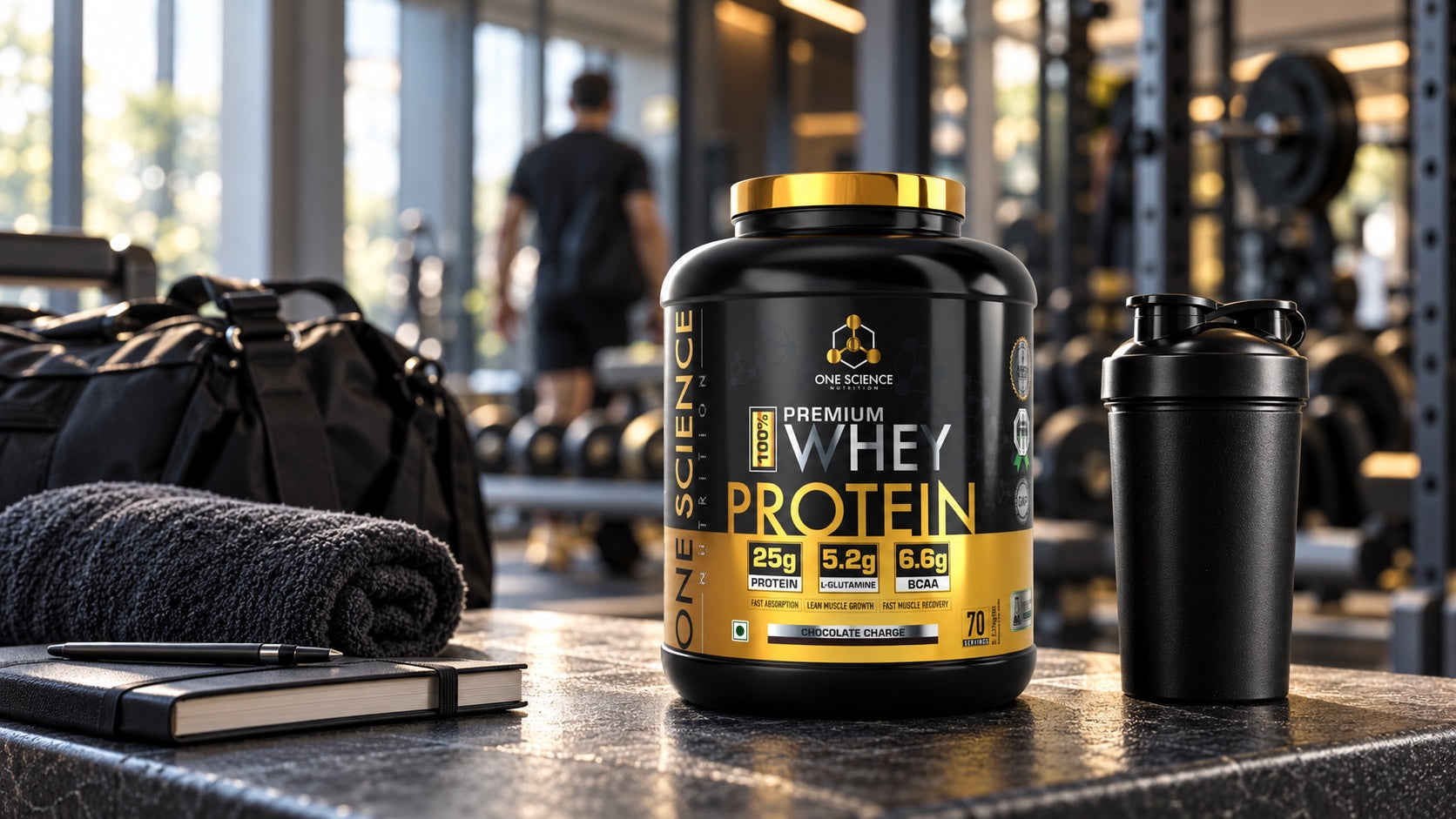
One Science Nutrition Premium Whey in Chocolate Charge provides 25 g of protein and 117 kcal per 32.5 g serving. It combines concentrate and isolate, with 1.6 g of carbohydrate and 2.1 g of fat in that serving.
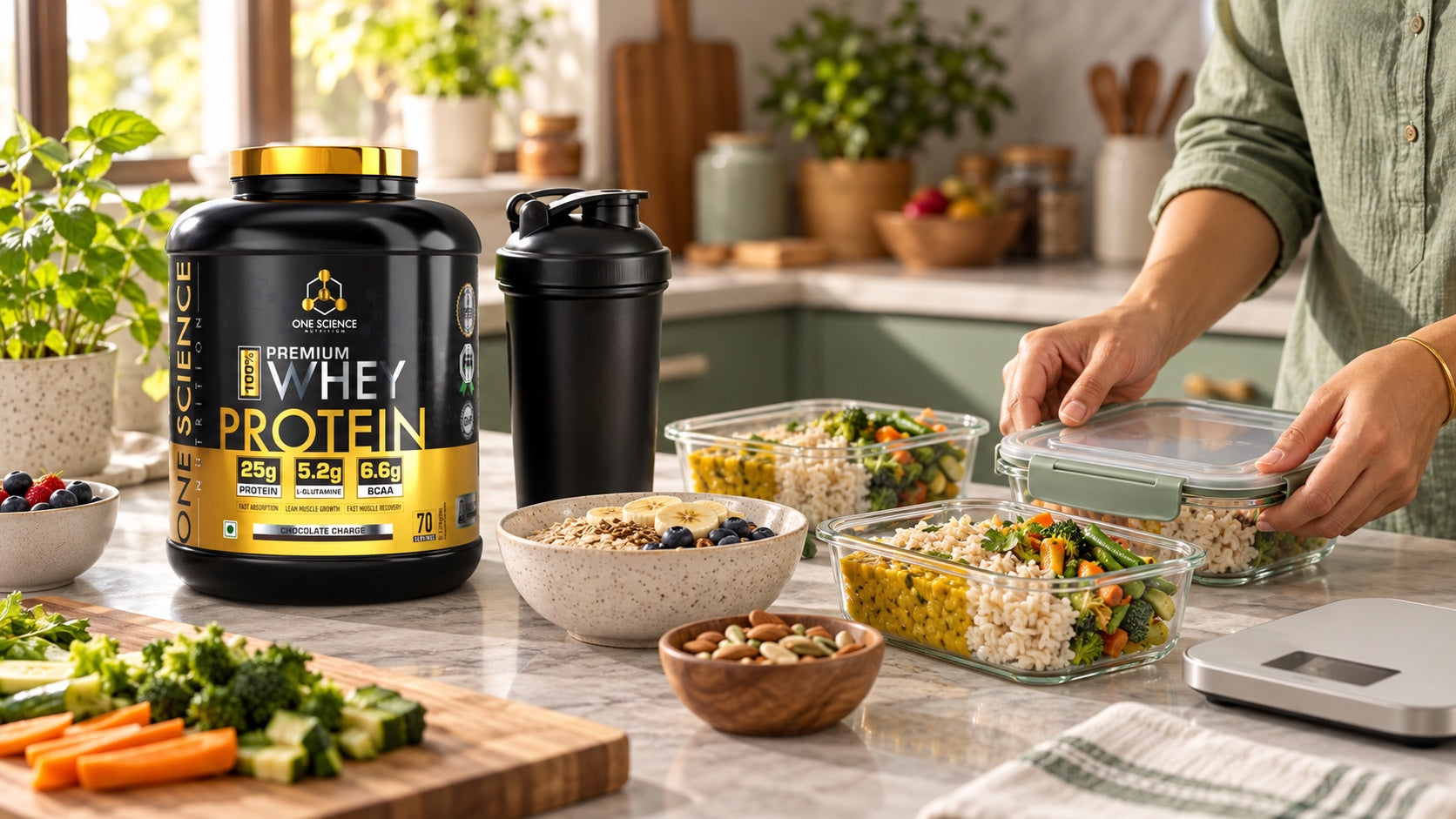
That makes it straightforward to plan a protein top-up around food. Suppose an adult's individually appropriate target is 100 g and meals supply 75 g. A 25 g protein serving would close that illustrative gap. Adding a BCAA drink instead would not supply the same complete protein contribution.
The directions use one daily serving in 150 to 200 ml of water or milk. Milk changes the shake's nutrition.
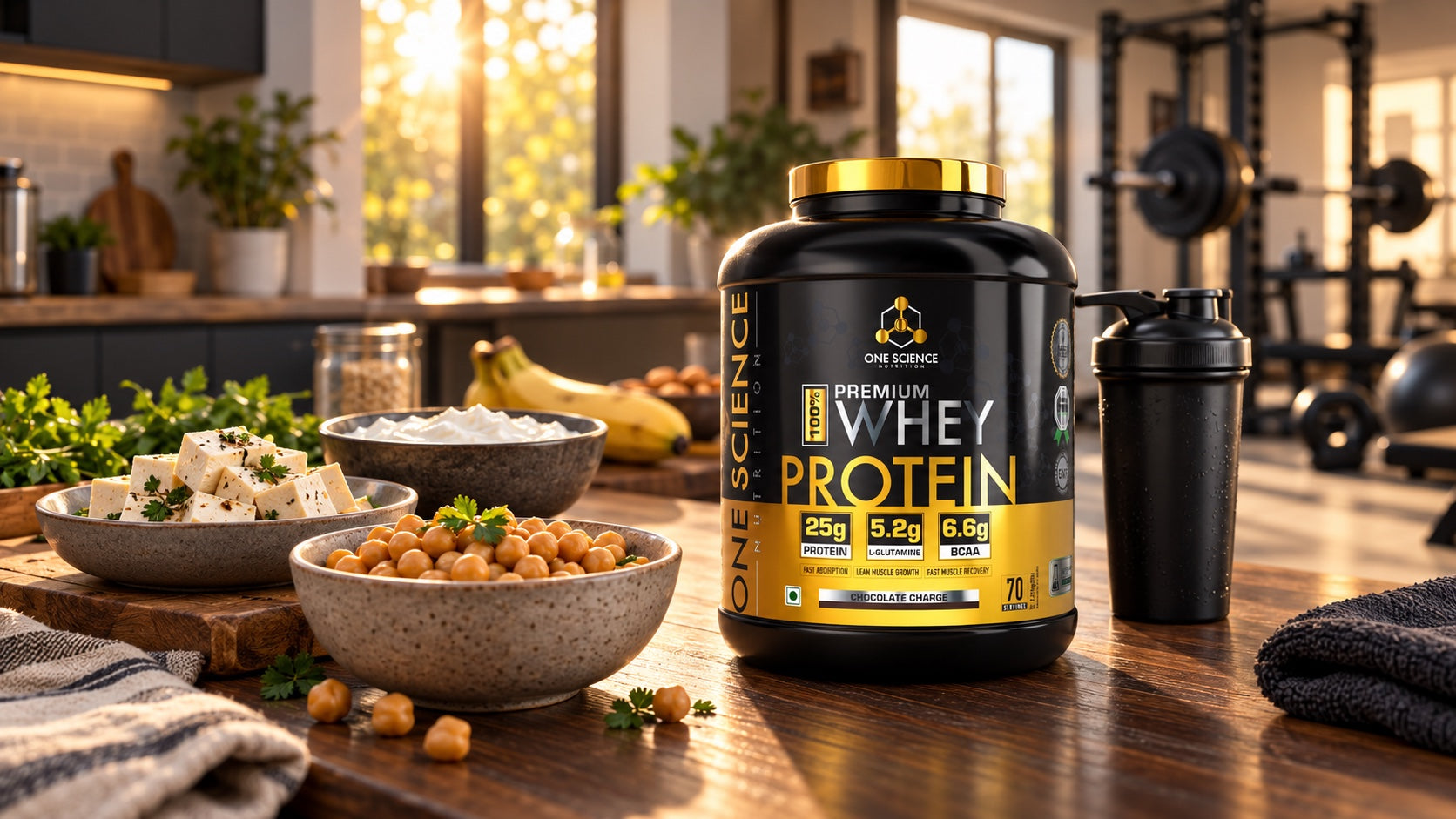
Choose One Science Nutrition Premium Whey when a whey blend is the convenient protein source your routine needs. It contains milk and soy and is not recommended for children or pregnant or breastfeeding women.
When to consider One Science Nutrition Advanced BCAA
One Science Nutrition Advanced BCAA in Orange supplies 5 g of BCAAs per 10 g serving. The breakdown is 2.5 g leucine, 1.25 g isoleucine and 1.25 g valine, a 2:1:1 ratio. The formula also lists 1.5 g citrulline DL-malate, 1.5 g glutamine, 150 mg sodium and 150 mg potassium.
These details help you compare the drink with other products you use. The extra ingredients do not make the formula a full protein serving, and their inclusion does not establish an additional muscle-gain benefit for someone already eating enough protein.
The label directions use 10 g in 250 ml of cold water, once daily. Consider One Science Nutrition Advanced BCAA if its orange flavour and disclosed formula fit your preferences and dietary restrictions. Keep its role separate from filling a protein gap.
The product is for adults. Its facility warning lists milk, egg, gluten, soy, peanuts, nuts, celery, fish and crustaceans. Follow the pack's restrictions and seek professional advice for pregnancy, breastfeeding, medical conditions or medicines.
Does research show any effect from BCAAs alone?
Some short-term studies have measured a muscle protein synthesis response after BCAA intake. That is different from proving a useful extra benefit when BCAAs are added to an already adequate protein intake.
A 2017 study by Jackman and colleagues compared a 5.6 g BCAA drink with placebo after resistance exercise in ten young resistance-trained men. It reported a 22% higher myofibrillar protein synthesis rate over four hours with BCAAs. Myofibrillar protein synthesis means making proteins involved in muscle contraction.
That does not mean 22% more muscle growth. It was a small, acute study, and it did not test One Science Nutrition Advanced BCAA or establish the benefit of adding it to an adequate whey routine. The useful question is whether an additional purchase improves the plan you already follow.
Before you buy both, answer these three questions
-
What is missing from my diet? If the answer is protein, address food and complete protein first.
-
What specific role would the second product serve? Flavour and drink format are valid preferences. Guaranteed extra muscle gain is not an established reason.
-
Have I checked every product I already take? Ingredient overlaps and directions matter more than assembling the largest stack.
For a protein gap, explore One Science Nutrition Premium Whey. For a separate orange-flavoured amino-acid drink, compare One Science Nutrition Advanced BCAA. Choose the role you need; buying both is optional.