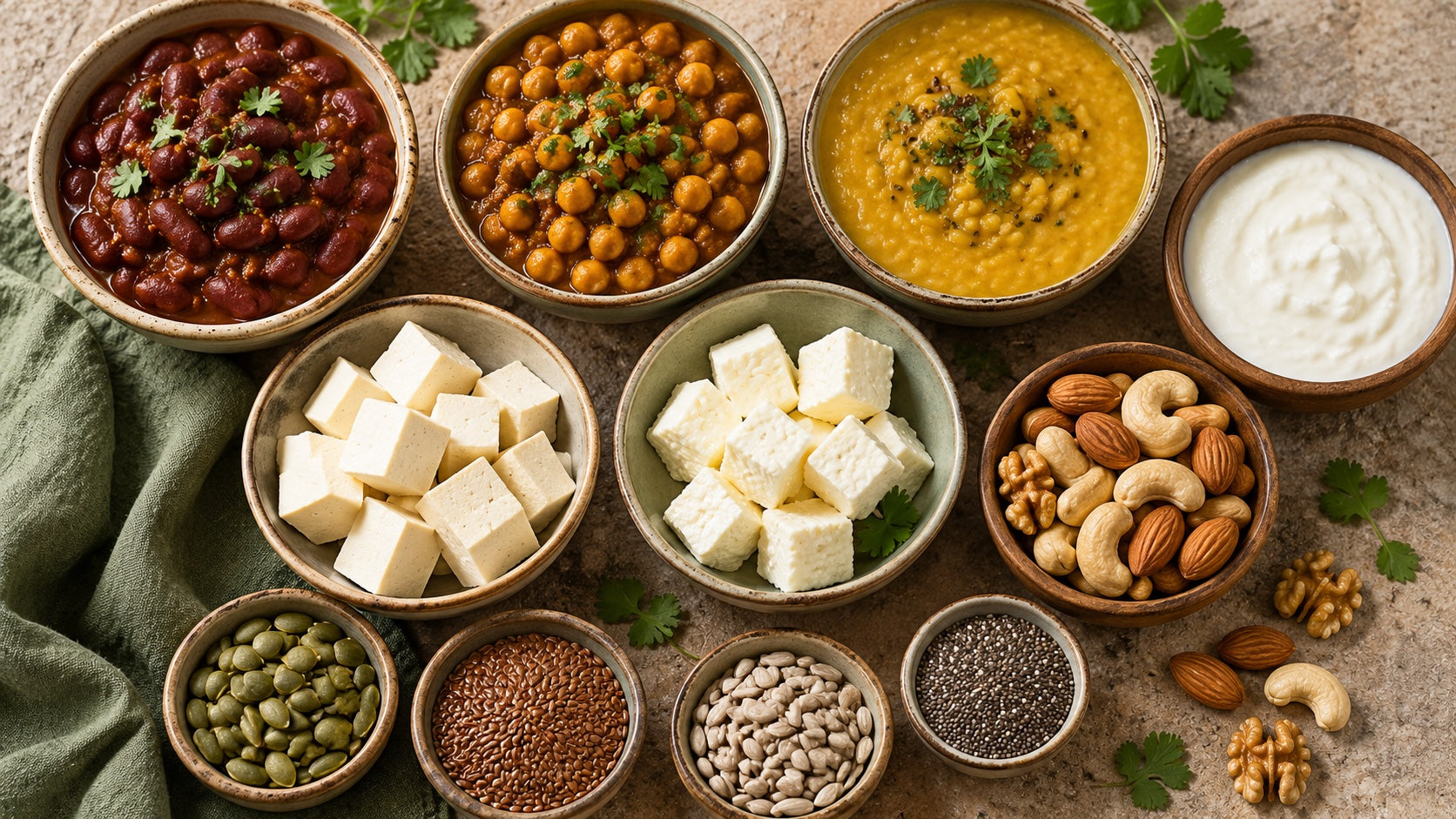
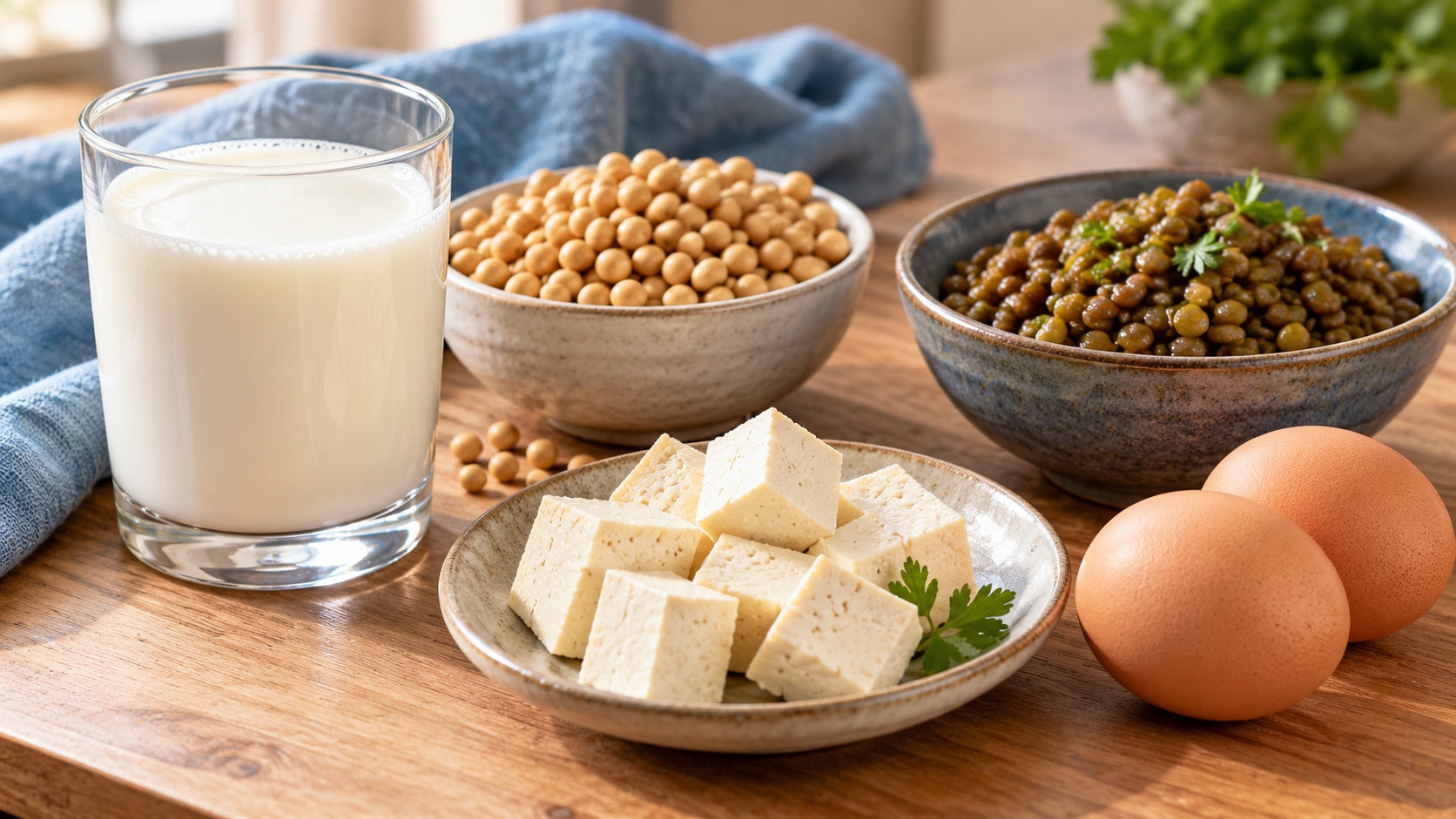
The best vegetarian protein sources in India are usually foods you can buy, cook and eat regularly: dals, beans, soy foods, milk, curd and paneer. Nuts and seeds add variety. A plant-based protein powder can help when meals leave a gap.
One Science Nutrition Pea Protein offers a convenient pea-based option, while One Science Nutrition High Protein Muesli can make breakfast easier to plan. Both have a role alongside familiar meals. Start with what you already eat, then improve the meals that contain very little protein.
Choose by the meal you need to fix
A list of foods is useful. Knowing where to put them is better.
| Meal gap |
Foods to consider |
A simple way to use them |
| Breakfast is mostly tea and toast |
Curd, milk, tofu, paneer or a protein-containing cereal |
Add curd beside breakfast, or make a tofu or paneer filling |
| Lunch has rice and vegetables but little else |
Dal, rajma, chana, tofu or soy chunks |
Give the protein food its own proper portion |
| Snacks are mostly biscuits |
Roasted chana, curd, milk or a planned shake |
Choose something you can keep at work or prepare quickly |
| Dinner relies on one small spoon of dal |
A larger pulse portion, soy food, paneer or curd |
Build the meal around the protein source, then add other foods |
There is no need to replace every meal. Fix one weak spot first. A breakfast you can repeat on a rushed Tuesday matters more than an elaborate plan you only cook on Sunday.
Pulses: make dal, chana and rajma do more of the work
Moong, masoor, toor, chickpeas and kidney beans are familiar protein foods with plenty of uses. Dal with rice, chana in a salad, rajma with rice, or a pulse-based chilla can all fit a vegetarian day.
Portion and preparation matter. A thin bowl of dal is not nutritionally identical to a thick serving of cooked lentils. A dry ingredient's weight also cannot be swapped directly for the same weight after cooking, because cooking adds water.
You can make pulses more central without making lunch complicated: serve a generous portion, keep vegetables, and adjust rice or roti around your appetite and needs. Avoid assuming that the word “dal” alone tells you how much protein the meal contains.
Soy foods: useful when you want more options than paneer
Tofu, soy chunks, soybeans and tempeh offer different textures and cooking options. Tofu works in bhurji, stir-fries and curry. Rehydrated soy chunks can go into pulao or a tomato-based gravy.
Choose the form you enjoy and read the serving information on packaged foods. Dry soy chunks, cooked soybeans and a tofu block do not share one universal nutrition figure. Soy is also an allergen, so it does not suit everyone.
Dairy: convenient for vegetarians who include milk
Milk, curd, paneer and some strained yogurts can contribute protein without much preparation. Check the food you are buying: regular curd and a high-protein strained yogurt can differ substantially, as can full-fat and lower-fat paneer.
Vegetarian and vegan are different choices. Dairy can fit a lacto-vegetarian diet; a vegan diet excludes it. You can build a plant-based day using pulses, soy foods, grains, nuts, seeds and a suitable protein powder instead.
The MedlinePlus amino-acid guide, reviewed by registered dietitian Stefania Manetti and its medical review team, explains that variety across the day matters. You do not have to pair particular plant proteins at every single meal.
Nuts and seeds: additions worth keeping in perspective
Peanuts, almonds, pumpkin seeds and sesame can add protein, texture and other nutrients. Use them as part of a varied diet. They also bring fat and energy, so a handful is different from making them the only substantial protein source in a meal.
For a broader view of food choice, Harvard's Nutrition Source discusses the fibre, fats and other nutrients that accompany protein. The whole food matters, not just the protein number.
Two practical additions from One Science Nutrition
One Science Nutrition Pea Protein for a planned shake
One Science Nutrition Pea Protein uses pea protein isolate. A 40 g serving provides 25 g protein and 154.52 kcal, with 5 g fibre. Iced Coffee, Rich Chocolate and Unflavored options are listed.
Use One Science Nutrition Pea Protein when a shake makes an otherwise difficult protein gap easier to cover, such as a busy afternoon when a substantial snack is impractical. Keep lunch and dinner varied rather than asking one powder to do every job. Follow the purchased flavour's directions and check its full ingredient and allergen information if you have an allergy.
One Science Nutrition High Protein Muesli for breakfast
One Science Nutrition High Protein Muesli in Dark Choco Crunchy supplies 13.2 g protein and 194 kcal per 50 g dry serving. The dry serving also contains 3.5 g fibre and 4.4 g added sugar. Any milk or yogurt you add contributes separately.
One Science Nutrition High Protein Muesli suits mornings when a measured cereal portion is easier than cooking. It contains soy, wheat and almonds. It is not gluten-free, and jaggery is still an added-sugar ingredient. Choose the milk or yogurt alongside it according to your diet, rather than assuming every prepared bowl has the same protein total.
Make your next grocery list shorter
Pick two pulses, one soy food and, if you eat dairy, one dairy protein you will use this week. Choose a breakfast and an afternoon option before buying more ingredients.
For a convenient shake, explore One Science Nutrition Pea Protein. For a breakfast cereal with a clear protein contribution, explore One Science Nutrition High Protein Muesli. Buy the option that fixes a real meal gap and keep your everyday vegetarian foods in the plan.