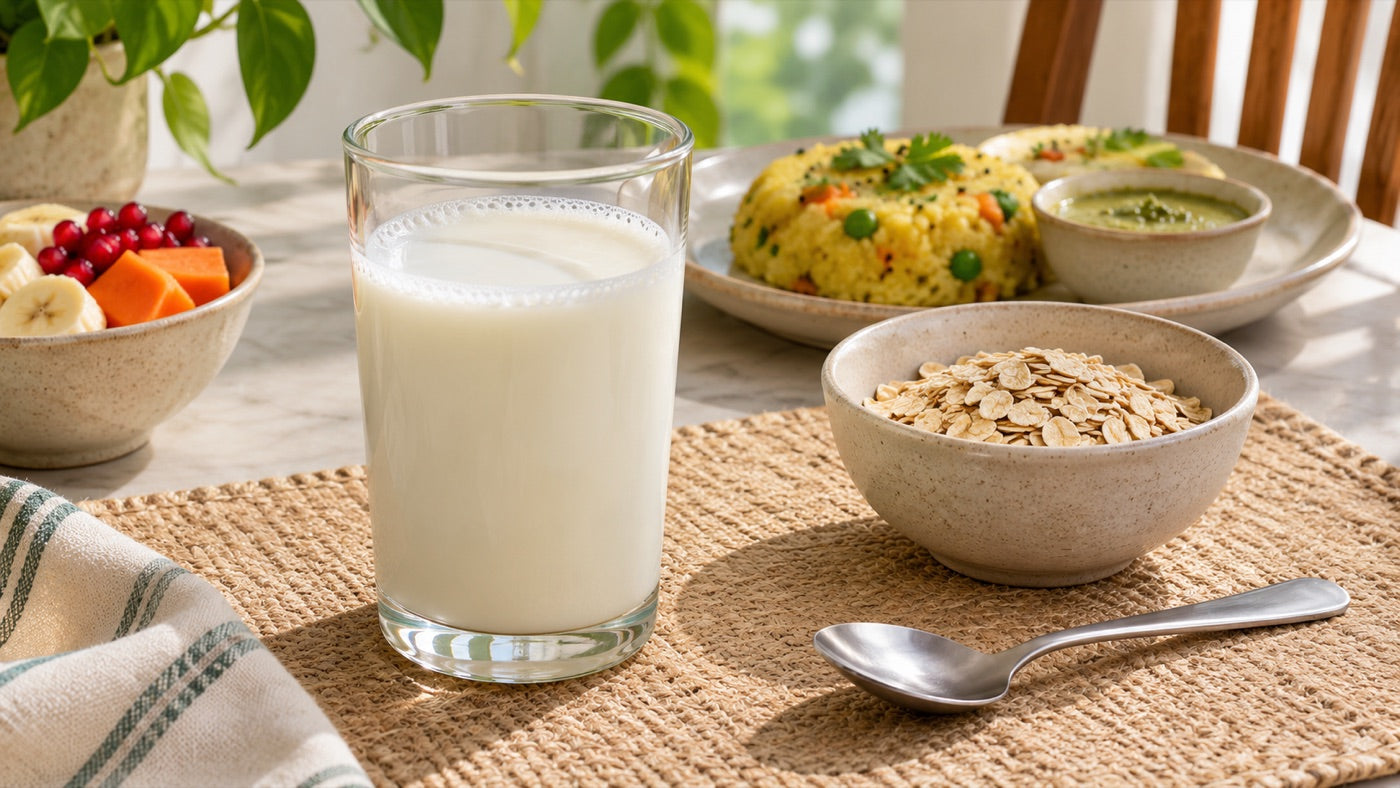
The protein in milk depends on the product and the amount you drink. For a concrete Indian example, Dudhsagar Dairy lists 3 g of protein per 100 ml for its Amul Taaza milk. On that basis, a 200 ml serving provides about 6 g and a 250 ml serving about 7.5 g. Your own pack may differ.
Milk can be a useful part of a protein-rich diet, but a glass of milk and a serving of whey powder aren't the same portion. One Science Nutrition Premium Whey and One Science Nutrition ISO Gold provide more concentrated whey servings. You can choose them when convenience and the amount of protein you need make a separate shake useful, while keeping milk and other foods in your meals as suitable.
Work out what your glass actually contains
A glass is a piece of kitchenware, not a fixed nutritional unit. Two glasses can look similar and hold different amounts. If you're trying to estimate protein, measure your usual pour once so you have a useful starting point rather than borrowing someone else's idea of a large glass.
Use the value on the milk you buy and multiply it by the amount you drink. The calculation is straightforward: protein per 100 ml multiplied by your serving in ml, divided by 100. You don't need to keep measuring forever to understand a familiar serving more accurately.
The figures below use Dudhsagar Dairy's Amul Taaza information, which lists approximately 3 g protein per 100 ml. They describe that example, rather than a universal value for every type or brand of milk.
| Amount of the example milk |
Approximate protein |
| 100 ml |
3 g |
| 150 ml |
4.5 g |
| 200 ml |
6 g |
| 250 ml |
7.5 g |
| 500 ml |
15 g |
A cup of chai may contain considerably less milk than the cup's full volume because water is part of the recipe. Count the milk that went into it, not the final amount of tea. Small amounts across the day still contribute, but the size of the mug alone doesn't tell you the protein.
Toned, full-cream and skimmed describe more than protein
People often assume that removing fat also removes most of the protein. These are different components. Toned, full-cream and skimmed milk can differ substantially in fat and energy while the protein differences are smaller. The exact comparison should use the actual products, not a rule that the thickest milk must be best for every goal.
Choose a type that suits your preferences, energy needs and any medical advice. Someone who needs more dietary energy and someone managing their intake may reasonably make different choices. Neither person needs to treat milk as a competition between the most and least creamy option.
Cow and buffalo milk can also differ in composition. The Food and Agriculture Organization's milk overviewexplains that species, breed, feed and other factors influence milk. That's a good reason to use a matching pack value rather than attach one exact protein figure to every glass sold in India.

Is high-protein milk the same as ordinary milk?
Some products are formulated to contain more protein than standard milk. Others are milk-based drinks with additional ingredients. Compare their nutrition per serving and per 100 ml, and check what the full recipe contains. The words milk or protein on the front don't make every drink equivalent.
Pay attention to whether the number refers to the whole pack or a smaller serving. A large carton may contain more than you plan to drink at once. Using the entire pack's protein while counting only part of its energy makes the estimate inconsistent.
The same principle applies to flavoured milk, coffee drinks and homemade shakes. Added ingredients change the total. You can enjoy them, but it helps to know whether you're comparing plain milk with a prepared drink that includes sugar, fruit, nuts or powder.
What happens when you add whey to milk?
The protein from the milk and the powder both count. Suppose you prepare a suitable 25 g protein serving of whey with 250 ml of the example milk above. The milk adds about 7.5 g, bringing the drink to approximately 32.5 g protein. The milk also adds its own energy and other nutrients.
That is a planning example, not a reason everybody needs that drink size or protein amount. If water is allowed by the pack and you prefer a lighter preparation, it can keep the drink closer to the powder's own nutrition. Choose the preparation according to the product directions and the food plan you are trying to build.
Milk allergy still matters even if you mix a whey powder with water. The whey itself comes from milk. Lactose intolerance and milk allergy are different concerns, so a change of mixing liquid won't answer every problem with a dairy-derived product.
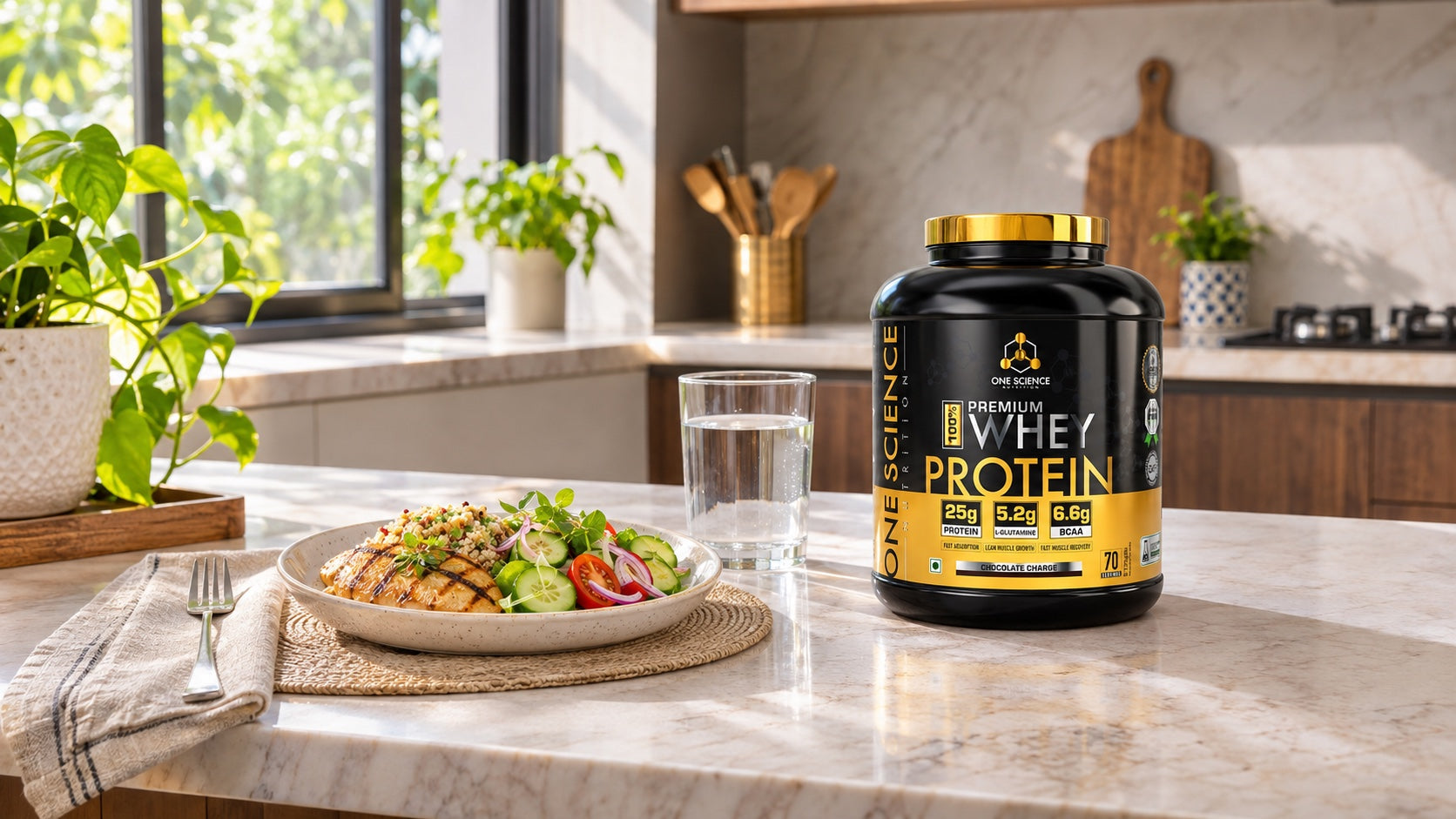
The Chocolate Charge serving of One Science Nutrition Premium Whey provides 25 g of protein and 117 kcal in 32.5 g of powder. Its protein ingredients combine whey concentrate and isolate. This gives you a convenient protein amount when an ordinary glass of milk doesn't fill the particular gap you are trying to address.
For example, you may enjoy milk with breakfast but find it impractical to carry another chilled food for an afternoon meal. A suitable serving of One Science Nutrition Premium Whey can help at that later point, with the preparation and storage handled appropriately. It doesn't require you to stop enjoying milk or make every meal a shake.
Choose One Science Nutrition Premium Whey from flavours including Chocolate Charge, Vanilla Swirl and Alphonso Mango. Follow the chosen pack's directions. It contains milk and soy and is unsuitable for milk allergy; it isn't recommended for children or during pregnancy or breastfeeding. Medical conditions and prescribed diets call for individual advice about protein supplementation.
One Science Nutrition ISO Gold combines whey isolate and hydrolysed whey. The Chocolate serving supplies 27 g of protein, 113 kcal, 0.5 g carbohydrate and 0.3 g fat per 32.5 g of powder. Consider it when that serving composition matches what you want from a whey drink.
The appeal of One Science Nutrition ISO Gold is a convenient, concentrated whey serving, rather than needing a large volume of milk to obtain the same protein amount. Its low fat and carbohydrate numbers describe the selected powder serving. Adding milk changes the finished drink, so keep the preparation in the comparison.
One Science Nutrition ISO Gold contains milk and isn't suitable for milk allergy. It isn't recommended for children or during pregnancy or breastfeeding. Don't assume that the isolate-containing blend is lactose-free or will prevent digestive symptoms; use the exact pack and individual advice when dairy tolerance is a concern.
Keep milk in the wider food picture
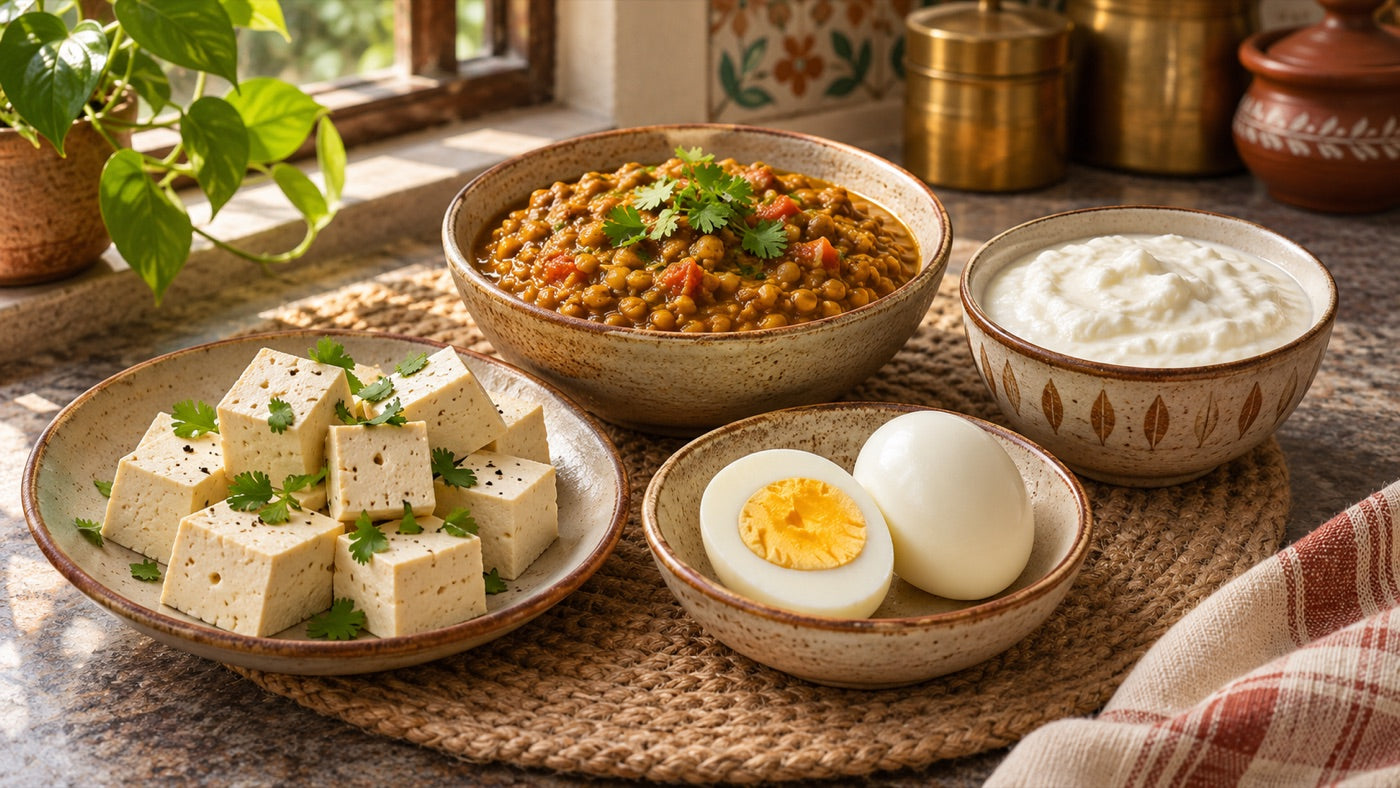
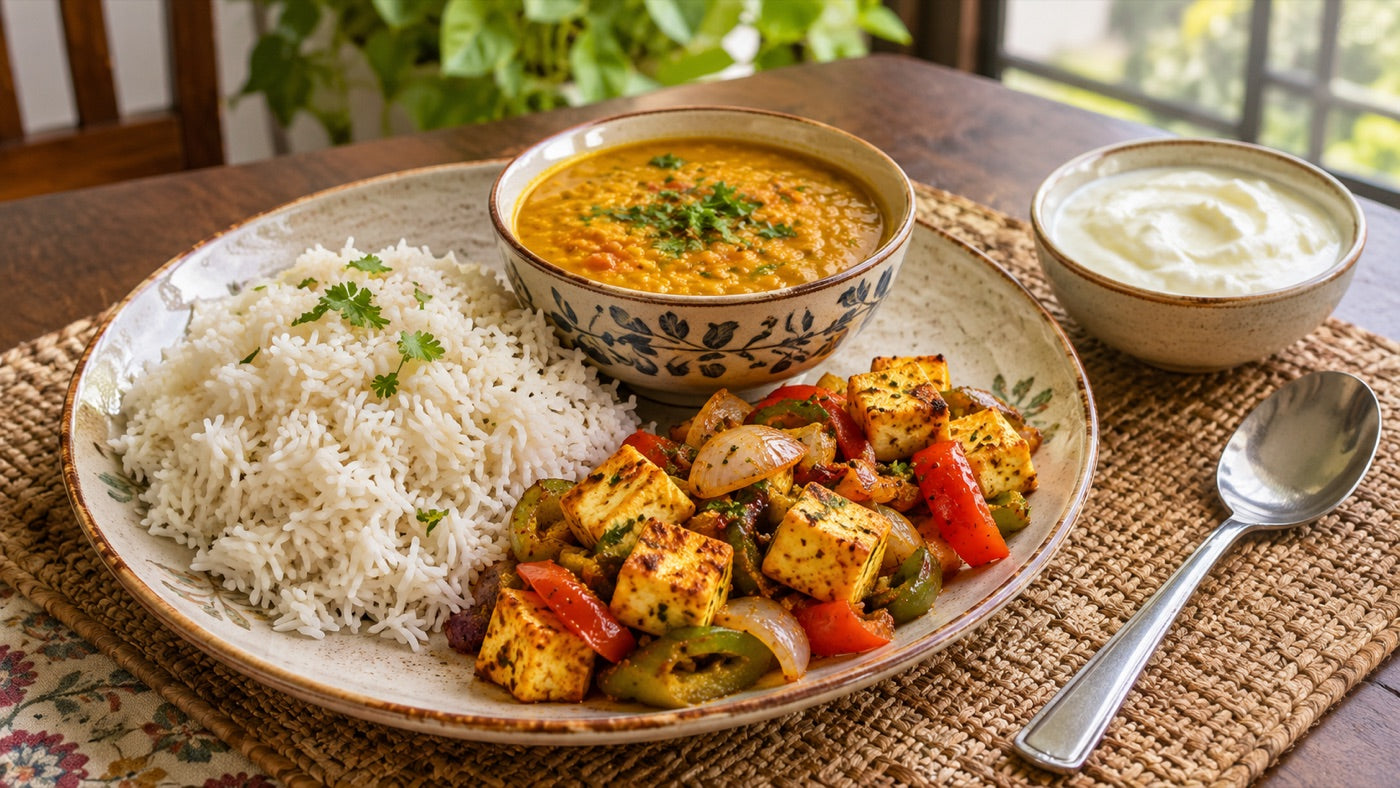
Milk provides more than protein, and a protein powder does not automatically replace everything a milk serving or complete meal offers. Choose suitable foods across the day, with pulses, soy, dairy, eggs or other protein sources according to your diet. Variety gives you more ways to make the routine enjoyable.
Our protein-quality guide can help explain why the source matters alongside the amount. When shopping, use your actual milk value and usual pour, then decide whether a convenient whey serving has a separate job to do.
Explore One Science Nutrition Premium Whey or One Science Nutrition ISO Gold if that extra convenience would help. The next time you make tea, breakfast or a shake, you'll be able to count the ingredients you used rather than guess from the size of the glass.