Cart
0

For healthy adults, protein needs are often expressed as grams per kilogram of body weight per day. EFSA's adult reference is 0.83 g/kg/day, while sports nutrition guidance uses 1.4 to 2.0 g/kg/day for most healthy exercising adults. Choosing the appropriate range comes before multiplying it by your weight. A number copied from someone else's training plan may not suit your activity or health.
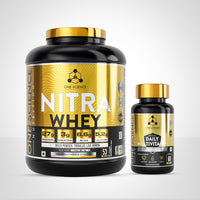
Once you have a suitable target, One Science Nutrition Premium Whey offers a convenient way to cover a protein gap. If you prefer a plant-based option, One Science Nutrition Pea Protein provides another route. Neither product determines your requirement. Your food intake and individual needs determine whether you need a supplement and where it belongs.
What does grams per kilogram actually mean?
The calculation is your body weight in kilograms multiplied by an appropriate daily protein factor. The result is grams of protein from everything you eat and drink over the day. It is not grams of protein powder, a target for each meal, or an amount to add on top of your existing diet.
For example, a 70 kg adult using 1.4 g/kg/day would calculate 70 multiplied by 1.4, which gives 98 g of protein daily. If their meals already supply 80 g, the remaining difference is 18 g. Ordering a supplement before doing that second calculation can turn a manageable shortfall into unnecessary extra intake.
Keep the units beside the numbers when you write them down. A note that says only “1.4 protein” can easily become confusing later. Writing “1.4 g of protein per kg of body weight per day” makes it clear what you are measuring and prevents a daily target from becoming an accidental per-meal instruction.
Choose the reference before using a calculator
The European Food Safety Authority's adult reference is 0.83 g/kg/day. It is a population reference for generally healthy adults, rather than a target designed specifically to maximise training adaptations.
The International Society of Sports Nutrition's 2017 position stand gives 1.4 to 2.0 g/kg/day for most healthy exercising people. That is a range, not an instruction for every gym member to choose the highest number.
Think about what your week actually involves. A new membership card does not describe training frequency, session demands, appetite or recovery. Discuss those details with a qualified dietitian when choosing your target, especially if you are changing your diet substantially. You can then use the calculation consistently instead of moving between unrelated online recommendations.
| Body weight | At 0.83 g/kg/day | At 1.4 g/kg/day | At 2.0 g/kg/day |
|---|---|---|---|
| 50 kg | 41.5 g | 70 g | 100 g |
| 60 kg | 49.8 g | 84 g | 120 g |
| 70 kg | 58.1 g | 98 g | 140 g |
| 80 kg | 66.4 g | 112 g | 160 g |
| 90 kg | 74.7 g | 126 g | 180 g |
These calculations illustrate the references above. The columns are not three successive levels that everyone should progress through.
Which body weight belongs in the calculation?
For a healthy adult whose body weight is suitable for this method, current weight can provide a straightforward starting point. However, current weight, target weight and fat-free mass are different measurements. Switching between them while keeping the same protein factor can change the meaning of the recommendation.
People with a high starting body weight should ask a dietitian which weight to use. The same applies when body weight is affected by fluid retention, substantial recent changes or a medical condition. A calculator cannot make that clinical choice just because it accepts any number entered into a box.
You also do not need to recalculate your target after every small movement on the scales. Use a consistent measurement routine and review meaningful changes alongside your training and eating pattern. Otherwise, ordinary day-to-day variation can create a new target each morning without improving the plan.
Turn your daily number into a realistic food total
Suppose an appropriate target for a 70 kg exercising adult is 112 g daily, equivalent to 1.6 g/kg/day. This is a hypothetical planning example. Their usual breakfast supplies 20 g, lunch 30 g, an afternoon snack 10 g and dinner 27 g. The food total is 87 g, leaving 25 g to plan for.
Those meal figures are assumed totals, not promises about a particular katori, restaurant meal or recipe. Check your actual portions, ingredient labels and preparation. Count the milk in tea or a shake where relevant, and remember that grains and mixed dishes can contribute protein too.
It helps to record an ordinary workday and a less structured day before deciding that your diet always falls short. You may discover that the main problem is a skipped meal on office days, rather than a need to increase every meal or buy several different products.
A measured option: One Science Nutrition Premium Whey
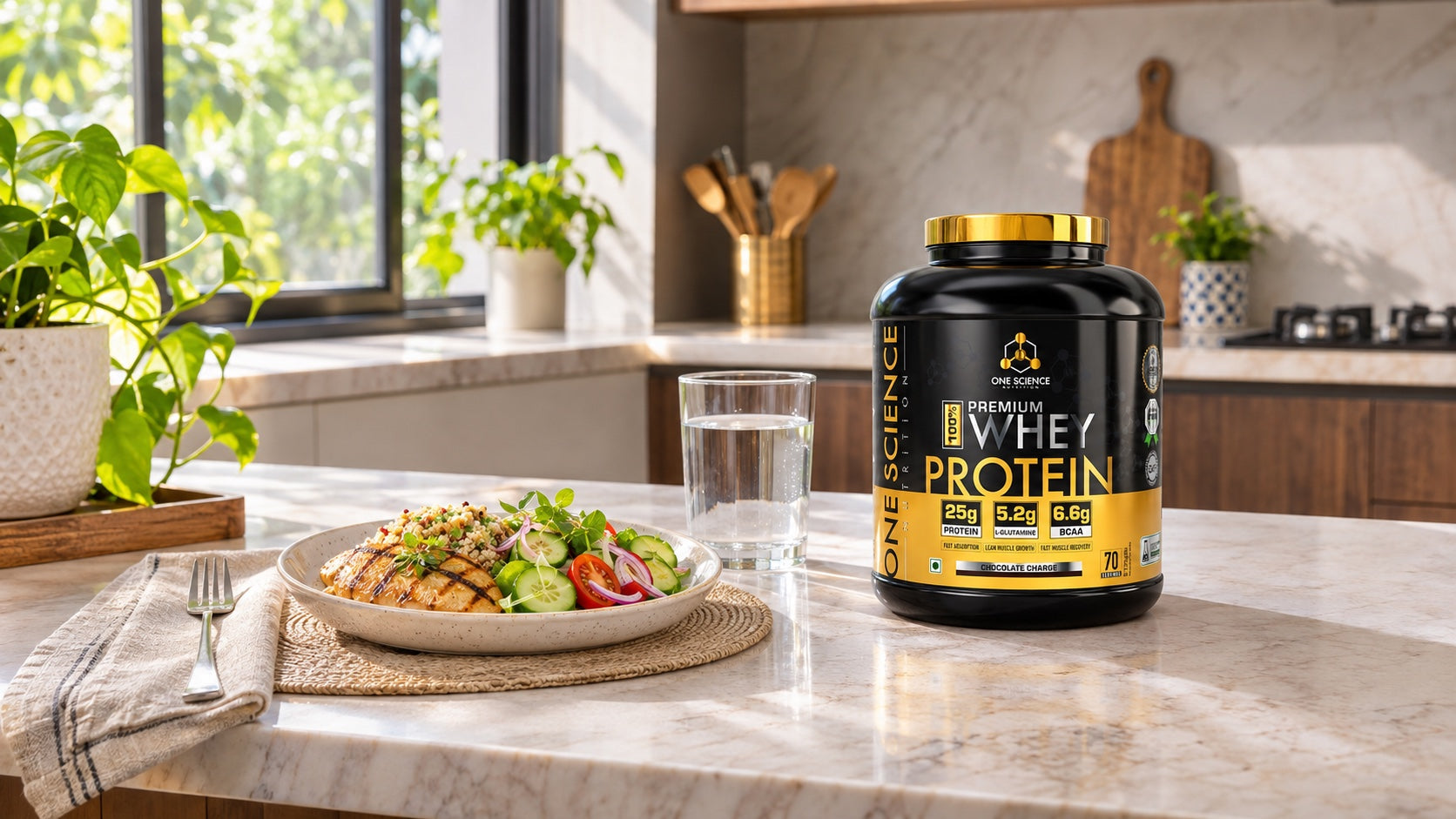
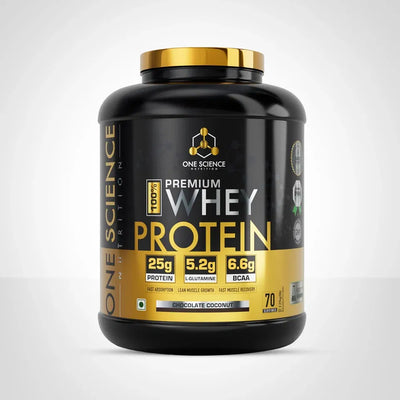
The Chocolate Charge serving of One Science Nutrition Premium Whey provides 25 g of protein from 32.5 g of powder. It uses a whey concentrate-and-isolate blend and contains milk and soy. That makes it an option for adults who include dairy and want a convenient protein serving alongside their meals.
In the 87 g food example, one labelled 25 g protein serving would bring the daily total to 112 g. The useful feature is that the amount can be counted clearly. The serving contributes 117 kcal when prepared with water; adding milk changes the protein and energy total because the milk contributes its own nutrients.
One Science Nutrition Premium Whey can be useful on days when cooking another protein-containing portion is impractical. Choose a preparation time you can repeat, follow the pack directions and include the serving in your daily total. The product is not recommended for children or during pregnancy or lactation. Adults with medical conditions should get individual advice before changing supplement intake.
A plant-based alternative with different serving numbers
One Science Nutrition Pea Protein provides 25 g of protein per 40 g serving, with 5 g of fibre in its listed serving. The larger powder weight does not mean it supplies more protein than the 25 g whey example. Compare protein grams rather than assuming all scoops are equivalent.
This option can make planning easier when you prefer plant protein or exclude dairy ingredients. The product page declares a facility that also processes milk, nuts and soy, so plant-based does not mean suitable for every allergy. It is not recommended for children or pregnant or lactating women, and medical conditions require professional advice.
You would usually choose the suitable option for the gap instead of automatically taking both. For an adult with the example 25 g shortfall, either serving can be counted towards the target. Check the selected flavour and purchased pack, then explore One Science Nutrition Pea Protein if that format matches your preferences.
Keep the calculation useful as your routine changes
For the wider food-planning context, read our practical guide to daily protein needs. Keep the final target connected to your meals as well as your body weight.
Write down the weight used, the chosen factor, the daily result and your usual food contribution. That small worksheet makes it easier to review your plan with a dietitian and explain why a supplement is present. You can then adjust the part that has changed instead of rebuilding the whole diet.
If the remaining gap is small, another ordinary food portion may cover it. If the gap is regularly around a labelled serving and convenience is the obstacle, choose One Science Nutrition Premium Whey as a practical option. Let the calculation guide the purchase, and let the rest of your meals continue doing their share of the work.