Take whey protein in a measured serving prepared according to the pack, and use it to fill a gap in your daily protein intake. You can usually choose a time that fits your meals and training. A shake is convenient; it is not a compulsory ritual after every workout.
For One Science Nutrition, two options are One Science Nutrition Premium Whey and One Science Nutrition ISO Gold. They provide different whey formulas and serving nutrition, so start by choosing the product that fits your needs and reading its directions.
Start with the gap, then choose the serving
Count the protein supplied by the foods you usually eat. Include milk, curd, dal, eggs, tofu, meat or other relevant sources before deciding what a shake needs to add.
For example, suppose an appropriate personal target is 90 g daily and your usual food supplies about 65 g. The remaining gap is about 25 g. That is a planning illustration, not a recommendation that everybody needs 90 g or that the estimate is exact.
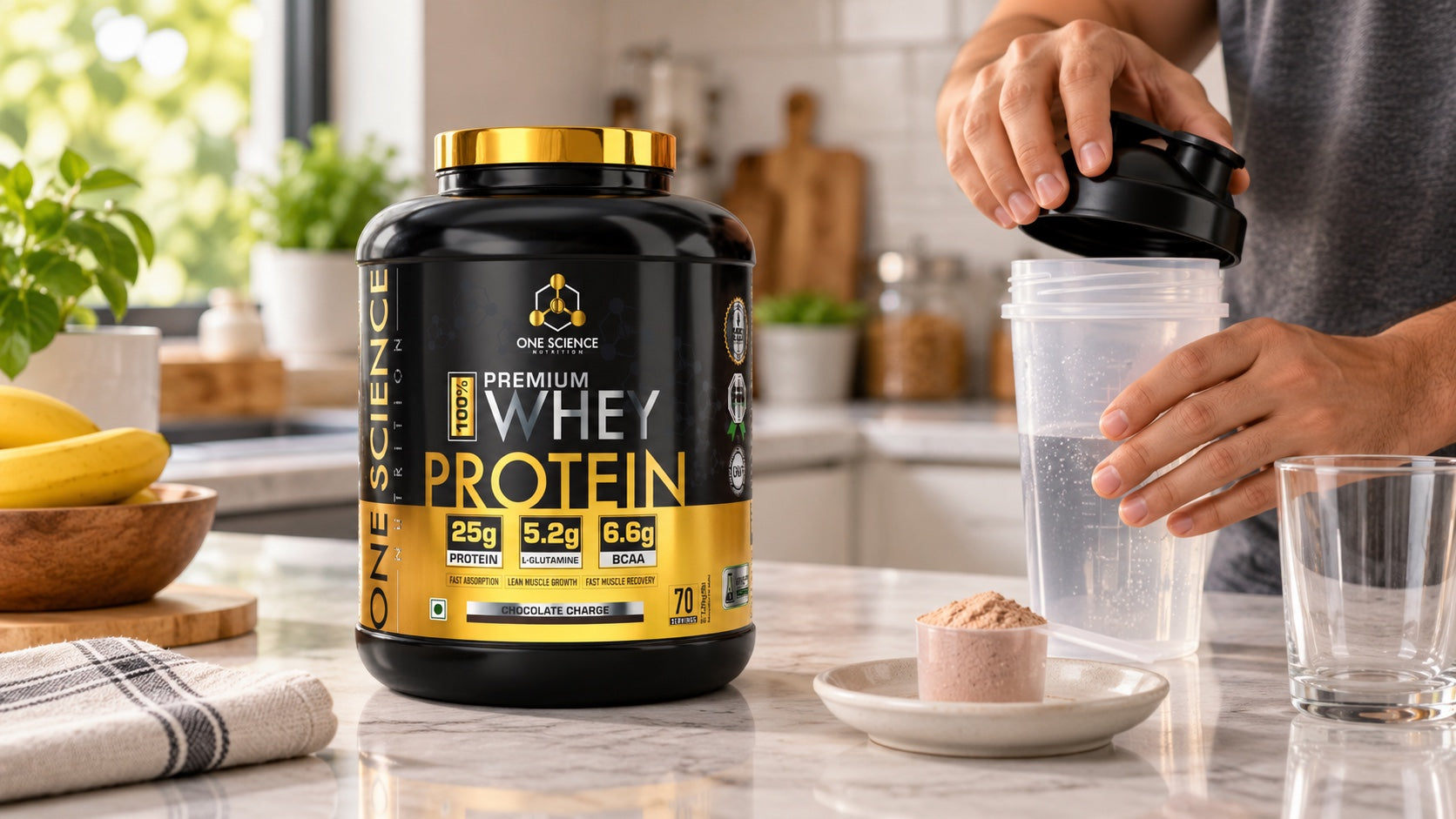
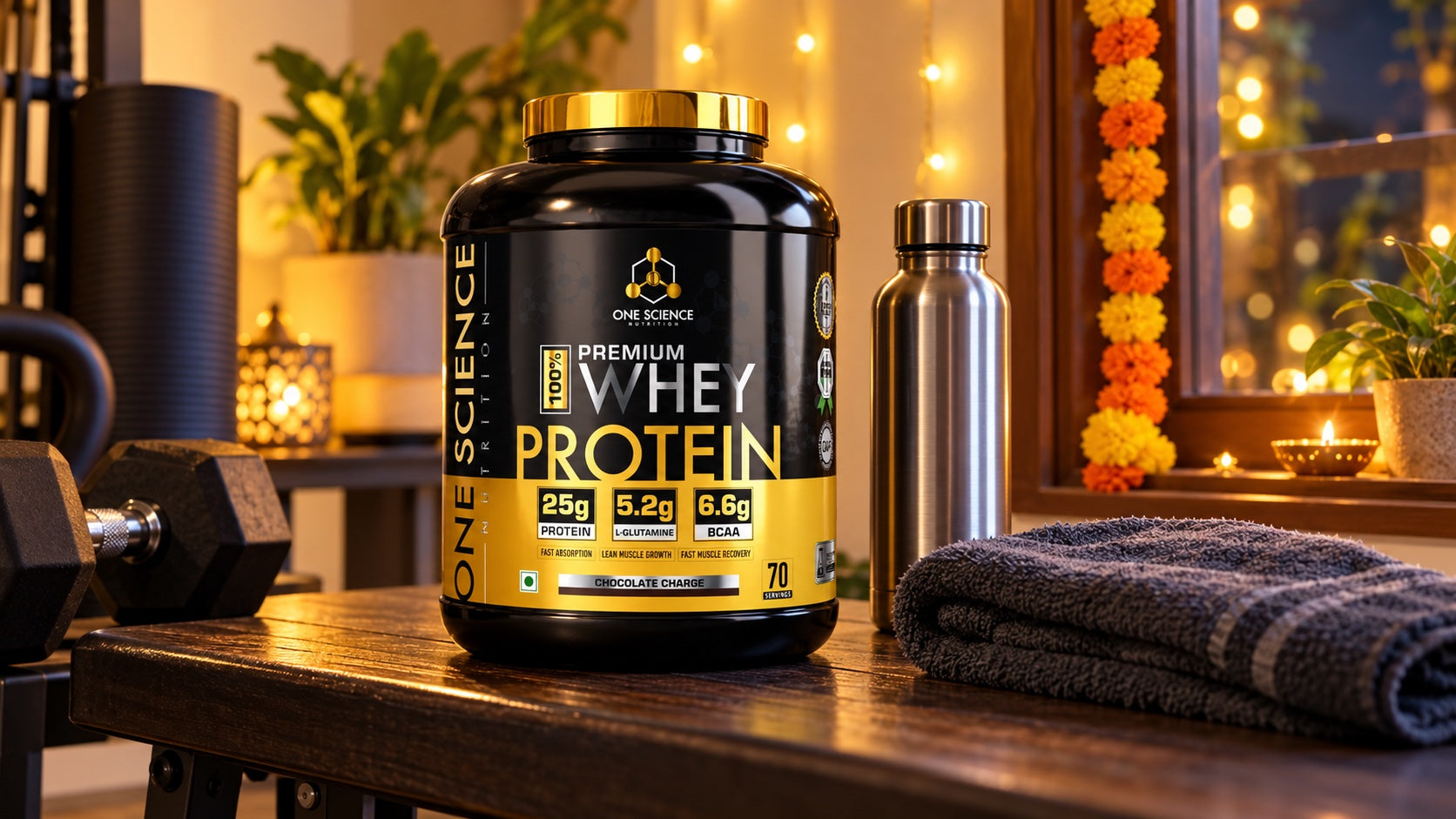
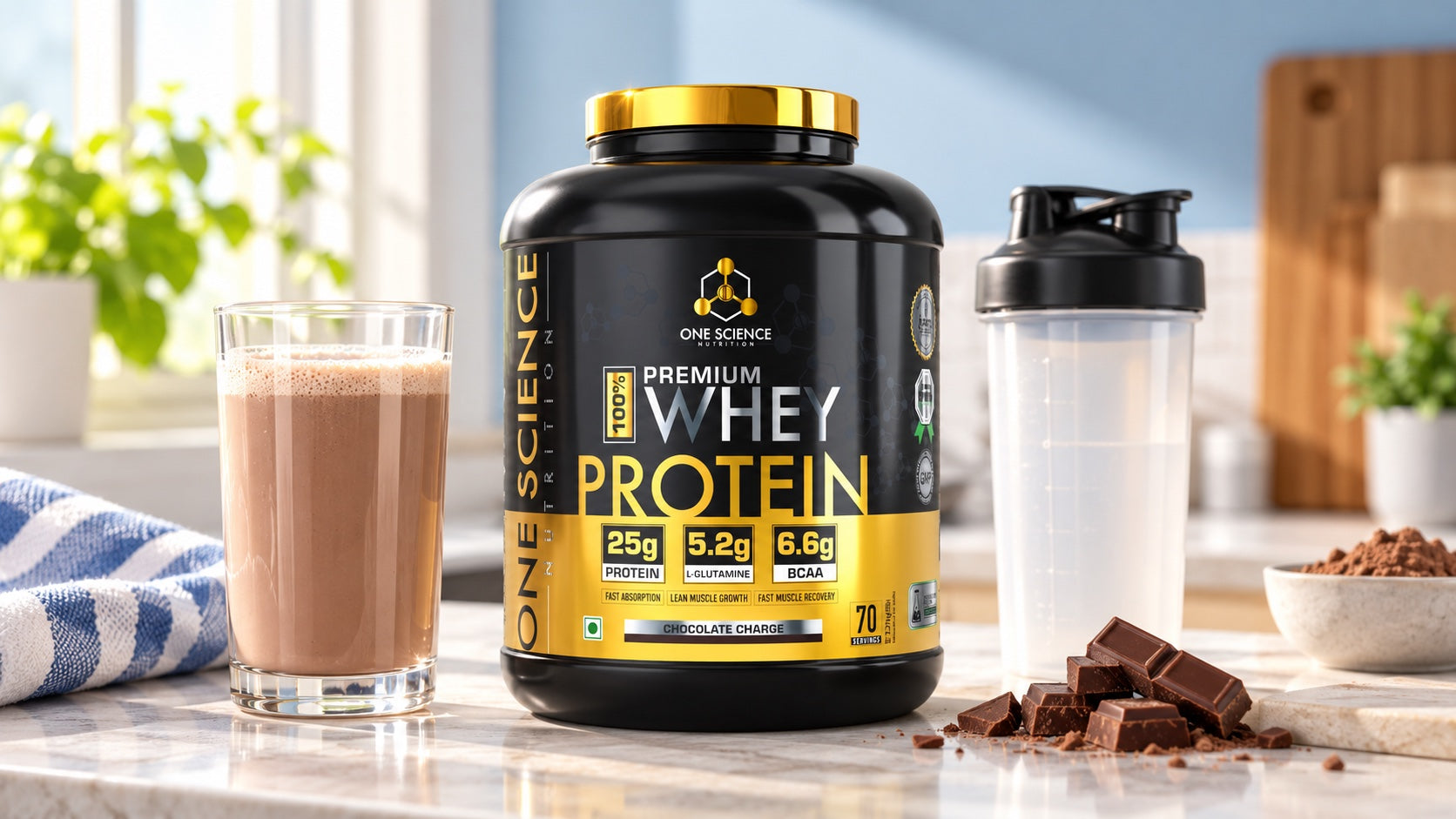
One Science Nutrition Premium Whey in Chocolate Charge provides 25 g protein per 32.5 g serving, with 117 kcal. The powder weighs more than its protein contribution because the formula includes other components too. Measure the product serving, rather than treating 25 g of powder as 25 g of protein.
Follow the serving frequency on the pack. The Chocolate Charge pack directions specify one daily serving. If your food intake is still inadequate, review your meals and needs with a dietitian rather than automatically increasing the powder.
Make the shake in a sensible order
-
Use a clean shaker. Make sure the lid closes properly and the bottle has been washed and dried.
-
Add the liquid. Use the type and amount directed on your pack.
-
Measure the powder. Use the pack scoop as directed. A kitchen scale can help you measure the serving weight consistently.
-
Close and shake. Mix until the texture is even. A blender is useful when adding fruit or other foods.
-
Clean up after drinking. Rinse and wash the shaker rather than leaving it in your gym bag all day.
Putting the liquid in first can make it easier to avoid powder sitting dry at the bottom. If the shake is too thick, check the pack directions before changing the recipe. Extra dry scoops are not a texture fix.
Do not shake hot liquid in a sealed bottle. For a cold shake, use suitable drinking water or refrigerated milk and prepare it hygienically.
Water or milk?
Water keeps the shake's nutrition closer to the powder's own values. Milk adds protein, carbohydrate, energy and flavour, with the amount depending on the milk and volume used.
Choose around your diet and preference. Milk may suit someone who wants a more substantial drink. Water may suit someone who wants a lighter preparation or does not want the extra milk contribution. Plant-based drinks also vary widely in protein; check the one you use.
Mixing whey with water does not make it dairy-free. Whey itself comes from milk. The NIDDK explanation of lactose intolerance also distinguishes difficulty digesting milk sugar from milk allergy. A milk allergy makes whey unsuitable, regardless of the mixing liquid.
Where One Science Nutrition ISO Gold fits
One Science Nutrition ISO Gold uses whey protein isolate and whey protein hydrolysate. The Chocolate nutrition example provides 27 g protein, 113 kcal, 0.5 g carbohydrate and 0.3 g fat per 32.5 g serving.
Consider One Science Nutrition ISO Gold if you want whey with a small carbohydrate and fat contribution. Choose One Science Nutrition Premium Whey if its concentrate-and-isolate blend and serving nutrition fit your routine. Both are ways to add dietary protein; you do not need to alternate or combine them to make whey work.
Our whey concentrate and isolate comparison explains the ingredients in more detail. Flavour and pack directions matter, so use the instructions on the product you receive. Neither formula should be assumed lactose-free. One Science Nutrition Premium Whey contains milk and soy, and One Science Nutrition ISO Gold is milk-derived. Both are not recommended for children or during pregnancy or breastfeeding. Ask for professional advice if a medical condition or medication affects supplement choices.
When should you take whey protein?
Pick a time that helps you meet your daily needs. A morning shake can suit a rushed breakfast, while an afternoon serving may help when dinner is delayed. After training is convenient for many people, but it is not the only useful time.
Chad Kerksick and colleagues' ISSN nutrient-timing review places the timing question alongside total intake and the surrounding meals. Missing an exact minute after a workout does not make the session pointless.
On rest days, the body still needs protein. Whether a shake is useful depends on what you eat that day, rather than whether you went to the gym.
If the routine is not working
Repeated stomach discomfort deserves attention. Check the serving, the mixing liquid, allergies and the other foods or products you are taking. Do not assume that discomfort means you need a larger scoop or a more expensive formula.
Stop and seek medical help for signs of an allergic reaction. For persistent digestive symptoms or uncertainty about suitability, speak to a healthcare professional.
For a measured everyday whey serving, shop One Science Nutrition Premium Whey or One Science Nutrition ISO Gold according to the formula you prefer. Keep the preparation simple and let the shake support the meals you already need.