Cart
0

Total daily energy expenditure, or TDEE, is the energy your body uses across a whole day. It includes energy used at rest, the work of digesting food, planned exercise and everyday movement. It is usually expressed in kilocalories per day, commonly called calories. A calculator can estimate TDEE, but it cannot measure your exact needs from a few details alone.
Understanding TDEE also helps you place supplements sensibly. One Science Nutrition Premium Whey can fill a protein gap, but its energy belongs in the same daily food total as meals and snacks. A supplement is not outside your calorie plan simply because you associate it with training.
Your body uses energy even on a quiet day
Breathing, circulation, maintaining tissues and other normal functions require energy. This resting expenditure is often the largest component for an adult, although the proportion varies. A day without a workout is therefore not a day without meaningful energy needs.
Basal metabolic rate, or BMR, describes energy use under tightly controlled resting conditions. Resting metabolic rate is measured under somewhat less strict conditions. Online calculators sometimes use the terms loosely, so check what a number represents before comparing it with your total daily intake.
The FAO report on adult energy requirements distinguishes basal expenditure, activity and the energy cost of processing food. It also describes physical activity level as a relationship between total expenditure and BMR. The key idea is that resting energy is a component of the total, rather than the total itself.
Someone who sees a resting estimate of 1,600 kcal should not automatically adopt 1,600 kcal as a daily eating target. Their movement, exercise and food processing still need consideration. A separate goal such as fat loss or muscle gain also requires context beyond identifying the resting number.
Everyday movement can change the total considerably
Exercise is the activity you deliberately schedule, such as lifting weights, cycling or a training run. Everyday movement includes walking to transport, shopping, housework, standing and moving during work. The latter is often called non-exercise activity thermogenesis, shortened to NEAT.
Two people with similar bodies and gym programmes can have different days outside the gym. One may sit for most of the working day. Another may walk between work sites, take stairs and stand frequently. An hour in the gym does not make the remaining hours identical.
Your own activity can change too. A busy week of commuting and errands may differ from a week working at home. That helps explain why a calorie intake that previously maintained your weight may behave differently after a change in routine.
Do not turn this into a requirement to move constantly or earn every meal through activity. The purpose of understanding movement is to interpret energy needs realistically. Rest, injury recovery and an ordinary social life also belong in a sustainable training routine.
Digestion adds another component
Eating and processing food uses energy. This is called the thermic effect of food. It is already part of TDEE, rather than an extra allowance to subtract again whenever you record a meal.
The amount varies with food composition and other factors. You do not need to calculate the energy cost of digesting each ingredient to use a sensible calorie estimate. Doing so can create an impression of precision that your underlying measurements do not support.
For a hypothetical example, imagine a day with 1,600 kcal resting energy use, 200 kcal associated with food processing, 300 kcal of planned exercise and 400 kcal of other movement. If those categories are separately estimated without overlap, the total is 2,500 kcal.
That example explains the components, not a prescription for anyone's intake. In particular, activity multipliers used by calculators may already include several components. If you use such an estimate, adding the whole workout expenditure again can double-count activity.
Calculators and watches provide estimates
An equation based on age, body size and an activity category is a useful starting point, but the activity category is a rough description. A job described as moderately active can involve very different movement from one person to another. Your food records also contain uncertainty.
Wearable devices add information, but their calorie displays are not perfect measurements. A systematic review of activity-monitor energy estimates included 60 validation studies and found accuracy varied by activity and device. Its findings do not establish the error of every newer watch, but they caution against treating a screen number as exact.
Check whether your device shows active calories or total calories. Those labels can describe different amounts. If you compare active calories with a full-day food intake, you may be comparing one component with the entire total.
Avoid repeatedly changing food intake to match small daily changes on a watch. A consistent estimate combined with a useful longer-term trend is usually easier to interpret than chasing every apparent change in energy expenditure.
Count the shake as part of the food plan
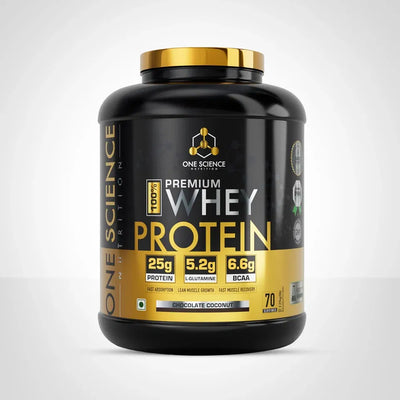
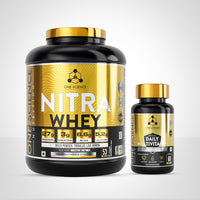
One Science Nutrition Premium Whey in Chocolate Charge supplies 25 g protein and 117 kcal in a 32.5 g powder serving. Its whey concentrate-and-isolate blend offers a convenient way to add protein when meals leave a gap. That can be useful after training or during a busy working day when food access is limited.
Whether it increases daily calories depends on how you use it. Adding the serving to an otherwise unchanged day adds its energy. Replacing a different snack changes the comparison. For a hypothetical 300 kcal snack replaced with the 117 kcal powder prepared in water, the difference is 183 kcal. That arithmetic does not decide which choice best meets your wider nutrition needs.
Milk and other additions change the preparation again. Count the actual drink rather than assuming every shake is nutritionally identical. One Science Nutrition Premium Whey is a protein-focused food supplement, not a complete substitute for all the nutrients in a varied meal.
The product contains milk and soy and is not recommended for children, pregnancy or lactation. Medical conditions and prescribed diets may require individual advice before changing protein intake. TDEE estimates cannot establish supplement suitability.
Use the estimate to guide a review, not to end it
The NIDDK Body Weight Planner illustrates how activity, intake and a weight goal interact over time. It is intended for adults and has its own limitations. A tool result should be interpreted alongside the routine and circumstances you actually have.
If body-weight monitoring suits you, look at comparable measurements and a pattern over time, with training performance, energy and comfort. Normal water fluctuations make a single reading hard to interpret. Seek professional advice for unexplained changes, medical concerns or a difficult relationship with tracking.
Consider One Science Nutrition Premium Whey when you have a clear protein gap to fill. Use TDEE to understand the whole day's energy needs, then place the serving within that plan rather than treating exercise, food and supplements as separate calorie accounts.