Cart
0
You do not need to eat or drink carbohydrate during every workout. For a short, ordinary gym session after normal meals, it may add little practical value. Carbohydrate during exercise becomes more relevant as the activity gets longer, harder or includes repeated demanding bouts. The decision depends on the session, earlier food, tolerance and the opportunity to refuel afterwards.
Start by separating fuel for the day from fuel consumed while moving. One Science Nutrition High Protein Oats can fit a planned meal before or after training. A bowl of oats is a different choice from a quickly consumed carbohydrate drink or gel during a long run. Matching the food to its job makes both choices more useful.
A normal gym session and a long ride ask different questions
Consider a hypothetical adult who eats lunch, has an afternoon snack and then lifts weights for 45 minutes. They can usually focus on the quality of those meals, comfortable hydration and the next eating opportunity. Carrying a sugary drink is not automatically necessary because the session involves exercise.
Now consider a cyclist riding for two and a half hours at a demanding pace. That session presents a different fuel problem. Stored carbohydrate is limited, and consuming carbohydrate during prolonged exercise can support performance. The fact that a short session needs little planning does not make the same approach suitable for an endurance event.
The German Nutrition Society position paper on carbohydrates in sports nutrition explains that duration and intensity influence carbohydrate use and the value of intake during exercise. The exercise name alone is insufficient: an easy cycle to work and a long competitive ride are both cycling, but their demands differ.
Duration also includes what you are actually doing. A gym visit with long conversations and a few sets is not equivalent to continuous hard exercise for the same time on a clock. Describe the session honestly before borrowing an endurance fuelling target.
When an hourly carbohydrate plan becomes useful
The International Society of Sports Nutrition nutrient timing position stand discusses approximately 30 to 60 g carbohydrate per hour during extended high-intensity exercise, particularly beyond an hour. This is sports nutrition context, not a compulsory dose for every adult whose workout reaches 61 minutes.
Earlier meals, intensity, total duration and gut tolerance affect the practical plan. Longer endurance events may involve higher intakes and specific carbohydrate combinations under experienced guidance. Those approaches require practice; they are not a reason for a new runner to begin with the largest number they find online.
Use a simple hypothetical calculation to understand the units. If an athlete's individual plan is 40 g carbohydrate per hour for two hours, the total is 80 g. If each gel in that example supplies 20 g carbohydrate, four gels provide that total. The actual product, fluid needs and timing still have to fit the event.
Do not confuse the weight of a gel or powder with its carbohydrate content. A 40 g packet may contain a different amount of carbohydrate because it includes water or other ingredients. Read the carbohydrate line for the serving you will consume, and include carbohydrate from drinks as well as food.
Choose a format you can tolerate while exercising
Sports drinks, gels and suitable familiar foods offer different ways to consume carbohydrate. A runner has different carrying and chewing constraints from a cyclist who can access food at a stop. Swimming, team sports and repeated events create their own opportunities and restrictions.
Test the format at the intended pace. Something that feels comfortable while walking may not suit a hard run. Practise opening the packet, swallowing the portion and getting water when needed. A race-day plan is partly a nutrition plan and partly a practical plan for what you can actually carry and consume.
Adding more powder to less water can produce a drink that is different from the one you tested. Follow the product preparation directions. If your carbohydrate and fluid needs do not match one drink's concentration, plan the components separately with appropriate advice rather than making an unusually concentrated mixture by guesswork.
Do not use carbohydrate intake to ignore a session that is too demanding for your current fitness or heat conditions. Pacing, rest, training progression and hydration still matter. If you feel unwell, stop and assess the situation rather than repeatedly taking sugar and hoping to continue.
Put meals on either side of the session
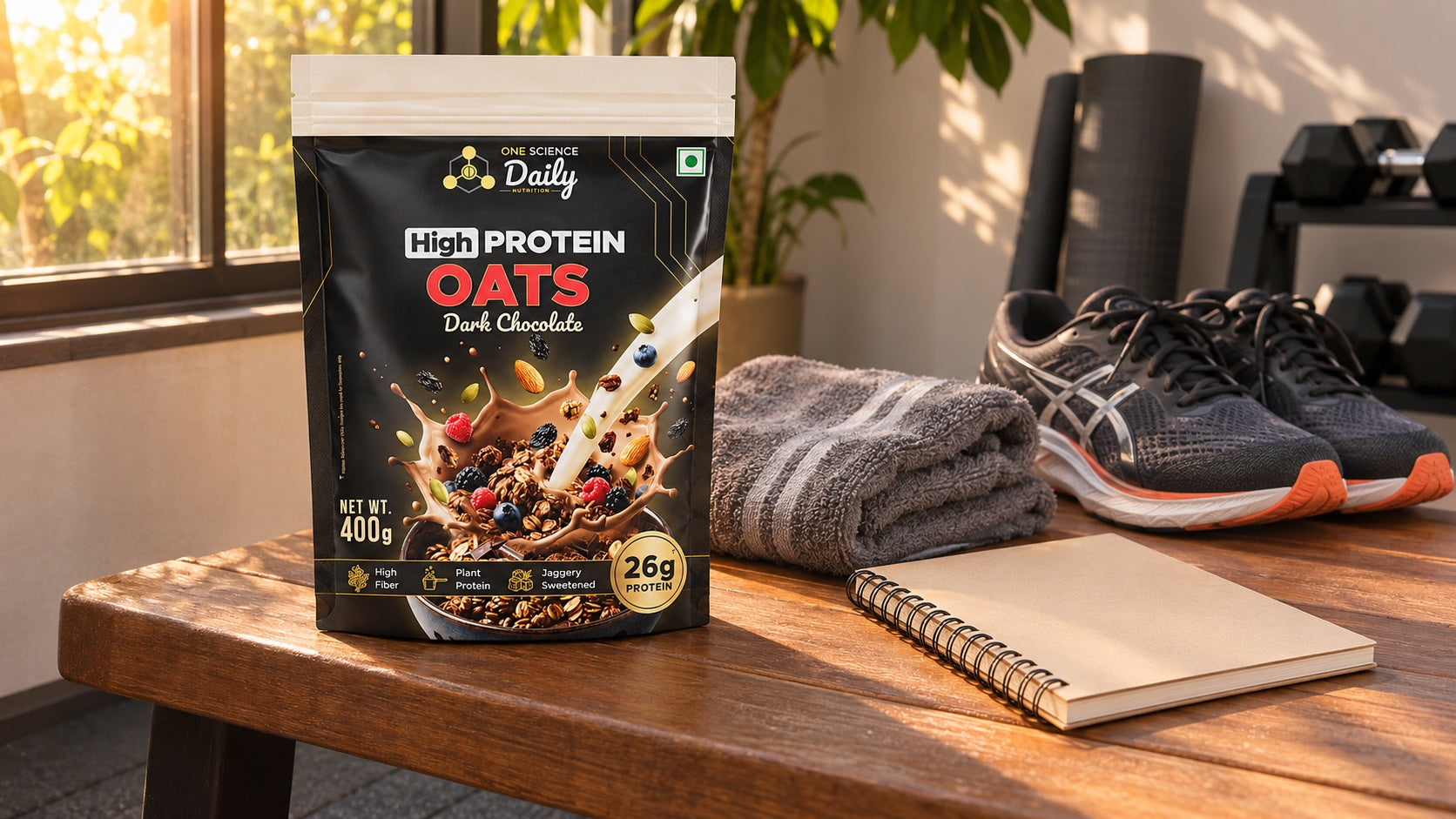
One Science Nutrition High Protein Oats in Dark Chocolate combines rolled oats with soy protein and ingredients including seeds, almonds, cocoa and jaggery. That makes it a convenient meal option to consider when you want carbohydrate-containing food alongside protein. Its fibre and other ingredients also distinguish it from a fast carbohydrate product used during endurance exercise.
The current product serving is 45 g, with 186 kcal. The listing gives 26.6 g protein per 100 g powder. These are different comparison bases, so the per-100-g protein number is not the amount in one 45 g serving. If you prepare it with milk, include the milk's contribution when tracking the bowl.
For a morning workout, you might prepare One Science Nutrition High Protein Oats with enough time to eat comfortably before leaving. For an early session when a full breakfast does not suit you, it may work better afterwards. Test the arrangement rather than forcing a fibre-containing meal immediately before a hard run.
Soy and almonds matter for allergy decisions, and preparation with milk adds milk to the meal. Follow the current pack's full allergen and suitability information. A high-protein breakfast does not become suitable for every dietary restriction simply because oats are familiar.
Avoid solving the wrong fuel problem
If you regularly finish short sessions exhausted after skipping meals all day, first address the meal pattern. A drink during training may obscure the reason you arrived hungry. Conversely, eating a large breakfast does not automatically remove the value of carbohydrate during a long, demanding endurance event.
If weight management is part of your goal, count the fuel you actually consume while still fuelling necessary exercise appropriately. A sports drink, several gels and a post-workout snack all contribute energy. Neither ignoring those calories nor withholding needed endurance fuel creates a thoughtful plan.
People with diabetes, recurrent low blood glucose, digestive conditions or medically prescribed diets need individual guidance before changing exercise fuelling. General sports targets are not treatment instructions. Children and adolescents also need age-appropriate advice rather than an adult endurance formula.
Choose One Science Nutrition High Protein Oats when its meal format fits your day. During exercise, make the carbohydrate decision from the actual session: short and comfortably fuelled, or long and demanding enough to warrant a practised plan. Buying a breakfast product and planning fuel for a long ride can both be sensible, provided each has a clear purpose.